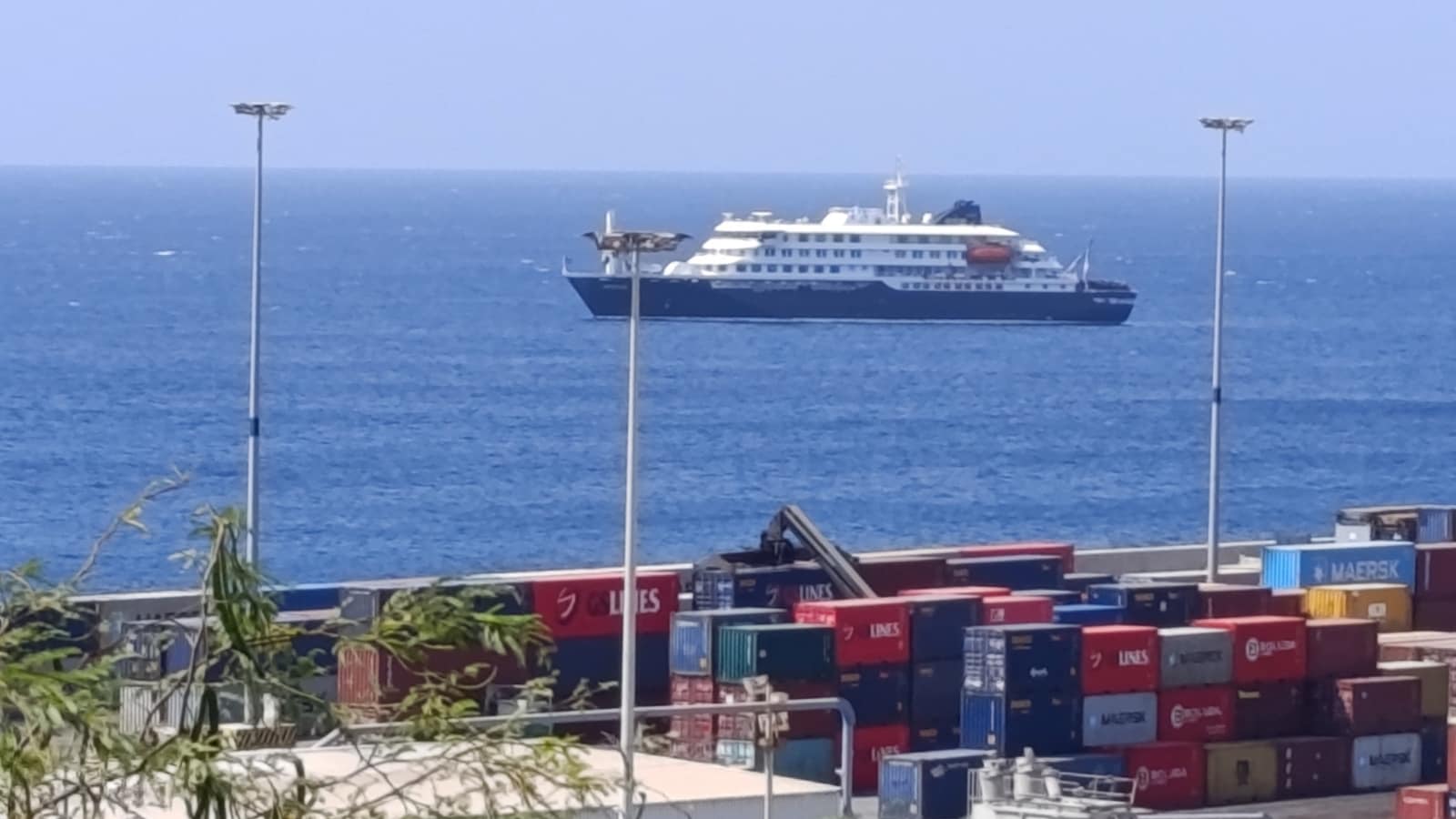
The MV Hondius is currently a floating laboratory of epidemiological anxiety drifting toward the Port of Granadilla. On board are 140 passengers and crew members who have spent weeks in a silent standoff with a pathogen that has already claimed three lives. While the World Health Organization (WHO) and Spanish regional officials are desperate to broadcast the message that this is not a sequel to the 2020 pandemic, the logistical scramble on the ground in Tenerife suggests a much higher level of concern than the official talking points admit. This is an outbreak of the Andes virus, a specific and rare strain of hantavirus that breaks the primary rule of its genus: it can spread between humans.
Spanish authorities have spent the last 48 hours transforming an industrial port into a sterile corridor. The goal is to ensure that not a single passenger from the Dutch-flagged vessel touches the soil of the Canary Islands before being shuttled into isolation or onto a waiting repatriation flight. It is a high-stakes game of containment designed to protect a tourism industry still haunted by the ghosts of global lockdowns, even as health experts insist the risk to the general public remains statistically negligible. Meanwhile, you can read related events here: Your Mouse Problem is Not a Plague and Your Fear is a Policy Failure.
The Breach of the Biological Barrier
The mystery of how a rodent-borne virus seized a polar expedition vessel began far from the Atlantic. Investigators currently trace the source to a bird-watching excursion in Argentina in early April. Two passengers likely inhaled aerosolized droppings from long-tailed pygmy rice rats, the natural reservoir for the Andes virus.
What makes the Andes strain different from the hantaviruses found in North America is its capacity for interpersonal transmission. While the Sin Nombre virus in the U.S. requires direct contact with rodent waste, the Andes strain can pass through close, prolonged contact between people. On a cruise ship—an environment defined by shared air, tight corridors, and communal dining—the biological barrier between "isolated incident" and "cluster" is dangerously thin. To explore the bigger picture, we recommend the recent analysis by Mayo Clinic.
By the time the first passenger died on April 24, the ship was already in the mid-Atlantic. The delay in diagnosis was catastrophic for contact tracing. Nearly 30 people disembarked at St. Helena before anyone knew they were carrying more than just souvenirs. These passengers have since scattered across 12 different countries, leaving health agencies in a frantic race to find them before the six-week incubation window slams shut.
Logistics of a Modern Quarantine
The operation in Tenerife is clinical and cold. The MV Hondius will not be allowed to dock at the main passenger terminal. Instead, it will remain at anchor while small, sterilized vessels ferry passengers to a cordoned-off section of the industrial port.
The Repatriation Protocol
- Spanish Nationals: Transported immediately via secure vehicle to a military hospital in Madrid for a mandatory 42-day quarantine.
- International Passengers: Held in a sterile "bubble" at the port until chartered flights from the U.S., UK, and Netherlands arrive to collect them.
- The Symptomatic: Any passenger showing a fever or respiratory distress is transferred to a specialized high-containment unit, bypassing local clinics entirely.
This level of separation is not just about biology; it is about optics. The regional president of the Canary Islands, Fernando Clavijo, fought a public battle with the central government to prevent the ship from docking at all. For Tenerife, the arrival of the Hondius is a PR nightmare that threatens the upcoming summer season. The sight of hazmat suits on the pier is exactly what the local government wanted to avoid, yet it is the only way to satisfy a nervous population.
Why the Covid Comparison Fails
The WHO is technically correct when they say this is not "another Covid," but that does not mean the Andes virus is benign. In fact, its case fatality rate is significantly higher, often hovering between 30% and 40%.
The saving grace is the "R0" value—the number of people one infected person is likely to contaminate. For the Andes virus, this number remains low. It requires the kind of intimacy found in a shared cabin or a family home to jump from host to host. It does not hang in the air of a grocery store for hours.
However, the international response reveals a deep-seated distrust of early-stage health briefings. When Dr. Tedros Adhanom Ghebreyesus arrived in Tenerife to personally oversee the disembarkation, it signaled that the global health community can no longer afford to "wait and see." The memory of the Diamond Princess in 2020, where a ship became a petri dish while governments bickered over who should take the passengers, has forced a more aggressive, if more expensive, intervention.
The St. Helena Oversight
The true investigative failure lies in the two-week gap between the first death and the confirmation of the virus. While the ship's operator, Oceanwide Expeditions, maintained that they followed standard medical protocols, the fact that two dozen people walked off the ship in St. Helena without so much as a temperature check is a glaring hole in maritime health security.
One of those passengers, a resident of Tristan da Cunha, is now hospitalized. A flight attendant who served another disembarked passenger has already been tested. While the attendant's result was negative, the incident exposed how easily a localized shipboard outbreak can bleed into the global aviation network.
We are currently seeing the limits of the "not another Covid" reassurance. If the virus is as difficult to spread as officials claim, the 42-day quarantine being imposed on some passengers seems like an admission of uncertainty. It is a "belt and suspenders" approach that suggests the medical community is still learning the true boundaries of the Andes strain's reach.
A New Standard for Maritime Health
The MV Hondius incident will likely end the era of "self-reporting" for illness on expedition cruises. We are moving toward a reality where rapid genetic sequencing tools must be standard equipment for any vessel operating in remote regions. Relying on a ship’s doctor to distinguish between a common flu and a rare hemorrhagic fever is no longer a viable risk management strategy for the industry.
The passengers waiting in their cabins today are not just victims of a rare virus; they are the test cases for a new, more rigid international health protocol. They will go home in chartered jets, handled by people in respirators, while the world watches to see if the "low risk" promise holds true.
The ship remains a dark silhouette against the Tenerife horizon, a reminder that in a connected world, there is no such thing as a remote outbreak. Every port is a potential front line.
Demand better than reassurances. Demand the data.