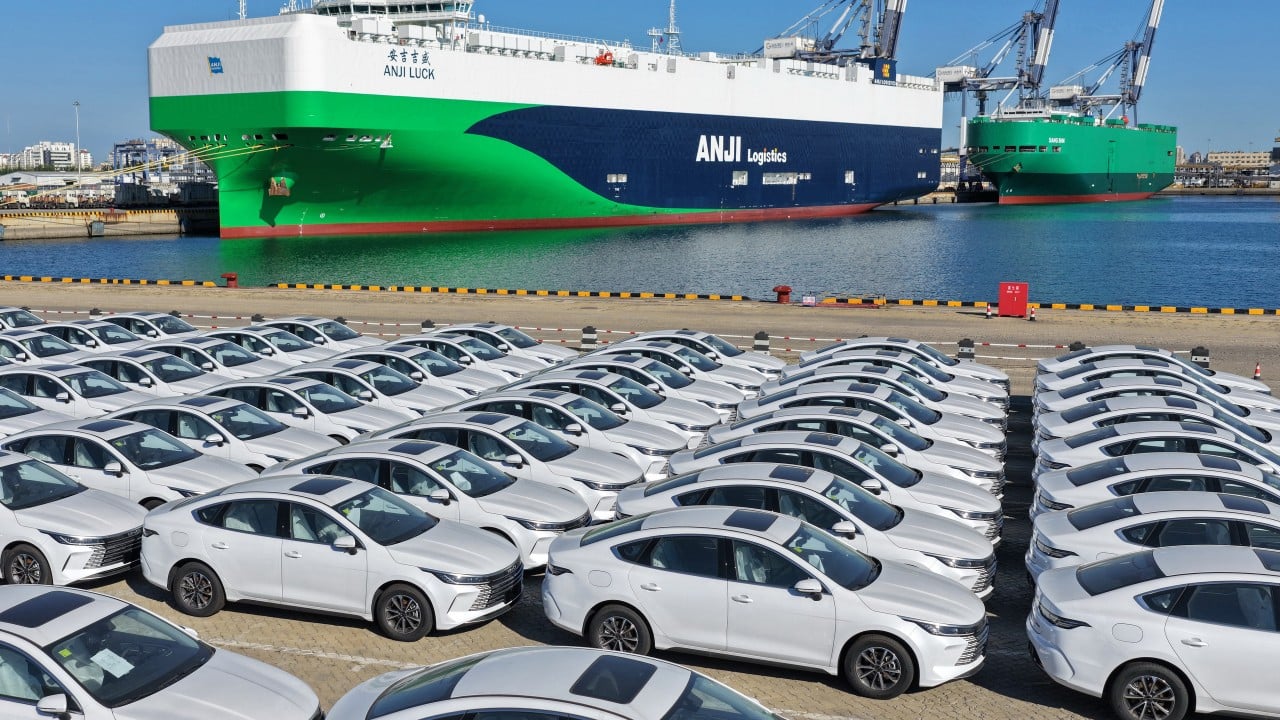
The American automotive establishment is currently treating the electric vehicle transition like a siege defense, pulling up the drawbridge and stacking 100 percent tariffs against the horizon. The argument from trade analysts and policy shops often frames the dilemma as a simple binary choice: either we welcome wholesale restrictions on Chinese electric vehicles to save domestic manufacturing, or we watch Detroit get flattened by state-subsidized imports. But this framing misses the structural rot eating away at the heart of Western industrial strategy. The debate over lifting wholesale barriers on Chinese electric cars is not really about trade equity. It is a reckoning over our own industrial complacency.
Look at the underlying mechanics. Decades of heavy state capital injection, hyper-optimized supply chains for critical minerals, and relentless vertical integration have given Chinese automakers an insurmountable lead in cost and scale. When a manufacturer can reliably turn out competent, feature-rich battery electric vehicles at a fraction of Western production costs, protectionism stops looking like a shield and starts looking like an oxygen mask for uncompetitive boardrooms. By keeping these vehicles out of domestic showrooms through prohibitive duties and stringent national security regulations, policymakers are effectively insulating legacy automakers from the exact market pressures required to force genuine innovation. For a closer look into similar topics, we suggest: this related article.
The dirty secret of the American EV market is affordability. Or rather, the total lack of it. While executives in Detroit spent the past five years chasing high-margin, three-row electric luxury tanks that require massive battery packs and cost upwards of sixty grand, the rest of the car-buying public found themselves priced out. Consumers want reliable, inexpensive personal transport. Instead, they are handed a market dictated by corporate margin protection and inflated sticker prices. When trade experts argue that we must maintain strict exclusionary policies to protect domestic jobs, they are papering over a deeper failure. We have regulated and tariffed our way into a corner where ordinary citizens cannot afford the mandatory green transition they are legally expected to make.
There is, ofered as an alternative by some pragmatic trade scholars, the path of conditional domestic production. The logic goes that if Chinese automotive giants want access to the North American consumer base, they should be forced to build factories on domestic soil, employ local union labor, and transfer manufacturing know-how. It sounds like a clever compromise. It echoes the historical playbook used to manage Japanese automakers in the nineteen-eighties. For additional details on the matter, in-depth reporting can be read at MarketWatch.
Yet this approach underestimates the velocity of the current industrial shift. Foreign manufacturing plants operating within our borders do not magically solve the cost disease plaguing domestic supply chains. If our tier-one suppliers are bogged down by archaic labor practices, high overhead, and a lagging battery material refining sector, transplanting an assembly line does not bridge the efficiency gap. It merely masks it behind a local zip code.
Furthermore, the geopolitical anxiety driving these barriers is entirely real, even if its economic remedies are flawed. Modern electric vehicles are essentially computers on wheels, bristling with sensors, cameras, and constant data-connection streams. Allowing a geopolitical rival unfettered access to domestic telemetry infrastructure presents a legitimate intelligence headache. But we must be honest about the trade-offs. We are using national security as a catch-all justification to paper over industrial unreadiness.
Consider a hypothetical scenario. Suppose Washington suddenly dropped all import restrictions tomorrow morning. Dealership lots would flood with agile, technologically dense electric hatchbacks retailing for under twenty thousand dollars. Carbon reduction targets would accelerate past every political milestone. At the same time, the shockwave would instantly threaten hundreds of thousands of legacy manufacturing jobs, rippling through union halls and supplier networks that have not modernized fast enough to weather an open-market gale. That is the bind. The wall protects us from immediate economic trauma while guaranteeing long-term irrelevance.
The rest of the world is not waiting around for the United States to resolve its identity crisis. Markets across Southeast Asia, Latin America, and parts of Europe are already absorbing millions of these export units, building out charging ecosystems, and establishing new trade loyalties that do not feature Detroit or Silicon Valley. By barricading ourselves behind a wall of tariffs, we risk becoming an isolated automotive backwater, driving expensive, domestically assembled combustion engines and overpriced compliance cars while the global transit grid modernizes around us.
The question facing industry analysts is not whether we should dismantle wholesale restrictions today or tomorrow. The real question is whether our domestic manufacturing sector can survive its own protection. As long as trade barriers serve as an excuse to avoid building cheap, mass-market electric vehicles, the tariff wall remains nothing more than a monument to our own decline.