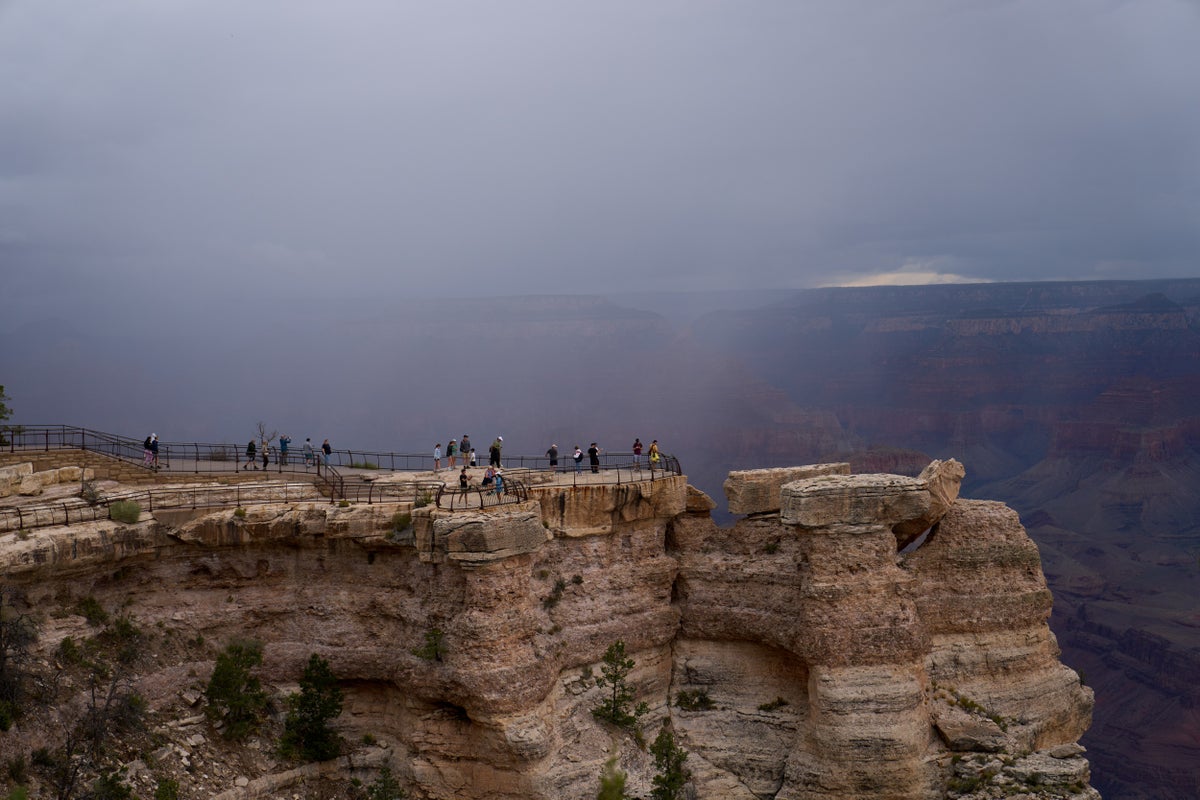
The Grand Canyon flash flood disaster that struck Bright Angel Canyon and Phantom Ranch caught dozens of backpackers off guard when a dry, scorching afternoon abruptly turned into a violent torrent, stranding hikers and destroying vital infrastructure. When a microburst slammed into the inner corridor, it generated a four-foot wall of muddy debris that forced experienced medical professionals and tourists alike to flee off-trail, scrambling through dense patches of cacti and scaling steep slopes to survive. Two hikers lost their lives in the deluge, and emergency rescue teams evacuated over eighty people via helicopter as historic monsoon rains ravaged the canyon floor.
Grand Canyon flash floods are a known seasonal hazard during the Southwest monsoon window, but the late-August event displayed an unusual combination of velocity and structural devastation. Historic footbridges crossing Bright Angel Creek were completely obliterated, cutting off pedestrian escape routes and trapping hikers between rising waters and unstable canyon walls.
The Anatomy of an Inner Canyon Microburst
Weather patterns in the abyss of the Grand Canyon operate under brutal physics. On the day of the disaster, many backpackers heading down the North Kaibab Trail checked forecasts anticipating standard high temperatures rather than catastrophic rainfall. Yet, narrow gorges like "The Box" act as natural funnels for severe weather.
When a microburst hits, high-velocity winds push massive volumes of water into narrow drainage basins within minutes. Because the surrounding terrain features hard rock and sparse soil, precipitation cannot absorb efficiently. Instead, it sheets directly off the canyon walls.
The result is an instant wall of water carrying boulders, uprooted cottonwood trees, and heavy sediment. Hikers caught in these corridors face a terrifying calculus. There is no shoulder to walk on, and climbing the vertical walls is nearly impossible.
The Human Cost and Heroic Rescues
Among those caught in the maelstrom was a group of emergency room physicians on a backcountry trek. Relying on their training to assess rapidly shifting dangers, they realized that staying put meant facing dual threats of crushing debris flows from the creek and lightning strikes from above. When a four-foot debris surge roared down the path, a frantic order echoed through the group to move upward immediately.
They plunged off the trail and scrambled straight through sharp desert cacti, trading lacerations for survival as the torrent swept through the path they had occupied seconds prior. Other groups huddled beneath rock overhangs while football-sized boulders rained down from the cliffs above.
Park rangers stationed at Phantom Ranch coordinated rapid shelter-in-place protocols and moved vulnerable visitors to higher ground before the main bridges failed. These swift actions prevented an even higher casualty count, though subsequent weather bands delayed helicopter extractions as low-hanging clouds and rolling rain bands locked down the South Rim.
Infrastructure Collapse and the Road to Recovery
The physical toll on the park is staggering. Essential footbridges, water utility lines, and campground facilities along Bright Angel Creek suffered catastrophic damage. The National Park Service closed Phantom Ranch, Bright Angel Campground, and the entire North Kaibab Trail indefinitely. Furthermore, debris entering the Colorado River forced a temporary shutdown of commercial and private river trips.
Rebuilding inner canyon infrastructure requires navigating extreme logistical hurdles where heavy machinery cannot easily tread. Every pound of building material must either be flown in by helicopter or packed down narrow mule corridors.
As climate patterns shift and extreme weather events become more erratic across the American Southwest, backcountry safety protocols are facing heavy scrutiny. Hikers entering deep canyon systems during monsoon months must reckon with the reality that standard forecasts can fail entirely when local topography supercharges a storm. The water rises faster than human speed, leaving raw instinct and immediate elevation gain as the only margins for survival.
Dozens of hikers rescued from flood-hit Grand Canyon
This video footage captures the scale of the emergency response and the structural damage left behind by the flash floods in the Grand Canyon.
:max_bytes(150000):strip_icc()/moscow-kremlin-and-st-basil-cathedral-at-dusk-158200423-5a64f4594e46ba00377331fb.jpg)

