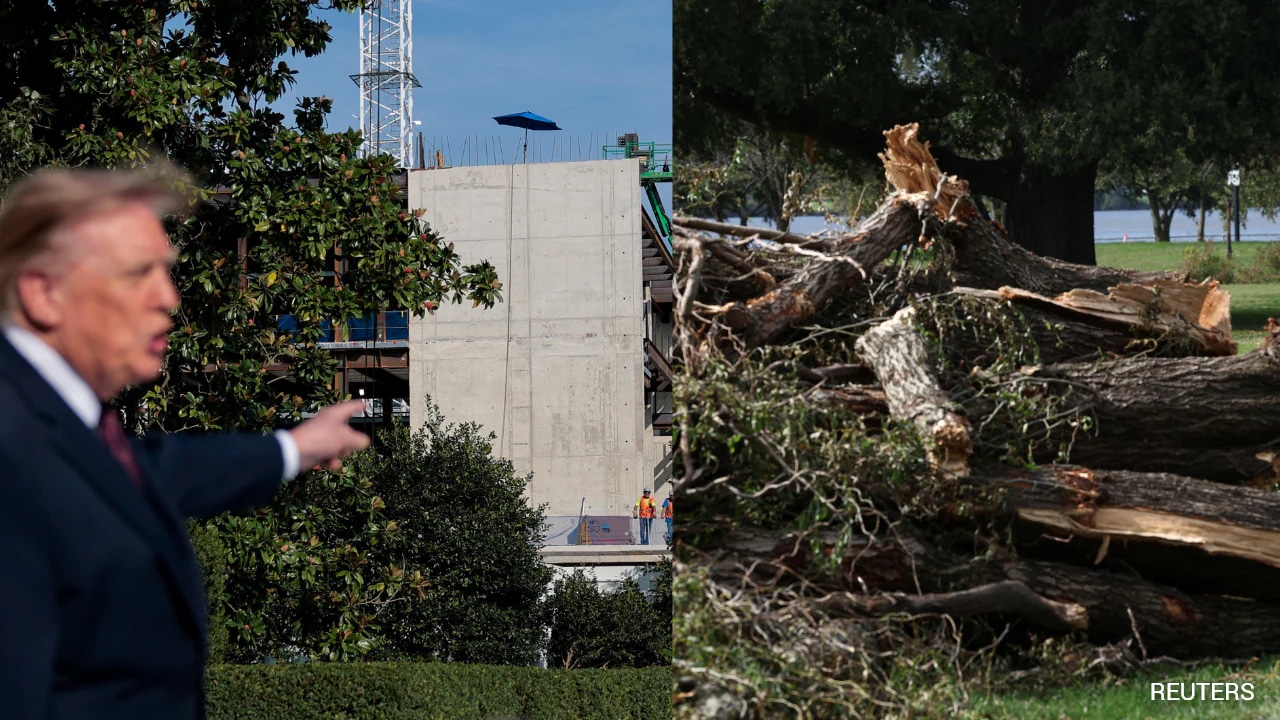
A federal judge extended restrictions on a Donald Trump golf course project after roughly 400 trees were cut down, turning a routine land-clearing dispute into an acute courtroom test of judicial authority and environmental compliance. When heavy equipment fells hundreds of mature trees before a court has finished weighing the legal boundaries of a disputed site, the conflict shifts immediately from paperwork to irreversible physical change. A felled tree cannot be un-cut while lawyers argue over briefs. That single reality explains why judges tighten temporary curbs when clearing happens faster than litigation.
Land conflicts involving high-profile developers rarely stay quiet for long. They pull in local officials, environmental watchdogs, adjacent property owners, and federal courts that must decide whether normal construction rules apply or whether extraordinary intervention is required to preserve the status quo. In cases centered on a golf course project, the stakes go far beyond greens, bunkers, and clubhouses. Topography changes. Drainage shifts. Habitats fragment. Once those alterations happen on the ground, restoring the exact pre-clearing condition becomes expensive, slow, or impossible.
From years of watching land-use battles play out in courtrooms and municipal chambers, one pattern stands out above all others. Disputes over tree cutting almost always expose a timing gap between physical action and legal review. Developers operate on tight seasonal windows, equipment schedules, and financing timelines. Courts operate on motions, evidentiary hearings, and written orders. When those two clocks collide on a parcel tied to Trump, the tension becomes front-page news within hours.
Why 400 Felled Trees Change the Courtroom Calculus
A federal judge weighing an injunction or temporary restraining order looks at several core questions, starting with whether the disputed action threatens irreparable harm. Cutting down around 400 trees hits that standard with unmistakable force. Unlike a delayed permit or a disputed contract clause, clearing a stand of timber alters the landscape immediately, affecting shade, soil stability, visual buffers, and wildlife movement before a final ruling on the merits ever arrives.
Courts also watch closely for status quo erosion. A restraining order or preliminary curb exists to hold the board steady until both sides have a fair chance to present evidence. If clearing continues—or happens right on the edge of a court's review—a judge may view tighter restrictions as the only practical way to prevent facts on the ground from racing ahead of the law. Even when a developer argues that work falls within permitted rights, judges often prefer to pause activity temporarily rather than risk an irreversible mistake.
Consider a hypothetical example to see how these pressures collide. Suppose a developer holds a general grading allowance for one corner of a property while neighbors and regulators dispute whether a neighboring wooded strip requires separate environmental review. If crews clear 400 trees across the contested edge over a single stretch of days, the opposing side argues that the dispute is already half-decided by chainsaw. A judge looking at that record faces a stark choice: allow further clearing and risk permanent damage if the challengers ultimately prevail, or extend curbs to freeze the site until the legal questions are resolved.
That dynamic helps explain why court restrictions often tighten after a major clearing event rather than loosening. Once timber is down, trust between the parties usually drops to zero. Opponents allege bad faith or overreach. Project backers counter that they acted within legal bounds or needed to clear hazards and prepare terrain. Either way, the judge is left managing a hotter dispute with less room for error.
The Hidden Mechanics of Site Clearing and Land Disputes
To understand how a golf course project reaches this kind of flashpoint, you have to look past the glossy renderings and examine what happens during early site preparation. Building a golf course requires reshaping large swaths of land to create sightlines, fairways, water features, and turf conditions. Trees shape every part of that design. Some are removed to open views or allow sunlight onto playing surfaces; others are kept for framing or screening.
Clearing hundreds of trees is rarely just a single afternoon of work. It involves planning access routes, staging heavy machinery, managing debris, handling erosion controls, and navigating overlapping rules from local zoning boards, state agencies, and federal authorities depending on the property's location and features. Any ambiguity over permit boundaries, wetland buffers, protected species, or municipal conditions can turn routine clearing into a legal violation claim overnight.
Where Permit Rules and Property Lines Collide
Land-use disputes frequently turn on technical lines that look simple on a map and messy in the woods. A property line may be clear on a survey, yet field crews working off rough instructions or shifting terrain can cross into restricted buffers or unapproved zones. Even when crews stay strictly inside legal boundaries, critics often challenge whether existing approvals actually cover large-scale tree removal tied to a new recreational layout.
- Scope of existing approvals: A general land-clearing or agricultural allowance does not always cover every phase of a commercial or recreational buildout.
- Buffer and setback rules: Streams, wetlands, steep slopes, and neighboring parcels frequently carry strict limits on vegetation removal.
- Documentation and notice: Disputes often flare over whether required notices, surveys, or environmental checks were completed before work began.
- Enforcement speed: Regulators and courts may act slowly before clearing starts, then move sharply once visible damage occurs.
In high-profile disputes linked to Trump, every procedural detail gets magnified. Opponents scrutinize every filing and every stump. Project defenders argue that critics use litigation and court curbs as leverage to stall legitimate development. Both claims point to a real feature of modern land law: complex permitting regimes create plenty of room for sharp disagreement long before a final judgment is entered.
The Ecological and Practical Toll of Mass Tree Removal
Removing around 400 trees does more than change how a parcel looks from the road. Mature trees intercept rainfall, anchor root systems, moderate local temperatures, and provide cover and foraging space for birds and small mammals. Clear a dense patch quickly, and runoff can increase during heavy rain, carrying sediment toward nearby drainage paths or waterways.
From a project-management standpoint, abrupt court curbs after heavy clearing create headaches of their own. Equipment sits idle. Schedules slip. Contractors face uncertainty over what can be moved, stabilized, or maintained while restrictions remain in force. That is one of the quiet ironies of aggressive early site work: moving fast before legal dust settles can trigger a freeze that costs far more time than waiting for clearer ground rules.
What Overlooked Factors Shape High-Profile Land Battles
Coverage of a federal judge extending curbs after hundreds of trees are cut usually focuses on the immediate clash between a famous name and environmental or legal challengers. That framing captures the drama, yet it misses several practical forces that drive these cases behind the scenes.
First, local politics almost always runs underneath the federal docket. A golf course or resort expansion touches tax expectations, neighborhood character, traffic, noise, and environmental values all at once. Residents who live near the property experience the change daily, not as an abstract policy debate, and their pushback frequently fuels the legal challenges that land in federal court.
Second, remediation is rarely simple. Planting young saplings is not the same as replacing mature trees that took decades to grow. Soil compaction from heavy machinery, altered drainage patterns, and sun exposure on newly opened ground can make regrowth uneven or slow. When challengers ask a court for tough remedies, they often argue that money or future planting cannot fully undo what was lost.
Third, judicial caution cuts both ways. Federal judges are reluctant to micromanage private land development without a clear legal basis, yet they are equally reluctant to let a party render a pending case moot through rapid physical changes. Extending curbs is often a middle-path move—a way to buy time for proper legal review without issuing a final ruling on every underlying issue.
| Dimension | Developer Position | Challenger & Court Focus |
|---|---|---|
| Pace of Work | Wants to clear and prep land while schedules and weather allow | Wants activity paused until legal and permit disputes are resolved |
| View of Tree Removal | Frames clearing as routine site prep or permitted land management | Views 400 felled trees as immediate, hard-to-reverse change |
| Legal Standard | Emphasizes property rights, existing permissions, and burden on owner | Emphasizes irreparable harm, status quo preservation, and compliance |
| Risk Concern | Costly delays, idle gear, and perceived political or legal headwinds | Permanent habitat, drainage, or visual loss before ruling is final |
None of these positions is purely black-and-white in practice. A landowner can have valid commercial reasons to prepare a site while still misjudging the legal exposure of clearing hundreds of trees mid-dispute. Conversely, challengers can raise genuine environmental and legal questions while still using court orders aggressively to slow a project down. Recognizing those gray areas keeps the analysis grounded in how land disputes actually work rather than treating every filing as a settled verdict.
How to Read the Next Chapter of the Dispute
When a federal judge extends restrictions following a large tree-clearing episode, the real story moves to the specific wording of the court order and the next evidentiary deadlines. Broad headlines tell you the curb was extended; the docket tells you what is actually frozen, what routine maintenance or safety work—if any—is allowed, and what timeline the court has set for full arguments.
Watch three concrete markers as the case unfolds. Look at whether the order hinges on procedural compliance (such as missing approvals or contested scope) or broader substantive claims about environmental impact. Look at how much physical work had already occurred before the curb tightened. And look at whether the parties begin negotiating enforceable boundaries or prepare for a prolonged battle over injunctions and appeals.
In disputes where 400 trees are already on the ground and a federal judge steps in to tighten the reins, the clock no longer belongs to the bulldozers alone. Check the court's next order and filing deadlines first, because the exact terms of that restriction—not the noise around it—will dictate what happens next on the land.


