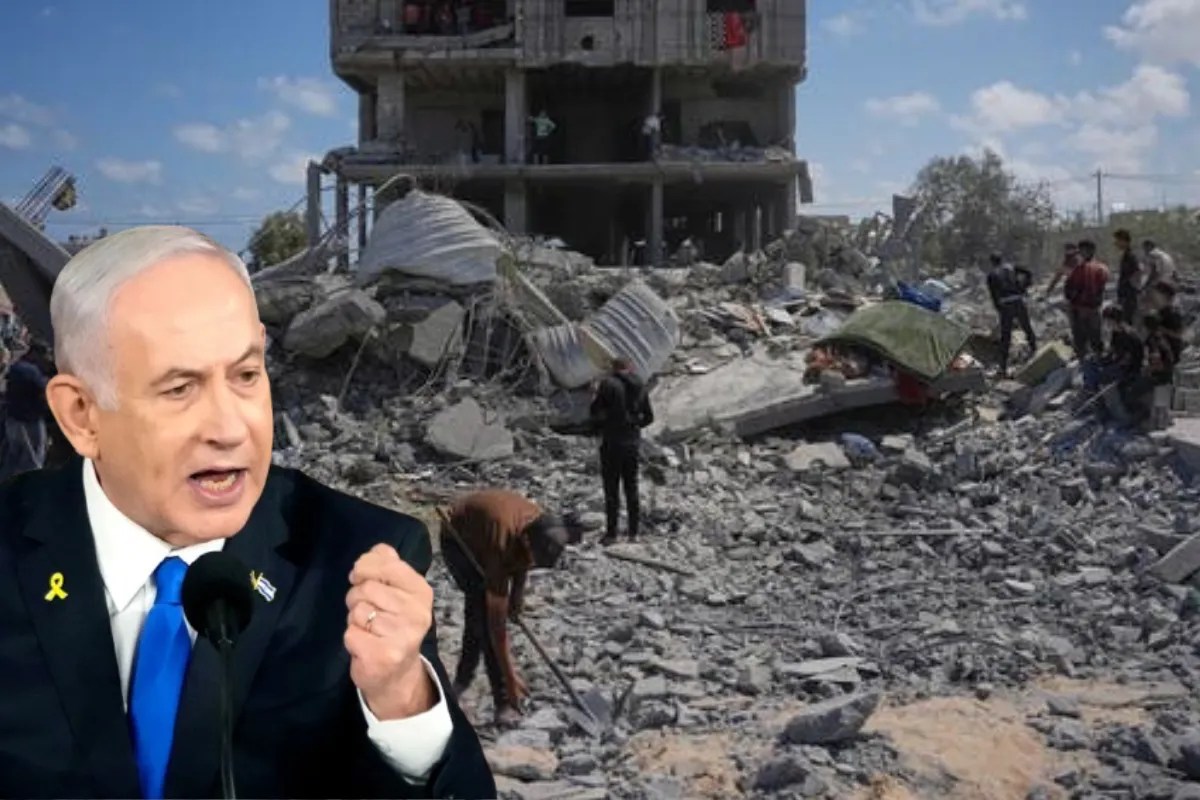
The airstrike was over in seconds. The strategic fallout will reverberate for months. When the Israel Defense Forces targeted and eliminated a senior Hamas commander during a recent high-intensity operation in Gaza, the immediate news cycle focused heavily on the casualty counts and the tactical execution. Yet, looking only at the flashpoint misses the grinding, multi-layered machinery that dictates modern urban warfare in the region.
Military analysts often talk about intelligence gathering as if it were a clean science. It is not. It is a messy, continuous accumulation of signals intercepts, human sources, digital footprints, and geospatial tracking that must be verified under extreme pressure. The operation that neutralized the Hamas commander represents a specific shift in doctrine. The military establishment has moved away from broad, sweeping engagements toward hyper-targeted, intelligence-led strikes designed to disrupt command and control structures without triggering a wider regional collapse. Or at least, that is the theory.
The reality on the ground is far more complicated.
The Anatomy of an Urban Target Package
Building a target package in a dense urban environment like Gaza requires an astonishing amount of computational power and human analysis. Every high-ranking militant operates within a security protocol designed to evade surveillance. They utilize analog communication methods, change locations frequently, and rely on civilian infrastructure as a protective shield.
Breaking through those layers demands patience. Intelligence units track a subject for weeks, sometimes months, mapping daily routines, communication patterns, and logistical dependencies. When an air strike finally occurs, it is rarely a spur-of-the-moment decision. It is the culmination of an approval chain that weighs military necessity against collateral risk, international legal frameworks, and political optics.
Critics argue that the collateral damage inherent in these urban operations outweighs any tactical gain. Human rights organizations point to the destruction of civilian neighborhoods and the displacement of families as evidence of disproportionate force. From this perspective, killing a commander does little to dismantle an entrenched political and militant movement; instead, it deepens resentment, radicalizes a new generation, and hardens ideological lines on both sides.
The Doctrine of Deterrence and Its Limits
For the Israeli security establishment, the primary justification for targeted assassinations remains deterrence. The calculation rests on a specific premise. If leadership figures are perpetually vulnerable, the operational capacity of the organization degrades, and the cost of planning attacks becomes prohibitively high.
History provides a mixed verdict on this strategy. Decades of targeted killings have repeatedly disrupted militant networks, temporarily stalling operations and forcing commanders into deep hiding. Yet, organizations like Hamas have proven remarkably resilient. When one leader falls, a successor steps into the vacancy, often younger, more radical, and less predictable than the predecessor.
The institutional memory of the organization adapts. Standard operating procedures are rewritten. Security protocols tighten. The continuous cycle of elimination and replacement creates an endless loop of escalation where tactical victories rarely translate into strategic resolution.
The Regional Chessboard
No military operation in Gaza happens in a vacuum. Every strike is weighed in capitals across the Middle East, from Cairo to Tehran.
Regional actors monitor these developments with acute anxiety. For neighboring states like Egypt and Jordan, an escalating conflict on their borders threatens internal stability, economic health, and security cooperation. For Iran and its network of regional proxies, the ongoing violence serves as a pressure valve, testing the limits of Israeli endurance and keeping the Palestinian issue at the forefront of regional geopolitics.
International diplomacy operates in the shadow of these military realities. Ceasefire negotiations unfold in luxury hotels, mediated by foreign diplomats who shuttle between opposing camps while the ground situation deteriorates further. These talks typically founder on the same core contradictions. One side demands a permanent cessation of hostilities and a lifting of the blockade; the other insists on total demilitarization and the complete dismantling of militant infrastructure as an absolute prerequisite.
The Human Cost Behind the Headlines
Behind the strategic abstractions and military jargon lie millions of ordinary people caught in the crossfire. The daily struggle for survival in Gaza is defined by collapsing infrastructure, severe shortages of clean water, medical supplies, and electricity, and the psychological trauma of continuous bombardment.
Children grow up knowing the distinct acoustic signature of incoming drones and artillery shells. Families are forced to move repeatedly, seeking shelter in overcrowded schools or makeshift camps that offer little protection from the elements or the violence.
International humanitarian law places strict obligations on warring parties to protect civilians and ensure access to aid. Yet, in the chaos of urban warfare, these legal protections are routinely strained to their breaking point. Aid convoys face bureaucratic delays, security risks, and logistical bottlenecks, leaving populations on the brink of severe humanitarian catastrophe.
The Long-Term Horizon
The elimination of a single commander makes for compelling headlines, but it changes little about the underlying structural reality. The fundamental questions remain unanswered. How can security be achieved for one population without denying basic rights and sovereignty to the other? Can deterrence ever substitute for a sustainable political horizon?
As the smoke clears from the latest strike, the machinery of war resets. Intelligence analysts return to their screens. Command centers review the footage. Militant cells begin the process of reorganization and succession. The cycle continues, bound by historical grievances, tactical imperatives, and a tragic absence of political imagination.