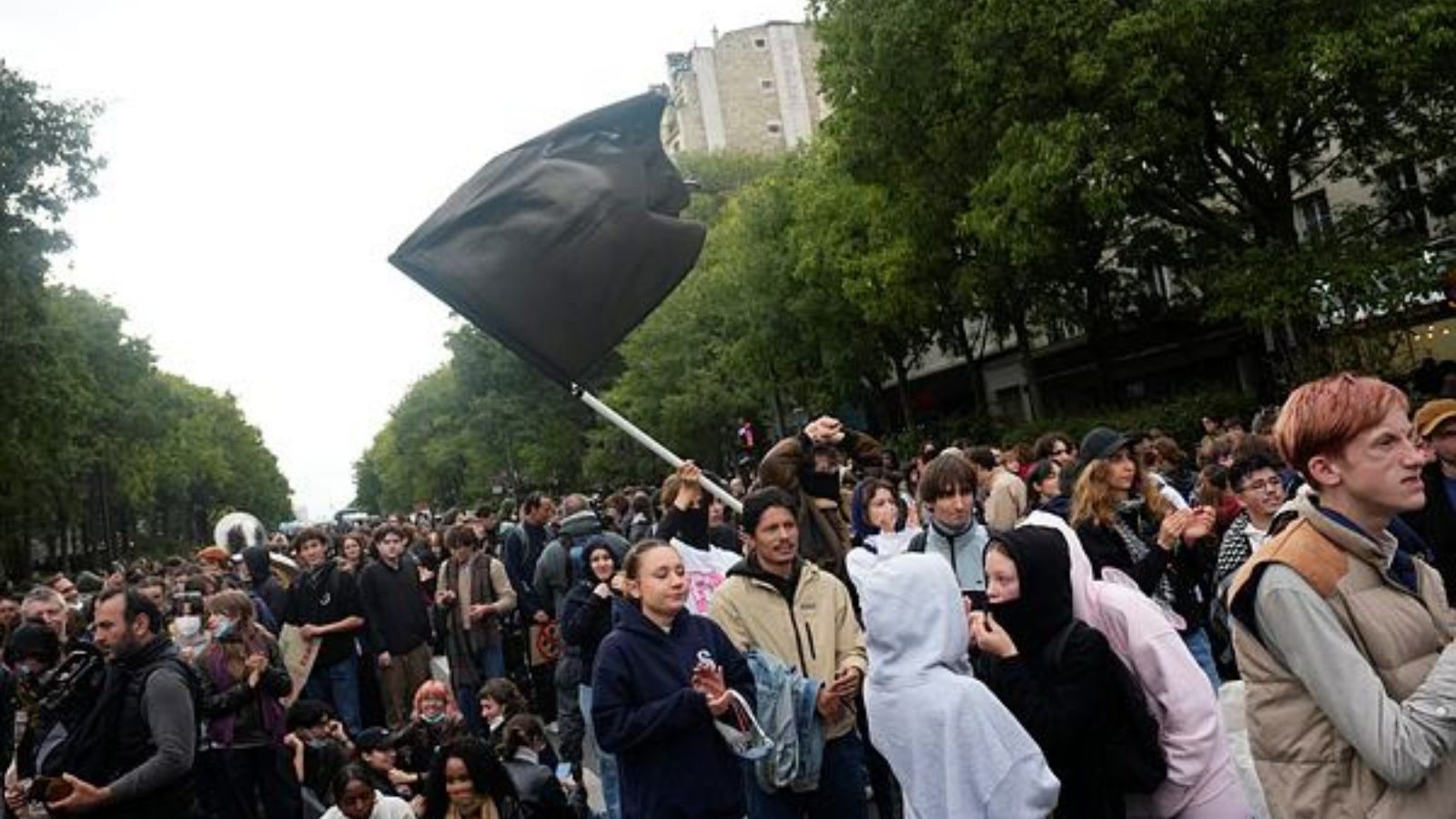
Mass France protests have drawn headlines over roughly 2,700 detentions within a single week and President Emmanuel Macron pointing fingers at Donald Trump, yet the real story runs far deeper than diplomatic blame or arrest tallies. Street unrest in France rarely sparks out of thin air. When thousands of people pour onto boulevards and force interior ministries into high-gear crowd control, domestic friction around living costs, labor rules, policing methods, and executive authority is already boiling underneath. Treating a sharp diplomatic jab or a weekly detention count as the whole explanation misses the machinery driving the conflict on both sides of the Atlantic.
I have covered European political crises and street movements long enough to recognize a familiar reflex. When pressure builds inside a capital, leaders reach for external villains while protesters reach for whatever symbols cut sharpest. Blaming foreign rhetoric makes for instant cable news and social media clips. It also lets domestic actors dodge uncomfortable questions about why so many citizens feel shut out of policy decisions in the first place.
Why Arrest Numbers and Blame Games Rarely Tell the Whole Story
Numbers like 2,700 detentions over seven days sound decisive on paper. In practice, a weekly arrest figure is a blunt instrument that flattens very different realities into one headline stat. Some detentions happen during heated clashes near government buildings or transit hubs. Others involve preventative sweeps, identity checks, or minor infractions during dispersed evening marches. Without knowing how many lead to charges, dismissals, or court appearances, a raw detention tally measures police tempo more than it measures the true scale or intent of a movement.
Public blame between senior leaders adds another layer of noise. When French leadership points toward Washington or American political figures trade barbs back, observers get an easy villain to argue over. Yet foreign commentary rarely creates domestic grievances from scratch. If underlying economic strain, stagnant real wages, or frustration with top-down decrees were not already present, outside remarks would bounce off the pavement like rain.
Foreign commentary can inflame a mood or supply slogans, but homegrown pressure is what puts boots on the cobblestones.
✨ Don't miss: The Myth of the Gilgit Baltistan Information Vacuum
Consider a hypothetical example to see how easily the signal gets lost. Suppose a municipal transport strike overlaps with rising heating bills, and a small fraction of marchers clashes with riot police outside a ministry. A foreign politician posts an inflammatory remark online, and the French presidency fires back publicly. For the next forty-eight hours, coverage centers on the diplomatic feud and the latest arrest count, while the core dispute over household budgets and pension or workplace rules fades into the background.
The Domestic Fault Lines Behind Street Unrest
France has a long, unmistakable history of resolving political tension in the streets rather than waiting quietly for the next election cycle. Across decades and across administrations—left, right, and centrist—crowds have treated strikes, blockades, and marches as legitimate tools of pressure when formal channels feel unresponsive. That habit is not a sign that French society is uniquely chaotic. It reflects a political culture where direct confrontation has repeatedly forced concessions that polite petitions could not win.
Several structural pressures tend to converge during major France protests:
- Cost-of-living squeeze: When groceries, fuel, housing, and utilities eat up a larger share of monthly paychecks, even modest policy shifts feel threatening to working and middle-class households.
- Executive concentration: France's Fifth Republic gives strong authority to the president and executive branch, which can speed up legislation while fueling resentment among citizens who feel bypassed.
- Policing and crowd control: Heavy deployments, containment tactics, and clashes between demonstrators and security forces can turn a grievance rally into a test of state authority itself.
- Fragmented representation: When traditional unions, parties, and grassroots groups pull in different directions, protests can become harder to negotiate with—and harder to contain.
None of these factors operates in isolation. High prices sting harder when workers feel they have no say over tax or labor changes. Tough policing feels more provocative when marchers already believe the government is ignoring them. Over time, the manner of the clash can overshadow the original demand, turning every evening into a fresh standoff.
Transatlantic Politics as a Mirror Rather Than a Cause
When Emmanuel Macron points at Donald Trump—or when American political figures weigh in on French turmoil—both sides are usually speaking to audiences far beyond diplomatic protocol. Transatlantic politics has become tightly entangled with domestic identity and cultural debates. Leaders on both sides know how to turn a rival's style, rhetoric, or political movement into a shorthand warning for voters at home.
That dynamic cuts both ways. Critics of Macron often view his governance style as technocratic or overly centralized, while his supporters frame him as a defender of democratic norms and institutional stability against populist disruption. Meanwhile, Trump's political brand thrives on challenging established institutions and speaking bluntly about disorder and elites. Invoking him in the middle of street unrest lets French officials cast domestic opposition or foreign criticism as part of a broader populist wave, even when demonstrators on the ground have wildly different motives.
What gets overlooked in that exchange is how messy real street movements actually are. Crowds in Paris, Lyon, Marseille, or smaller regional towns are rarely unified ideological blocs taking cues from a single foreign voice. A single march might include union members protecting benefits, students worried about tuition and jobs, local residents upset about municipal services, and small groups looking for confrontation. Projecting a neat transatlantic storyline onto a sprawling crowd makes for tidy commentary, not accurate analysis.
Crowd Dynamics, Policing, and the Escalation Trap
Street protests follow an escalation loop that seasoned observers see again and again. A demonstration starts with a clear focal point—a bill, a price hike, a labor rule, or a local grievance. Security forces deploy to protect key sites and keep traffic moving. Friction builds at perimeters, tear gas or batons come out, or objects are thrown, and suddenly the story shifts from the original policy to street violence and arrests.
Once that shift happens, both sides face a trap. Governments risk looking weak if they pull back immediately after disorder, yet heavy-handed crackdowns can radicalize bystanders and draw wider sympathy toward protesters. At the same time, peaceful marchers often find their message drowned out by images of burning barricades and sirens, while aggressive fringe actors gain outsized visibility.
| Analytical Lens | What It Highlights | What It Can Miss |
|---|---|---|
| Weekly detention totals | Short-term scale of police operations and arrests | Legal outcomes, peaceful marches, and root grievances |
| Executive blame and diplomacy | Political framing and transatlantic messaging | Local economic pain and grassroots organization |
| Street-level economics and politics | Underlying pressures driving sustained anger | Immediate tactical triggers on the ground |
No single lens gives complete clarity on its own. Looking strictly at arrest numbers misses why people showed up. Looking strictly at presidential rhetoric misses what happens at the street corner when night falls. A serious assessment has to hold both the macro politics and the gritty street reality in view at once.
Gray Areas Where Easy Answers Fall Short
Anyone claiming a simple fix for recurrent France protests is selling an illusion. Governing a major European economy under tight fiscal constraints while keeping public trust intact is genuinely hard. If a government spends freely to calm streets today, it risks wider deficits, higher borrowing costs, or heavier taxes tomorrow. If it pushes unpopular reforms through anyway, it invites strikes, blockades, and months of political drag.
Policing presents a similar bind. Authorities have a real duty to protect people, public transit, and property from damage and violence. Yet aggressive tactics or broad detentions can inflame tensions, invite scrutiny over civil liberties, and leave lasting scars between communities and the state. Finding the line between firm order and proportionate restraint is easy to preach from afar and notoriously difficult to execute in the middle of a chaotic night.
Even the role of external voices resists neat verdicts. Public figures in democratic countries will keep commenting on events abroad, especially when allies face major domestic turbulence. Calling out rhetoric that seems unhelpful or inflammatory is part of political debate, yet treating outside remarks as the primary engine of unrest lets domestic policymakers off the hook too easily.
What Observers Should Watch Next
To cut through future headlines around France protests, skip the loudest soundbites first and look for concrete indicators. Watch whether unions and civic groups are negotiating seriously or walking away from talks, whether disruptions stay confined to specific flashpoints or spread into essential logistics and workplaces, and whether courts and prosecutors are processing detentions routinely or piling up contested cases. Most of all, watch the gap between what leaders say at the podium and what ordinary households feel at the checkout counter—because that gap is where the next wave of pressure usually starts.


