The expanded format of the tournament was supposed to bring order to global football, but instead, it has engineered a logistical and competitive nightmare that is about to push the world's elite teams to the brink. Today, Wednesday, July 1, 2026, the Round of 32 continues with a high-stakes triple-header that exposes the sheer volatility of FIFA's new 48-team bracket. England faces the Democratic Republic of the Congo in Atlanta at noon Eastern, Belgium matches up against Senegal in Seattle at 4 p.m. Eastern, and the host United States takes on Bosnia and Herzegovina in Santa Clara at 8 p.m. Eastern. What looks on paper like a straightforward set of matchups for the traditional powers is actually a minefield of travel exhaustion, tactical misalignment, and squad degradation.
The tournament bracket has evolved into a war of attrition where traditional scouting reports mean less than a team's physical recovery protocols. The addition of an extra knockout round means that any side hoping to lift the trophy on July 19 at MetLife Stadium must navigate a path that punishes dominance and rewards survival.
The Illusion of Predictability in the Expanded Bracket
Fans looking at win probabilities are missing the structural flaws of this tournament. The Opta supercomputer heavily backs England with a 73.9 percent chance of defeating DR Congo within normal time, while giving the African side just an 11.3 percent shot at an outright upset. Soccer is rarely played on spreadsheets. The reality of a 12-group opening stage is that it allowed several heavyweights to sleepwalk through June, only to wake up facing highly motivated, battle-tested underdogs that have already played every game like a final.
DR Congo entered the knockout stage after coming from behind in multiple matches during the group stage. They possess a stubborn refusal to break when under pressure. England, now under the tactical guidance of Thomas Tuchel, topped Group L but did so while exhibiting the same familiar flaws that have haunted the team for generations. A 4-2 win over Croatia and a routine 2-0 victory against Panama were offset by a turgid 0-0 draw against Ghana, a match that laid bare England's historical difficulties against aggressive, disciplined African midfields.
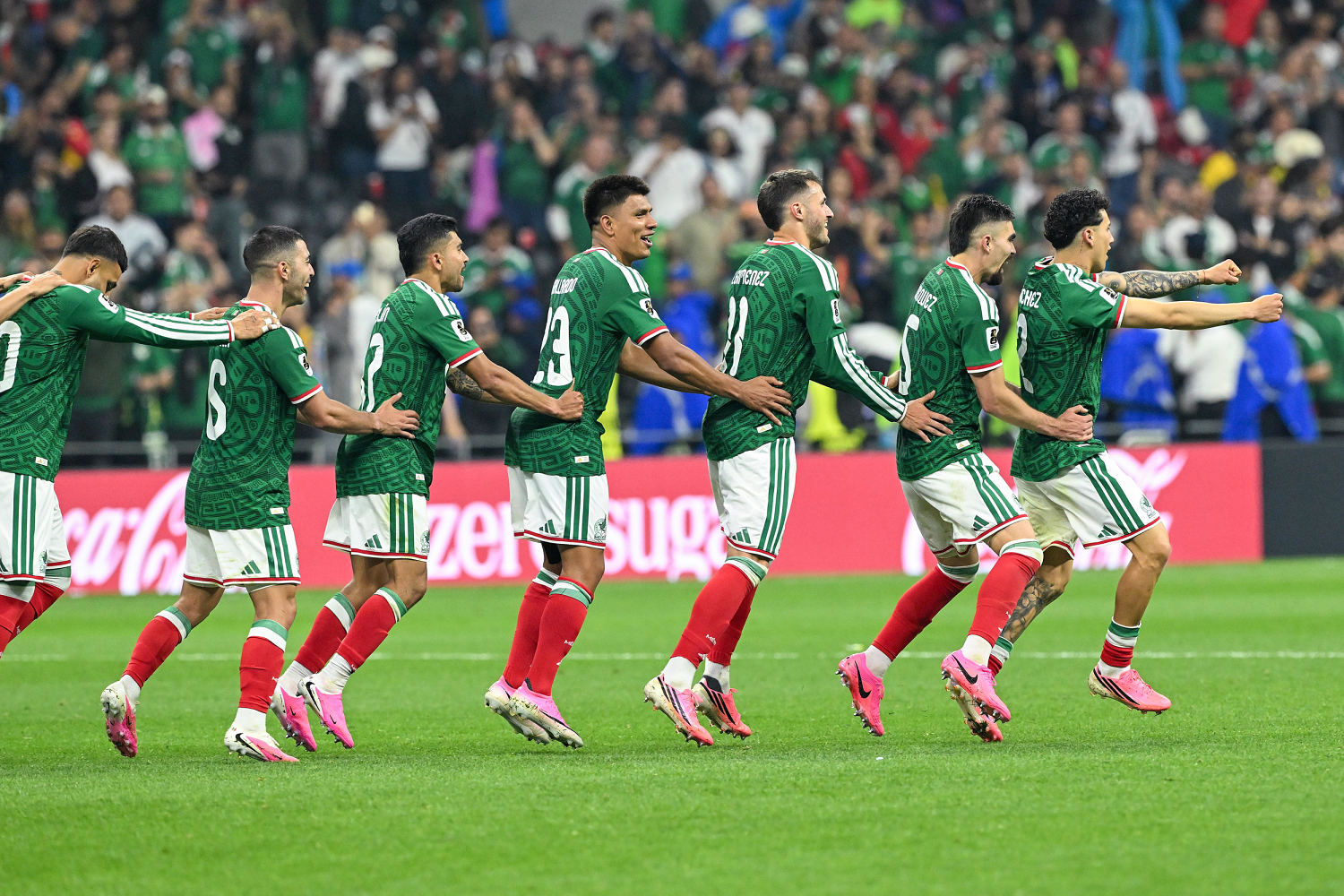
The bracket dictates that the winner of this afternoon match will immediately move on to face Mexico in the Round of 16, following El Tri's clinical 2-0 dismissal of Ecuador. For England, the pressure is structural. Failure to advance past a team making its first appearance under the DR Congo name since playing as Zaïre in 1974 would represent a sporting catastrophe in London, yet Tuchel's camp looks visibly uneasy about the quick turnaround and the heavy humidity of Georgia.
The Heavy Toll of Coast to Coast Logistics
The sheer geographic scale of this tournament has broken the traditional rhythm of international football. Teams are no longer operating out of a single, centralized base camp. They are flying thousands of miles between games, changing time zones, and adapting to radically different climates within a matter of days.
Consider the plight of Belgium and Senegal, who kick off at Lumen Field in Seattle. The Belgians arrived on the West Coast after a group stage campaign that looked thoroughly bipolar. They thrashed New Zealand 5-1 but looked completely devoid of ideas in uninspiring stalemates against Egypt and Iraq. Kevin De Bruyne and Romelu Lukaku remain the focal points of an aging generation that missed its optimal window for glory years ago, and their ability to recover between these cross-continental flights is visibly declining.
Senegal presents a brutal stylistic matchup for a fatigued European side. The Lions of Teranga possess an abundance of raw power and vertical speed, and unlike Belgium, they have recent experience navigating deep knockout runs after reaching the Round of 16 in Qatar. The winner of this clash will draw either the United States or Bosnia and Herzegovina on July 6 in Seattle. This setup ensures that whoever survives Wednesday will face an immediate, high-intensity challenge without the luxury of a prolonged training block. The logistical burden is not an administrative footnote. It is the defining tactical variable of the summer.
Tactical Vulnerability in the Middle Tier
The host nation enters the Wednesday night slot knowing exactly what lies ahead, but that knowledge brings its own brand of paralysis. The United States Men's National Team faces Bosnia and Herzegovina at Levi's Stadium in Santa Clara, California, under a cloud of immense domestic expectation. Mauricio Pochettino has guided his team to the top of Group D via a 4-1 victory over Paraguay and a 2-0 shutout of Australia, but a late 3-2 lapse against Türkiye proved that this defense remains highly susceptible to concentrated aerial pressure.
Bosnia and Herzegovina is a team that thrives in chaos. They scraped into the knockout rounds as a third-place survivor from Group B, courtesy of a gritty 3-1 victory over Qatar. They are a deeply physical, unyielding side managed by Sergej Barbarez. They possess a psychological freedom born from having absolutely nothing to lose. They reached this tournament by winning high-stress penalty shootouts against Wales and Italy in the qualification playoffs. They will actively look to drag the Americans into deep water.
The central narrative of the Bosnian threat resides in a fascinating generational divide. Striker Edin Džeko is still leading the line at 40 years old. His presence provides a stark contrast to winger Kerim Alajbegović, a player 22 years his junior who represents the future of Bosnian football. This combination of ancient tournament savvy and youthful exuberance is precisely the kind of low-block, counter-attacking formula that can frustrate a more talented American roster.
If Pochettino’s squad cannot find an early breakthrough, the match will devolve into a physical slog. The USMNT has historical scars against this type of opposition, and the memory of their 2-1 extra-time exit against Belgium in 2014 still lingers over the program. A friendly matchup three months ago in Atlanta resulted in a 5-2 blowout win for Belgium, a stark reminder of what happens when this American pool tries to play expansive football against elite European counters.
The Wednesday Survivor Guide
The tournament has reached a phase where style points are completely irrelevant. We have already seen Germany fall to Paraguay on penalties after a controversial disallowed goal, and the Netherlands get bounced by a resilient Moroccan side via a shootout in Houston. The bracket is fracturing along lines that the executives in Zurich never anticipated.
To survive the day and advance to the Round of 16, the favored nations must abandon their desire for tactical perfection and embrace a policy of aggressive game management.
- England must bypass the midfield press: Tuchel cannot afford to let DR Congo sit in a compact mid-block. England needs to utilize wide overloads early to stretch the Congolese defense before the mid-day heat drains their energy reserves.
- Belgium must manage the clock: An open, transitional match against Senegal will end in disaster for De Bruyne and Lukaku. The Belgians must use possession as a defensive tool to take the air out of the ball.
- The United States must avoid the penalty trap: Bosnia wants a slow, interrupted match that culminates in a shootout. Christian Pulisic and Folarin Balogun must use their superior quickness in the half-spaces to break the lines before Barbarez can organize his defensive bunker.
The tournament is no longer a showcase of beautiful football. It has become a brutal exercise in resource preservation, where the teams that move forward are simply the ones that manage their exhaustion better than the opposition. Watch the body language of the players in the 70th minute in Atlanta, Seattle, and Santa Clara. That is where the real stories of this World Cup will be written, far away from the idealized predictions of the supercomputers. Place your bets on the squads that can suffer without breaking.