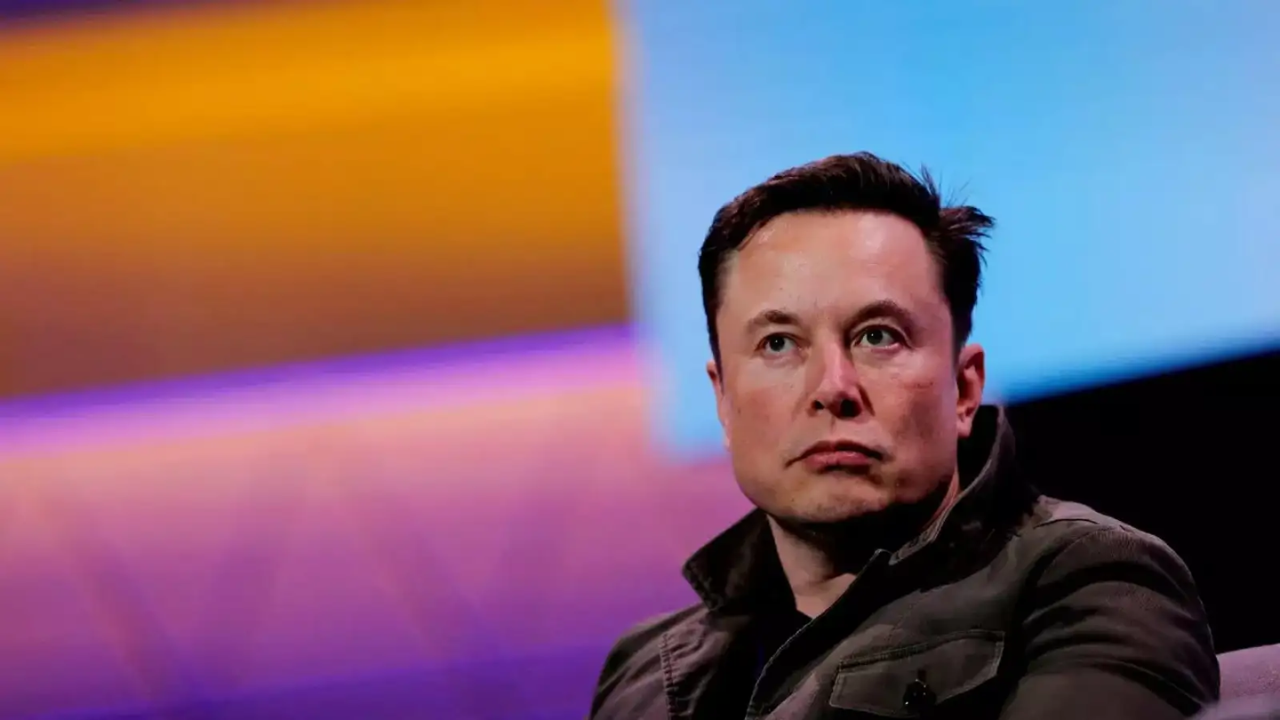
Elon Musk plans to give one personal share of SpaceX (NASDAQ: SPCX) to every child in the United States in 2027, a pledge valued at roughly $10.5 billion based on October 2026 closing prices near $146 per share. While the announcement promises free equity to roughly 72 million American minors, the math behind the gesture tells a far more calculated story. Giving away 72 million shares represents barely 1.1% of Musk's total beneficial ownership in the newly public aerospace and artificial intelligence giant, yet it arrives at a critical regulatory and market inflection point for both Wall Street and the U.S. Treasury.
The tweet itself was vintage Musk. Short. Unverified by an immediate Securities and Exchange Commission filing. Posted on October 19, 2026, just twenty-four hours after rival AI lab Anthropic announced a philanthropic pledge of 5% of its equity to a public benefit fund, Musk declared on X that he would hand over one of his SpaceX shares to every American child next year, adding that the transfer would be "the first of many". Don't miss our earlier post on this related article.
Most coverage stopped at the headline figure. They multiplied 72 million minors by the mid-October trading price of $146.03, gasped at the $10.5 billion price tag, and moved on. When you have covered corporate finance and executive compensation for decades, however, you learn to look past the top-line number and examine the plumbing. How do you actually move 72 million individual shares of a publicly traded company into the hands of minors who cannot legally sign a brokerage agreement? Why make the pledge four months after the largest initial public offering in history? And what happens to SpaceX's float, tax liabilities, and lockup schedules when a billionaire tries to turn an entire generation of children into retail shareholders?
The Math Behind the $10.5 Billion Gesture
To understand the scale of this transfer, you first have to strip away the sensationalism around the dollar figure. Ten billion dollars is an incomprehensible sum to a household budgeting for groceries, yet within the architecture of Musk's balance sheet, it is a rounding error. If you want more about the history here, Reuters Business offers an informative breakdown.
SpaceX went public on the Nasdaq Global Select Market on June 12, 2026, under the ticker SPCX. Priced at $135 a share, the offering raised roughly $75 billion before the underwriters exercised their overallotment option, vaulting the company—which now houses rocket launches, the Starlink satellite constellation, and the xAI artificial intelligence division under one roof—to a market capitalization hovering near $1.9 trillion. Following the offering and subsequent equity incentives, SEC disclosures show Musk directly holds approximately 4.77 billion shares, with total beneficial ownership reaching roughly 6.42 billion shares. That gives him 48.4% of the company's equity and, thanks to super-voting stock, 82% of its voting control.
Do the division. Subtracting 72 million shares from 6.42 billion leaves Musk with 6.348 billion shares. He retains 98.9% of his SpaceX stake. His voting grip on the company does not budge by a tenth of a percentage point.
Even the timing reveals a familiar competitive reflex. Anthropic's October 18 announcement committed 5% of company equity—plus an additional 2% for every 50% valuation gain—to public-interest initiatives addressing artificial intelligence's economic displacement. Musk, who has spent years arguing that universal high income will be necessary once automation reshapes labor markets, responded the very next morning. Instead of routing funds through a corporate foundation managed by a board of directors, he opted for direct, personal equity distribution. It is cleaner, requires zero board approval since the shares come out of his personal ledger rather than new corporate issuance, and puts the SpaceX brand directly into tens of millions of American living rooms.
Share Price Volatility and the Moving Target
Because Musk pledged a fixed number of shares rather than a fixed dollar amount, the actual value of the gift floats entirely on the whims of Nasdaq traders. SpaceX has traded like a classic momentum battleground stock since its June debut. Within three trading sessions of its $135 IPO, SPCX surged to a peak close above $201, only to plunge to an August low of $108.27 before recovering into the $137 to $147 range during October and November.
At $146 per share, 72 million shares equal $10.51 billion. If SPCX retests its August lows by the time transfers execute in 2027, the giveaway's value drops to $7.8 billion. Should Starship milestones or xAI cloud contracts push the stock back toward $200, the transfer balloons to $14.4 billion. For a parent with two children, that difference translates to roughly $216 on the low end or $400 on the high end—hardly a college fund, though an undeniable psychological hook for families who have never owned a single share of stock.
The Treasury Plumbing Making It Possible
If Musk had made this promise two years ago, Wall Street compliance officers would have laughed him out of the room. You cannot simply mail paper stock certificates to 72 million minors, nor can you open 72 million Uniform Transfers to Minors Act (UTMA) custodial accounts overnight without triggering a compliance nightmare across every clearinghouse in the country.
What changed is a little-noticed regulatory framework finalized by the U.S. Treasury Department and the Internal Revenue Service on September 30, 2026.
Under the federal Trump Accounts initiative—created via tax legislation to provide tax-deferred investment vehicles for American youth—the Treasury issued temporary regulations (TD 10056) specifically engineered to allow billionaires and corporations to donate publicly traded stock directly into children's accounts. The rules went into effect less than three weeks before Musk's post.
Here is how the mechanism works under Section 1.530A-7T of the new Treasury regulations:
- Qualified Stock Criteria. Donors can contribute shares directly if the equity is publicly traded, issued by a domestic corporation, and free of pre-existing transfer restrictions. Because SpaceX completed its IPO in June 2026, it satisfies the public-trading requirement.
- Approved Class Targeting. A donor cannot cherry-pick specific relatives or favored individuals. To qualify for favorable tax treatment, contributions must cover an "approved class" of at least 5,000 beneficiaries defined by objective geographic and birth-year criteria. Covering every minor in the United States easily clears that threshold.
- Automatic Account Enrollment. Beginning October 1, 2026, the Treasury started establishing automatic "auto accounts" for eligible children whose parents had not yet filed an election. While parents must eventually authenticate their identity and consent to tax-information sharing to claim and activate full account privileges, the federal infrastructure to hold those assets already exists on government ledgers.
- Tax-Free Receipt for Minors. Under Internal Revenue Code Section 139J, qualified general contributions made through this channel are excluded from the child's gross income when deposited. Parents do not get hit with an unexpected tax bill simply because a billionaire dropped stock into their toddler's account.
SpaceX President and Chief Operating Officer Gwynne Shotwell and her husband, Robert Shotwell, already test-drove this exact pipeline. Prior to Musk's announcement, the Shotwells pledged one SpaceX share each to more than 2 million children aged 11 to 17 living in lower-income areas, with a heavy concentration near SpaceX facilities in central Texas. Musk is effectively taking Shotwell's regional pilot program and scaling it to the entire U.S. Census youth population.
The Catch Inside the Treasury Rules
A close reading of TD 10056 exposes a critical friction point that neither Musk nor early news reports addressed. Under the underlying statute, the federal government's $1,000 seed deposit program specifically targets U.S. citizens born between January 1, 2025, and December 31, 2028. Meanwhile, Treasury's broader auto-enrollment and account rules operate around a defined growth period running through December 31 of the year a beneficiary turns 17.
Does "every kid in America" mean all 72 million residents under age 18, or strictly U.S. citizens with valid Social Security numbers who qualify for Treasury-administered Trump Accounts? Millions of children living in the United States lack citizenship or active tax identification numbers required to open federal custodial accounts. Furthermore, unclaimed "auto accounts" face strict funding limitations until a legal guardian steps forward to authenticate identity. If Musk intends to bypass Trump Accounts for older teenagers or non-citizen children, he would have to build a private brokerage distribution network from scratch—an administrative undertaking that would cost hundreds of millions of dollars in know-your-customer compliance fees alone.
Lockup Schedules and Float Dynamics
Wall Street analysts looking at Musk's pledge immediately asked a more cynical question. Is this pure philanthropy, or is it a clever way to manage supply overhang?
Every major IPO comes with lockup periods—contractual windows preventing insiders from dumping shares onto the open market immediately after listing. For SpaceX, the standard 180-day lockup governing early employees and pre-IPO investors expires on December 8, 2026. However, Musk and several top insiders are bound by a separate 366-day lockup agreement that restricts sales until roughly June 2027.
That timeline aligns suspiciously well with Musk's promise to distribute the shares "next year". Under Treasury Regulation Section 1.530A-7T(b)(8), donated stock must not be subject to pre-existing transfer restrictions at the time it is contributed. Musk literally cannot execute the transfer until his 366-day lockup expires in mid-2027 unless the IPO underwriting syndicate—led by Goldman Sachs and Morgan Stanley—grants a formal waiver.
Once those shares land in Trump Accounts, another rule kicks in. Treasury regulations mandate that donated public stock generally must be held for five years or until the end of the child's account growth period, whichever comes first.
Think about what that does to the market mechanics of SPCX.
- Zero Immediate Selling Pressure. If Musk sold 72 million shares on the open market to raise $10.5 billion in cash for a traditional charity, the sudden supply shock would depress SpaceX's stock price and erode the value of his remaining 6.35 billion shares.
- Long-Term Float Lockup. By transferring the shares directly into locked, tax-deferred youth accounts, 72 million shares are effectively removed from active daily trading for up to five years.
- Permanent Brand Loyalty. Seventy-two million American households suddenly have a direct financial stake in SpaceX's regulatory approvals, Starship launch schedules, and government defense contracts. Politicians who might otherwise scrutinize SpaceX's growing monopoly in orbital launch or satellite communications now face a voter base whose children literally own the stock.
The Tax Math Nobody Talks About
In traditional philanthropy, donating appreciated stock to a 501(c)(3) public charity allows a billionaire to deduct the fair market value of the shares against their adjusted gross income while avoiding capital gains taxes entirely.
Trump Accounts play by slightly different rules, and the tax trade-offs highlight why Musk structured this as a personal gift rather than a corporate write-off. Under Treasury's temporary regulations, charitable organizations and donor-advised funds can facilitate qualified general contributions as an exempt purpose. However, when an individual donates shares directly without routing them through a qualified charitable entity, standard federal gift tax rules and annual exclusion limits apply unless structured through a compliant charitable intermediary.
To pull off a $10.5 billion transfer without triggering a massive 40% federal gift tax bill—which would cost Musk roughly $4.2 billion out of pocket—his legal team must route the 72 million shares through a qualified charitable structure or donor-advised fund that enters into a formal Treasury acceptance agreement. That agreement requires specifying the exact funding volume, the covered class of beneficiaries, and a fixed record date.
Even then, Musk absorbs an opportunity cost. Unlike selling shares to fund personal liquidity, gifting 72 million shares permanently removes that equity from his estate. Yet for a man whose net worth sits near $900 billion following the SpaceX listing and ongoing Tesla compensation awards, sacrificing 1.2% of his net worth to cement regulatory goodwill in Washington and lock in a generation of retail shareholders is bargain-basement corporate strategy.
What Parents Should Watch For
Right now, there is no website where parents can claim a free SpaceX share, and any link promising immediate registration is an outright scam. Neither SpaceX nor Musk's family office has filed a Treasury acceptance agreement or announced a record date.
If the transfer moves forward in the second half of 2027 following the expiration of Musk's post-IPO lockup, parents will likely encounter a two-tier rollout. Families who already claimed a Trump Account during the 2026 enrollment wave will see the single share appear automatically once the Treasury processes the bulk transfer. Families who ignored the government's auto-enrollment notices will have to complete identity verification and tax-consent forms through an approved custodian before gaining control over the asset.
One share of SpaceX will not pay for college, buy a first car, or alter the trajectory of American wealth inequality. At $146, it buys roughly three tanks of gas. What it actually buys—for less than two percent of one man's stake in a single company—is seventy-two million future voters who check the ticker symbol SPCX before they even turn eighteen.



