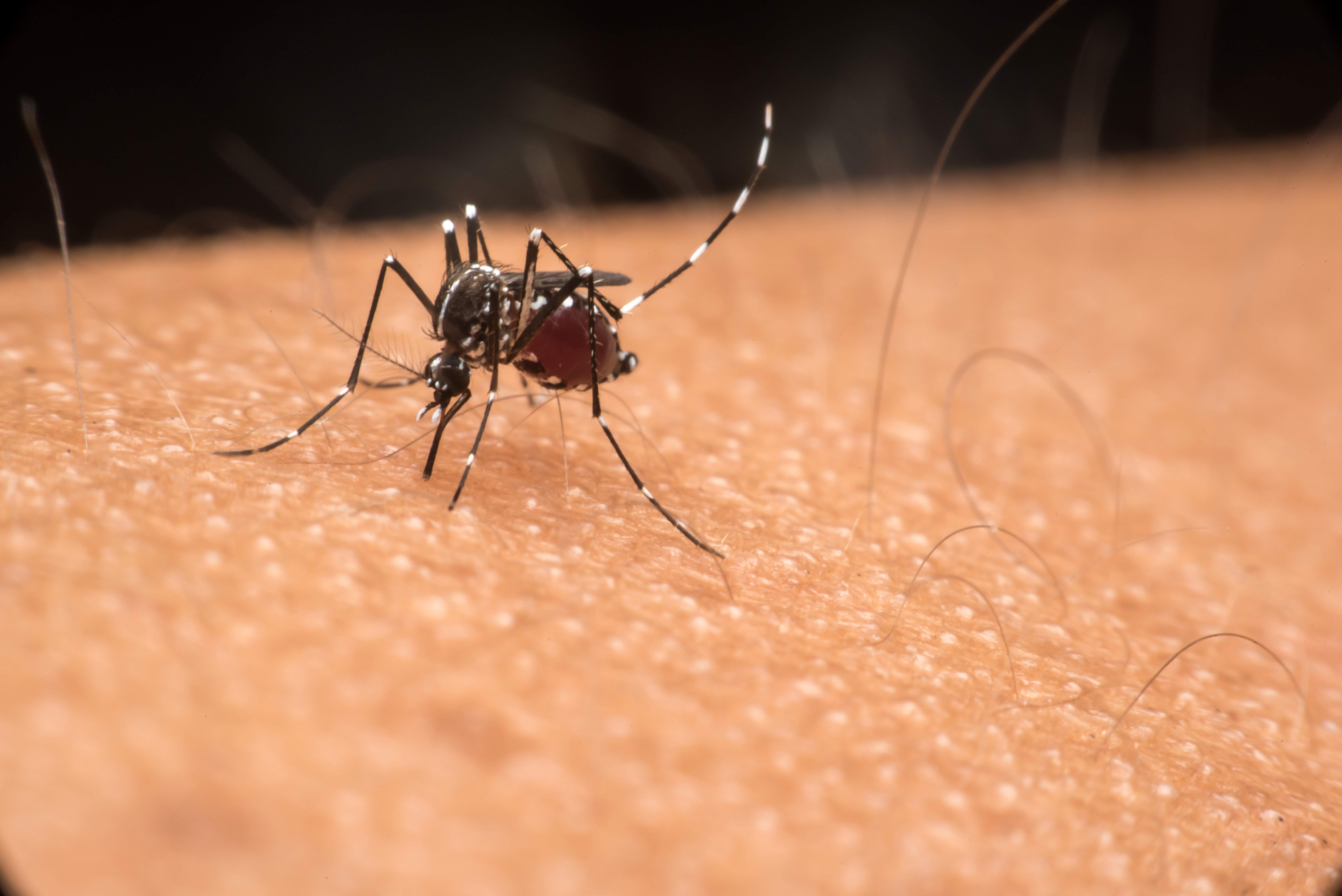
Edmonton is currently experiencing an unprecedented mosquito surge after a series of massive June rainfalls drenched the capital region with nearly a month’s worth of precipitation in single-day bursts. While municipal officials offer standard public relations assurances about routine larvicide applications, the reality on the ground points to a systemic breakdown in urban pest management. Decades of shifting civic budgets, combined with the unintended environmental consequences of massive infrastructure projects like Anthony Henday Drive, have left the city exceptionally vulnerable to these biting populations. The current crisis is not merely an act of bad weather. It is the predictable outcome of municipal policy decisions that scaled back aggressive control measures, shifting the burden of protection onto individual property owners who are completely unprepared for the onslaught.
A walk through any community park or residential neighborhood in the city reveals the scale of the problem. Swarms of aggressive insects are driving families indoors, disrupting local business patios, and rendering backyard spaces virtually unusable. The municipality’s biological sciences department acknowledged that the sudden deluge activated billions of eggs laid during previous dry seasons, triggering a massive, simultaneous hatch. Yet, the public messaging remains frustratingly passive, treating the explosion as an unavoidable seasonal nuisance rather than a failure of urban planning and preventative maintenance.
To understand how the capital region became an open-air breeding ground, one must examine the mechanics of modern municipal mosquito management and the structural vulnerabilities embedded in our growing urban environment.
The Structural Infrastructure of an Urban Inundation
Modern cities are engineered to move water away from roads and buildings as quickly as possible. In Edmonton, this engineering has inadvertently created a sprawling network of ideal insect nurseries. When billions of dollars were funneled into building Anthony Henday Drive, engineers prioritized traffic flow and stormwater runoff, creating kilometers of deep, low-lying roadside ditches and drainage catchments.
These ditches are designed to hold water temporarily to prevent highway flooding. During an intense rainfall event, these zones fill up instantly. Because they are cut off from natural river systems, they lack the predatory fish, beetles, and amphibians that would naturally keep insect populations in check. They become stagnant, sun-warmed pools. This is precisely what a female mosquito looks for when she is ready to deposit her eggs.
The sheer scale of this infrastructure makes ground-based treatment incredibly difficult. City crews must drive specialized trucks and off-road vehicles along highway margins, attempting to spray liquid larvicide into thousands of individual pockets of standing water. If a single ditch is missed, or if the application occurs a few days too late, millions of larvae successfully transition into airborne adults. The ring road has effectively encircled the city with a permanent, high-output insect factory that fires into production every time a major storm system moves through the province.
Urban development in newer suburban communities further compounds the issue. Greenfields are paved over, replaced by rooftops, driveways, and asphalt roads that cannot absorb rain. The water has to go somewhere, so it flows into a complex web of neighborhood stormwater management basins. While these ponds are necessary for flood prevention, their shallow margins create a massive perimeter of stagnant water. Vegetation grows unchecked along these edges, shielding developing larvae from wind and waves, and creating micro-habitats that defy standard municipal mitigation efforts.
The Financial Retrenchment of Preventative Programs
The current state of defense is a shadow of what it used to be. Decades ago, the municipality relied on highly coordinated aerial suppression programs. Helicopters mapped out massive geographic sectors and dropped targeted control agents over thousands of hectares of temporary wetlands before the insects could hatch. This proactive approach kept urban populations at a manageable baseline, even during exceptionally wet summers.
Political pressure, shifting environmental priorities, and chronic budgetary constraints gradually eroded these expansive programs. The city transitioned toward a highly restricted integrated pest management policy. This framework dictates that wide-scale treatment programs can only be triggered when a strict threshold is crossed, specifically when more than 65% of sampled habitats are actively producing larvae.
Waiting for a specific mathematical threshold to be met introduces dangerous operational delays. While technicians are out in the field sampling water, counting larvae, and filing reports to clear administrative hurdles, the biological clock is ticking. In warm summer weather, a mosquito can progress from an egg to a biting adult in less than a week. By the time the data is processed and teams are deployed, the first wave of the hatch has frequently already taken flight, rendering the subsequent larvicide application completely useless against the adults currently swarming residential neighborhoods.
The reduction in scope has also concentrated municipal efforts almost exclusively on public property, such as public parks, schoolyards, and roadside ditches. This leaves massive swaths of the city completely unprotected. Ravines, private woodlots, agricultural borders, and industrial zones receive minimal or no treatment due to jurisdictional boundaries and private property restrictions. The insects do not respect property lines. They breed unhindered on private land and are carried into residential areas by nightly wind gusts, completely overwhelming the localized control efforts managed by city staff.
The Biological Shift and Public Health Realities
The composition of the local pest population is changing in ways that pose new challenges for residents and health officials alike. For generations, the primary source of annoyance in the capital region was Aedes vexans, a species known as the floodwater mosquito. These insects are notorious ankle-biters that emerge in massive clouds following heavy rains, but they are primarily an outdoor nuisance rather than a severe vector for disease.
A more concerning development is the increasing prominence of Culex pipiens, a species that thrives in warmer, highly localized urban settings. These insects prefer very temporary, stagnant water sources. They are found in roof gutters, discarded tires, birdbaths, and street-level storm catch basins. Culex pipiens is a primary vector for West Nile virus, a disease that can cause severe neurological complications in vulnerable human populations.
The rise of these urban-adapted species alters the risk calculation for the city. While floodwater species eventually die off as ditches dry out, urban container-breeders can sustain their populations throughout the entire summer by utilizing the micro-environments created by human habitation. A single clogged eavestrough on a residential home can collect rainwater and produce thousands of West Nile vectors every week, entirely independent of whether the city has treated the nearby public parks.
Climate patterns are aggravating this biological shift. Milder winters allow a higher percentage of overwintering adult female mosquitoes to survive the cold months. When spring arrives, these survivors are already positioned to begin the reproductive cycle early. A wet June acts as an accelerant on an already primed biological system, leading to the rapid population spikes that caught many residents off guard this season.
The Limitations of Current Mitigation Strategies
The municipal response relies heavily on two specific biological larvicides: Aquabac and Vectolex. Both products utilize soil bacteria, specifically Bacillus thuringiensis israelensis and Lysinibacillus sphaericus, to target the digestive systems of mosquito larvae. These biological controls are highly specific, meaning they kill the target larvae without causing widespread harm to birds, fish, or beneficial insects.
This environmental safety comes with a significant operational drawback. These bacteria must be actively ingested by the larvae to work. They remain effective in the water for only a short window of time. If heavy rains continue to fall, the larvicide becomes diluted, reducing its efficacy. Furthermore, if the larvae have already reached the pupal stage, they stop feeding entirely as they prepare to emerge as adults. At that point, applying biological larvicide is a complete waste of resources, as the pupae are immune to the bacteria.
The limitations of these products mean that timing is everything. City crews must be precisely positioned to apply the granules or liquid formulations during a narrow three-to-four-day window after a rainfall event. When the entire capital region is hit by a massive storm, the small pool of municipal pest control workers is simply stretched too thin to cover every temporary pool of water within that critical timeframe.
The city's official advice to residents often feels like an abdication of operational responsibility. Homeowners are told to empty birdbaths, clear their gutters, and set up oscillating fans on their patios to blow the insects away. While property maintenance is helpful, an oscillating fan is a laughable defense against a regional biological surge driven by systemic infrastructure issues and scaled-back municipal programs. Expecting individual actions to correct a macro-environmental problem is a strategy designed for failure.
The Private Pest Control Boom and Regulatory Gaps
As municipal programs struggle to contain the surge, a rapidly growing private residential pest control industry has emerged to fill the void. Companies now crisscross suburban neighborhoods, offering to spray residential yards with chemical barrier treatments designed to eliminate adult insects on contact.
These commercial treatments typically utilize pyrethroids, synthetic chemical pesticides that mimic the insecticidal properties of natural pyrethrins found in chrysanthemum flowers. Technicians apply these chemicals to the undersides of leaves, shaded bushes, and tall grass where adult insects rest during the heat of the day. For homeowners desperate to reclaim their backyards, these services provide immediate, tangible relief that lasts for several weeks.
This private intervention comes with unrecognized ecological costs. Unlike the highly specific biological larvicides used by the city, pyrethroids are broad-spectrum insecticides. They do not discriminate between a blood-sucking mosquito and a beneficial pollinator. When a yard is blanketed in these chemicals, resident bumblebees, honeybees, butterflies, and predatory wasps are wiped out alongside the target pests.
The widespread adoption of private spraying creates a fragmented, unregulated approach to urban ecology. One homeowner might choose to maintain an organic, pollinator-friendly garden, while their neighbors on both sides spray their properties with long-lasting chemical barriers. Because these sprays can drift on the wind during application, accidental cross-contamination is common. This undermines localized biodiversity and disrupts the natural food webs that songbirds and urban wildlife rely on for survival.
The systemic reliance on private entities also highlights a growing socioeconomic disparity in urban livability. Wealthier suburban neighborhoods can afford to hire private contractors to create chemical bubbles around their properties, effectively insulating themselves from the consequences of municipal policy changes. Lower-income areas, which often have higher densities of rental properties and less property maintenance, are left entirely dependent on the city's underfunded public programs. This leaves residents in these areas to bear the brunt of the infestation.
Rerouting the Future of Urban Pest Management
The current crisis demonstrates that Edmonton cannot continue to manage its pest populations through a reactive, piecemeal framework. Relying on an arbitrary 65% larval threshold ensures that city crews will always be chasing a problem that has already taken flight. The city needs a fundamental re-engineering of its municipal mitigation strategy to match the realities of our changing climate and expanding infrastructure footprint.
First, the city must integrate pest management directly into its infrastructure design guidelines. Future highway projects, ring road expansions, and suburban subdivisions must be built with drainage systems that prevent the formation of stagnant water pools. If temporary retention areas are necessary, they must be engineered with steep banks to minimize shallow breeding margins, and they should be integrated into natural drainage networks that support native predators.
Second, the municipality needs to re-evaluate the scale and funding of its public control programs. Proactive larvicide application must replace reactive sampling. The city should utilize modern predictive modeling and real-time weather data to deploy crews to known hotspots along Anthony Henday Drive and major drainage corridors immediately when a heavy rainfall forecast is confirmed, rather than waiting for larvae to appear and hatch.
Finally, there must be greater transparency and coordination between public health officials, municipal scientists, and the private pest control sector. If broad-spectrum chemical barrier treatments are going to be used widely across private land, stricter regulations and clear guidelines are required to protect urban pollinator populations and ensure that these treatments do not cause long-term ecological degradation.
The buzzing swarms currently occupying the river valley and suburban backyards are a clear warning sign. Urban environments are highly interconnected systems. When a city builds massive infrastructure without considering biological consequences, and subsequently cuts back on the preventative programs designed to manage those consequences, the environment responds.
Edmontonians will continue to pay the price in missed summer evenings and rising pest control bills until the municipality treats mosquito management as a vital component of public infrastructure rather than an optional service line in a balancing budget. The solution requires moving past basic backyard advice and confronting the structural policy failures that created this open-air breeding ground in the first place.