The uniform creates an immediate psychological barrier. It commands obedience, projects state-sanctioned authority, and induces an unearned sense of security. When Kyle Edmund Boozan, a former transit peace officer in Edmonton, leveraged his access to official gear to construct a fabricated identity as an Edmonton Police Service officer, he exploited that exact psychological vulnerability. Posing as a municipal cop to manipulate a woman he met online, Boozan utilized a badge and uniform belonging to his then-fiancée to validate a lie that ultimately dismantled lives and exposed deep fractures in institutional credential security.
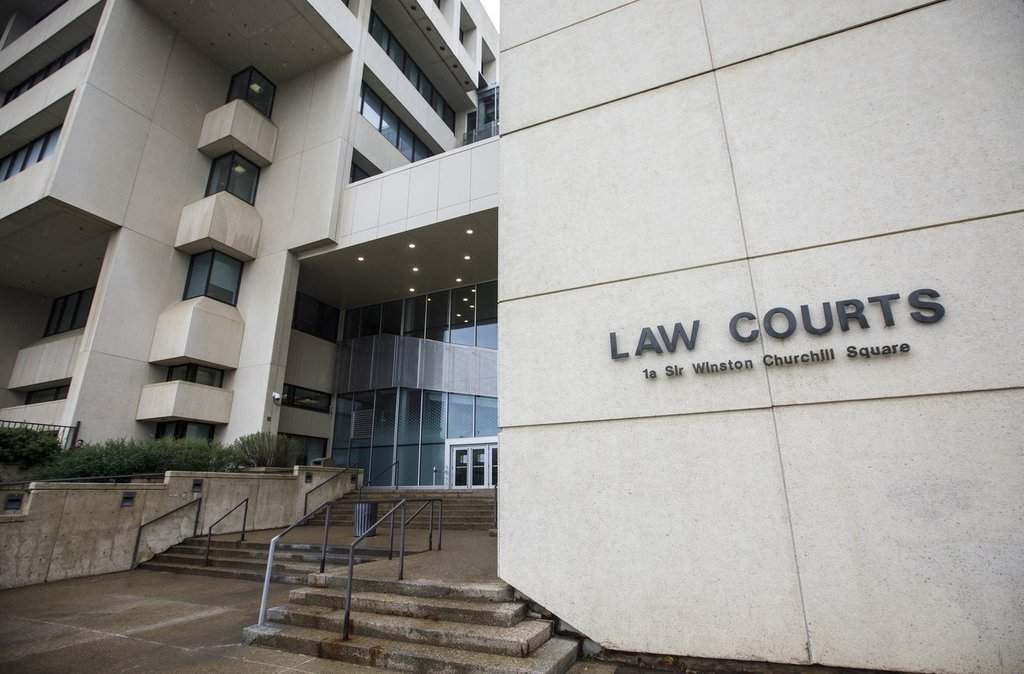
The court slapped Boozan with a conditional sentence of 24 months less a day under house arrest, paired with an ankle monitor and a multi-year weapons ban. Yet the judicial outcome sidesteps a far more disturbing systemic reality. How easily can individuals embedded within the outer rings of law enforcement cross the line into full-blown usurpation of municipal police authority?
The Anatomy of a Credential Breach
Fraud relies on proximity. Boozan was not an outsider guessing at police procedures or buying cheap novelty props from a surplus store. He was an insider. His resume included stints at the Edmonton Remand Centre, military service, and active employment as a transit peace officer. That background gave him an intimate fluency with police vernacular, shift structures, and tactical behaviors.
When he met a woman on a niche social media platform whose profile expressed an affinity for law enforcement, the script was already written. He fed her specific details about imaginary assignments within elite municipal police units. He sent digital imagery featuring authentic gear.
The security failure compounds when examining the source of the physical artifacts. The badge and uniform pieces did not belong to Boozan; they belonged to his then-fiancée, who presumably held a legitimate position within the security apparatus. The casual permeability of law enforcement households—where restricted symbols of state power can be borrowed, displayed, or co-opted for domestic deception—points to an institutional blind spot. If municipal and provincial agencies fail to audit how uniform components and identification items are secured off-duty, the public is left exposed to anyone living under the same roof as an authorized officer.
The Psychological Mechanics of Authority Transfer
Civilians are conditioned to trust the badge. That social contract is essential for civil order, but it makes citizens exceptionally vulnerable to predators who wear the aesthetic of protection.
The victim in this case handed over the key to her apartment explicitly because she believed her partner, as a police officer, was inherently safe. That logic is culturally reinforced from childhood. Police officers are cast as community anchors, guardians against chaos. When a bad actor subverts that narrative, the violation extends far beyond physical trespass. It poisons the well of public trust.
The deception only unraveled because of a mundane operational detail. Boozan transmitted a video of himself riding a bicycle while supposedly on duty. The observant eye of his partner caught the critical discrepancy: the insignia on the frame read transit peace officer, not police.
That single word difference—peace officer versus police officer—highlights a legal chasm that many citizens do not fully grasp until it is too late. Municipal transit peace officers and provincial peace officers operate under constrained, specialized mandates. They are not municipal police. They do not carry general criminal code jurisdiction in the same sweeping manner, nor do they share the exact same training paths. Yet to the untrained public eye, the uniforms often blend into a uniform sea of authority.
The Dangerous Overlap of Quasi-Law Enforcement
Edmonton has wrestled with this friction before. The blurring of lines between corrections personnel, transit security, peace officers, and sworn municipal police creates an environment ripe for identity usurpation.
Consider the case of Andrew James Donald, a former Edmonton Remand Centre guard who went on a spree of confronting citizens while falsely claiming to be an RCMP or municipal police officer. Armed with a cache of unauthorized firearms, tactical gear, and stolen valor, Donald harassed families and fabricated warrants before his eventual arrest and sentence.
When individuals cycling through corrections, private security, and auxiliary enforcement roles decide to upgrade their perceived social standing by claiming a badge they do not possess, the regulatory bodies governing these professions rarely catch the drift until a criminal complaint lands on a desk. Background checks vet past infractions, but they cannot continuously scan for psychological deterioration or narcissistic impulses driving an individual to impersonate a cop.
The Firearms Factor
The risk profile of these impersonation cases escalates sharply when weapons enter the equation. When executing search warrants on Boozan’s property following the investigation, authorities discovered multiple firearms and ammunition stores that failed to meet legal storage requirements, with some weapons left completely unlocked.
A person willing to fabricate a career in law enforcement to manipulate a partner is already operating outside ethical and legal boundaries. Granting such an individual legal access to restricted or non-restricted firearms creates an immediate public safety hazard. The 10-year weapons prohibition handed down in court is a necessary remediation, but it arrives only after the machinery of justice was forced to react to an acute crisis.
True institutional reform requires looking past the individual guilty plea and examining why systemic oversight mechanisms permit auxiliary security personnel to maintain such frictionless access to the trappings of power. Until municipal agencies treat uniform security with the same rigorous chain-of-custody protocols applied to firearms, the badge will remain vulnerable to those who wear it not to protect the public, but to deceive it.



