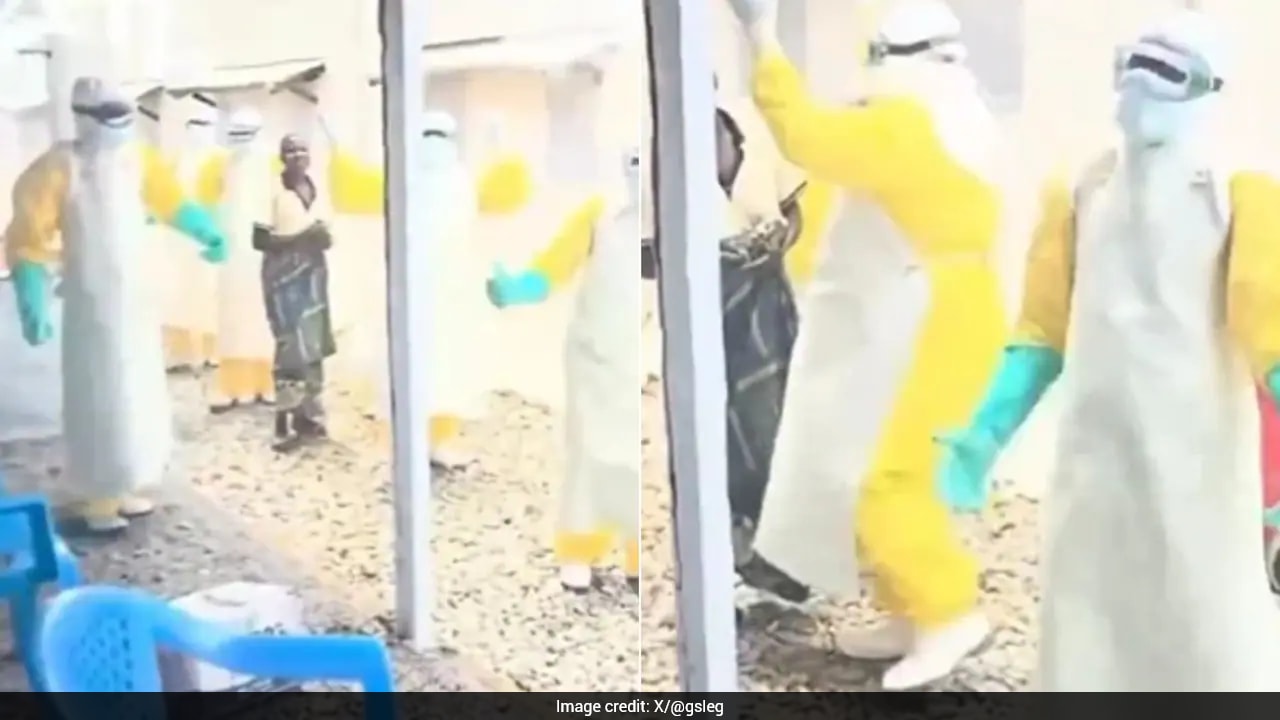
Medical teams in the Democratic Republic of the Congo celebrate every time the final Ebola patients walk out of a treatment center's doors. Those discharges matter. They signal clinical survival, staff endurance, and a hard-won pause in a relentless viral threat. Yet celebrations around an Ebola discharge often obscure a harder operational reality that veteran outbreak responders know all too well. Clearing a single ward or watching the last known patients leave a facility does not end transmission risk, resolve supply bottlenecks, or fix the fragile public health systems forced to absorb the shock.
A discharge celebration is a moment of relief. It is also an inflection point where international attention begins to drift away while local health workers are left carrying heavier burdens than before.
Why a Facility Discharge Tells Only Part of the Story
When a patient leaves an Ebola treatment center after two negative PCR tests, the relief inside the compound is palpable. Health workers in stifling personal protective equipment have spent weeks managing severe fluid loss, organ strain, and acute fear. Seeing survivors walk out upright validates every shift spent rotating through hot zones and logging clinical observations under pressure.
Still, an empty ward inside one treatment center is not the same as a contained outbreak. Ebola transmission moves through household contact, traditional burial practices, informal care networks, and mobile populations crossing porous administrative borders. A facility can discharge its last confirmed patients while suspected cases still wait at peripheral clinics or unverified deaths go unreported in distant villages.
Outbreak control operates on two clocks at once. One clock measures clinical recovery inside a designated facility. The other measures surveillance coverage, contact tracing completion, and community trust across the surrounding districts. When coverage slips on the second clock, a celebratory discharge can create a false sense of security among donors, neighboring districts, and even exhausted staff.
Consider a hypothetical example to see how easily the signal gets misread. Suppose a regional treatment unit discharges its final two confirmed patients after a quiet ten-day stretch. Local leaders hold a ceremony, photos circulate widely, and emergency supplies start getting reallocated elsewhere. Two weeks later, a family member who cared for an early unconfirmed case develops fever in a neighboring sub-district without an active alert team. The facility was cleared, yet the chain of transmission was never fully severed.
That gap between ward recovery and community containment has appeared repeatedly across central Africa. Treatment centers are high-visibility islands of intensive care. Public health surveillance is quieter, slower, and far harder to dramatize in a single news cycle.
The Hidden Strain Behind Frontline Celebrations
Celebrations in the field rarely capture the quiet exhaustion that sets in once the cameras turn off. Frontline medics in the Democratic Republic of the Congo routinely work across overlapping health emergencies, juggling Ebola preparedness alongside measles, cholera, malaria, and chronic underfunding. A discharge milestone brings joy, followed almost immediately by administrative audits, decontamination protocols, and uncertainty over when the next alert will ring.
Pay and logistics remain persistent fault lines in outbreak response. When emergency funding surges during an acute spike, allowances and supply lines often move faster than routine payroll systems. When patient numbers drop and a facility empties out, surge support tapers down while local clinics still face unpaid arrears, stockouts of basic essentials, and damaged infrastructure.
Local health workers bear that whiplash directly. Many are nurses, lab technicians, and community health workers who lived in the area long before international emergency teams arrived and will remain long after emergency contracts expire. Their institutional memory keeps clinics functioning through thin months, yet their long-term career stability is rarely secured by short-term outbreak grants.
Security and Mobility in High-Risk Zones
Ebola response in eastern and central provinces of the Democratic Republic of the Congo never happens in a political or security vacuum. Armed group activity, displacement camps, and contested local authority reshape how patients reach care and how tracers reach contacts. A treatment center may discharge its remaining patients safely while insecurity blocks road access to outlying health areas for weeks at a time.
Displacement complicates every metric epidemiologists rely on. When families flee violence or economic shock, tracking a twenty-one-day incubation window becomes exponentially harder. People move without records, seek care from familiar healers rather than formal facilities, or hesitate to report symptoms out of fear that quarantine or isolation will separate them from their livelihoods.
Under those conditions, celebrating a facility discharge requires careful framing. It is a clinical achievement for the patients and staff involved. It is not proof that hard-to-reach populations are protected.
What Medical Advances Changed and What They Cannot Fix
Modern Ebola care looks markedly different from early outbreaks decades ago. Monoclonal antibody therapeutics, improved supportive care protocols, and ring vaccination strategies have transformed survival odds for patients who reach treatment early. Watching a patient recover today involves targeted medical interventions rather than palliative care alone.
Those breakthroughs are real. They are also incomplete.
Vaccines and therapeutics depend on cold chains, rapid diagnostics, trained staff, and community acceptance to reach people in time. In remote terrain with unreliable power, washed-out roads, and deep distrust of outside interventions, even world-class medical tools face steep friction. A single break in cold-chain power or a delay in sample transport can stall response efforts for days.
There is also a lingering risk of over-reliance on biomedical fixes at the expense of primary care. Emergency Ebola interventions often build parallel structures—dedicated ambulances, specialized isolation units, separate supply chains—that operate at high intensity for a limited window. Once active cases fall and patients are discharged, those parallel structures can hollow out if they are not integrated into everyday district health services.
Strong routine clinics are the best early warning system any outbreak has. When basic health centers are staffed, supplied, and trusted on ordinary Tuesdays, unusual clusters of fever or bleeding are spotted early. When routine care is weak, outbreaks tend to announce themselves late, after chains of transmission have already widened.
Community Trust as the Decisive Variable
Technical protocols win battles inside wards, yet community trust decides whether an outbreak burns out or smolders. Rumors flourish quickly during health emergencies, especially when outsiders arrive in protective suits, enforce strict burial rules, or restrict movement during funerals and markets.
Funerals sit at the heart of the tension. In many communities, caring for and burying kin according to custom is a sacred duty and a public expression of social solidarity. Safe and dignified burial teams were created to reduce post-mortem transmission risk while respecting cultural norms, yet friction still arises whenever procedures feel abrupt, imposed, or detached from local elders.
Rumors are rarely pure fabrications pulled from thin air. They often attach to real grievances: clinics that lacked basic medicines last month, health workers who went months without pay, or outside agencies that appear during a crisis and vanish once headlines fade. When communities feel ignored during routine hardship, skepticism toward emergency instructions is almost guaranteed.
Building trust takes steady presence rather than crisis messaging. Local leaders, religious figures, traditional birth attendants, and survivors themselves carry far more credibility than visiting experts reading from standard talking points. Survivors who walk out of a treatment center healthy can become powerful voices for early care-seeking—provided they are supported against stigma and economic fallout after discharge.
Stigma and Life After Recovery
Leaving a treatment facility is only the start of reintegration for many Ebola survivors. Fear of contagion often lingers long after viral clearance is confirmed, leading to strained marriages, lost jobs, eviction, or social exclusion.
Survivors can also experience lingering physical and psychological effects, including joint pain, vision changes, fatigue, and trauma from isolation. Without accessible follow-up care and practical reintegration support, recovery feels fragile. A discharge ceremony marks the end of acute inpatient treatment, not the end of what a survivor needs to rebuild a normal life.
Where Outbreak Accountability Usually Breaks Down
International health reporting loves clean arcs: outbreak detected, response mobilized, last patients discharged, crisis averted. Real-world epidemiology is messier. Outbreaks rarely end with a neat curtain call; they taper through declining case counts, lingering surveillance gaps, and a long countdown toward official declaration milestones.
Accountability often weakens right after a positive headline. Donors shift focus to newer emergencies elsewhere in the world. Media teams move on. Reporting becomes thinner just as the unglamorous work of active case search, rumor tracking, and clinic restocking becomes most critical to preventing resurgence.
Evaluating an Ebola response honestly requires looking past single-facility milestones. Key operational questions include:
- Surveillance depth: Are alert systems capturing community deaths and unexplained fevers in surrounding health zones, not just walk-ins at major centers?
- Contact completeness: What share of known contacts are being traced daily without missed follow-ups?
- Supply continuity: Do peripheral clinics have basic protective gear, testing supplies, and essential medicines once surge shipments slow down?
- Workforce stability: Are local staff paid reliably and supported with rest rotations after high-stress deployments?
- Survivor support: Do discharged patients have access to medical follow-up and community reintegration assistance?
Answers to those questions tell you far more about outbreak durability than a single ward discharge ever could.
Rethinking How We Measure Progress in the DRC
Celebrating frontline medics when the last patients leave a facility is human and earned. Doctors, nurses, hygienists, drivers, and logisticians carry extraordinary risk in demanding environments, and recognizing their skill and grit matters.
Progress should still be judged by what endures after the applause fades. A lasting gain is a district laboratory that stays functional, a community health network that remains connected to families, and local clinicians who have better tools and steadier backing than they had before.
Every Ebola discharge in the Democratic Republic of the Congo deserves recognition for the lives saved inside that ward, paired with clear-eyed vigilance outside its gates until every chain of transmission is verifiably broken.