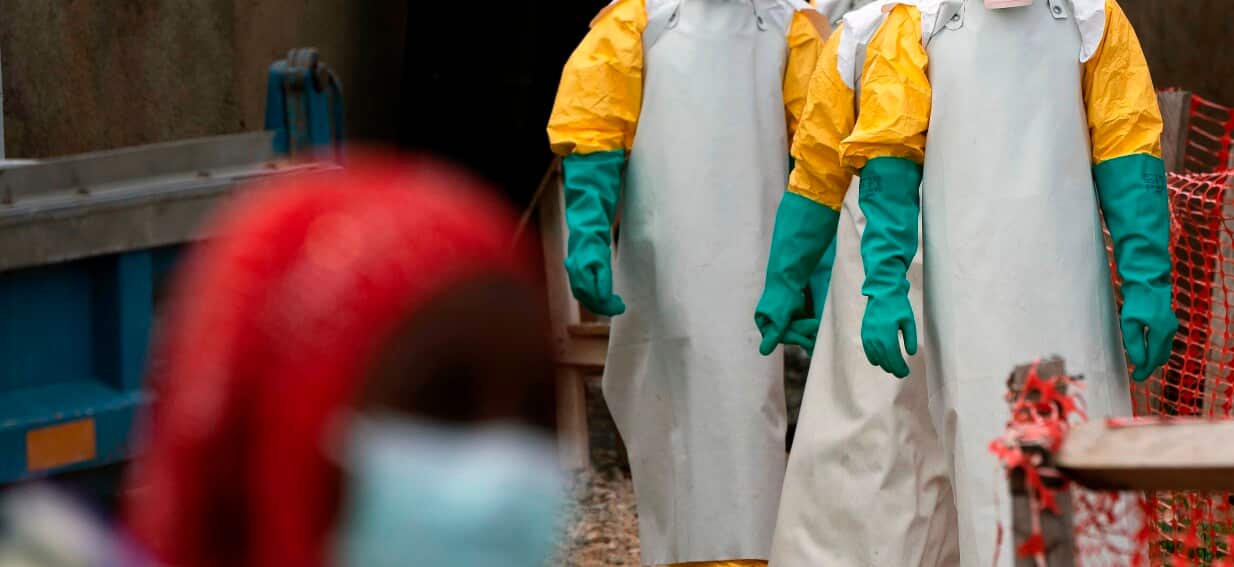
The World Health Organization has officially declared the latest Ebola outbreak a Public Health Emergency of International Concern. This designation, the highest alarm the agency can sound, is designed to instantly unlock global funding, mobilize international medical teams, and streamline supply chains to containment zones. On paper, this bureaucratic trigger shifts the global health apparatus from a reactive posture into an aggressive, coordinated offensive. In reality, the declaration exposes a recurring institutional failure.
By the time the international community officially recognizes an outbreak as a global threat, the virus has already exploited weeks of broken local surveillance, political instability, and deep-seated community distrust. Labeling Ebola an international emergency is a lagging indicator of a crisis that is already out of control.
The Mirage of the Emergency Declaration
The global health system relies on a predictable playbook. When a pathogen threatens to cross borders, Geneva convenes an emergency committee. Speeches are made. A declaration is issued. Money is pledged.
This top-down structure assumes that the primary obstacle to stopping Ebola is a lack of high-level coordination or capital. It is a comfortable assumption for bureaucrats because it suggests the solution lies in more meetings, more reports, and more funding packages.
The real theater of war against Ebola is entirely local. A directive issued from a sterile conference room in Switzerland does nothing to change the reality on the ground in an isolated village. Frontline health workers do not lack global declarations. They lack basic personal protective equipment, reliable electricity to maintain the cold chain for vaccines, and functional roads to transport diagnostic samples to labs before patients bleed out in community clinics.
When the international apparatus floods a region with resources after a formal declaration, it often creates a secondary crisis of logistical congestion. Cargo planes land at provincial airports packed with supplies that rot on tarmacks because there is no local infrastructure to distribute them. International experts arrive with high salaries and minimal knowledge of local dialects, inadvertently sidelining the local nurses and community leaders who possess the actual trust required to track contacts and isolate cases.
The Infrastructure of Distrust
Ebola is not merely a biological problem. It is a political and social mirror. The virus thrives in the exact geographic fractures where state authority has collapsed or where marginalized populations have been exploited for generations by centralized governments.
Outbreak Stage -> Institutional Response -> Community Reality
-------------------------------------------------------------------------
Early Detection -> Bureaucratic Verification -> Rumor and Fear
Border Control  -> Travel Restrictions       -> Unregulated Crossings
Containment     -> Forced Isolation          -> Armed Resistance
When international response teams arrive in armored vehicles, wearing biohazard suits that resemble alien invaders, the immediate psychological reaction from locals is not gratitude. It is terror. For a community that has experienced decades of government neglect, the sudden appearance of heavily funded foreign operations raises immediate suspicion.
Why, the local population asks, does the state suddenly care so intensely about our deaths from Ebola when it has ignored our children dying from malaria, clean water scarcity, and preventable diarrhea for fifty years?
This distrust manifests in tangible, dangerous ways:
- Secret burials: Traditional funerary practices involving the washing of the deceased are highly infectious events, yet forced, clinical burials by teams in hazmat suits drive these practices underground.
- Flight from isolation centers: Facilities designed to treat patients are frequently viewed as execution chambers, causing symptomatic individuals to flee into dense urban hubs or across porous international borders.
- Violence against health workers: Local resistance often boils over into physical attacks on treatment centers, driven by the belief that foreign actors introduced the virus to extract profit or suppress local political movements.
To counter this, global health strategies must pivot from colonial-style intervention to deep local integration. The response must be led by faces the community knows. Tribal leaders, traditional healers, and local market women must be integrated into the surveillance architecture months before an outbreak occurs, not deputized as an afterthought once the body count rises.
The Mutation of the Response Apparatus
The medical toolkit for fighting Ebola has advanced dramatically over the last decade. We now possess highly effective vaccines like Ervebo and monoclonal antibody treatments that can reduce mortality rates significantly if administered early. These innovations should have rendered large-scale Ebola outbreaks relics of the past.
They have not. The bottleneck is no longer scientific; it is operational.
            [Scientific Capability: High]
                         │
                         ▼
             [Logistical Execution] ──► Failing due to:
                         │              • Broken cold chains
                         │              • Interdicted supply lines
                         ▼              • Active conflict zones
             [Actual Patient Access: Low]
Vaccinating a population in an active conflict zone requires more than just clinical efficacy. It requires navigating shifting lines of control held by disparate militia groups. It requires a cold chain that can keep vaccines at ultra-low temperatures in regions without a reliable power grid.
When international agencies focus strictly on the biology of the virus, they fail to account for the sociology of the battlefield. A highly effective vaccine is completely useless if the truck carrying it is ambushed at a rebel checkpoint, or if the local population believes the injection is a government plot to sterilize them.
The Flawed Economics of Epidemic Preparedness
The current model of global health financing is fundamentally reactionary. It operates on a panic-and-neglect cycle. When an outbreak hits the headlines, Western donors scramble to write checks, eager to prevent the virus from reaching their own borders.
As soon as the outbreak is contained and the media attention shifts, the funding evaporates.
The Financial Collapse Cycle
- Outbreak Emerges: Global panic ensues; millions of dollars are pledged overnight.
- Containment Achieved: The emergency declaration is lifted; attention shifts elsewhere.
- The Post-Crisis Vacuum: Local surveillance systems are dismantled due to a lack of maintenance funding.
- The Next Spillover: The virus re-emerges undetected in a blind spot created by the withdrawal of capital.
This erratic funding model prevents the establishment of permanent, resilient healthcare systems in spillover-prone regions. If the international community invested a fraction of the money spent on emergency deployments into building permanent primary healthcare clinics, local diagnostic laboratories, and stable nursing salaries, the next Ebola outbreak could be snuffed out at the village level before an international declaration is ever required.
The Geopolitical Blind Spots of Global Surveillance
The decision to declare an international emergency is never purely scientific. It is inherently political. The International Health Regulations require member states to report anomalies transparently, but the economic consequences of doing so are punitive.
When a country steps forward and announces a cluster of Ebola cases, the immediate international response is often swift isolation. Airlines cancel flights. Neighboring states close borders. Trade grinds to a halt. The reporting nation is effectively penalized with economic strangulation for its transparency.
This reality creates a dangerous incentive structure for local politicians to hide or downplay early cases, hoping the cluster will burn itself out before attracting international scrutiny. By the time concealment is no longer possible, the virus has already moved beyond the index location.
The global community cannot expect transparent reporting while maintaining a system that punishes honesty with economic devastation. True global health security demands a mechanism that indemnifies developing nations for reporting outbreaks early, offering financial stabilization and targeted logistics rather than immediate isolation and economic ruin.
Moving Beyond the Alarm
The World Health Organization will continue to use its emergency declarations because it is the only structural lever it possesses to command global attention. But the analysts, journalists, and policymakers watching the crisis must look past the press releases.
The metric of success is not how quickly an emergency is declared. The metric of success is how rapidly the response can dismantle its own top-down bureaucracy and empower the local networks that actually hold the keys to containment. Until the global health architecture flips its model from reactive international intervention to permanent local fortification, each new declaration is simply a countdown to the next inevitable failure. This cycle will repeat, independent of how loudly the sirens in Geneva are sounded.