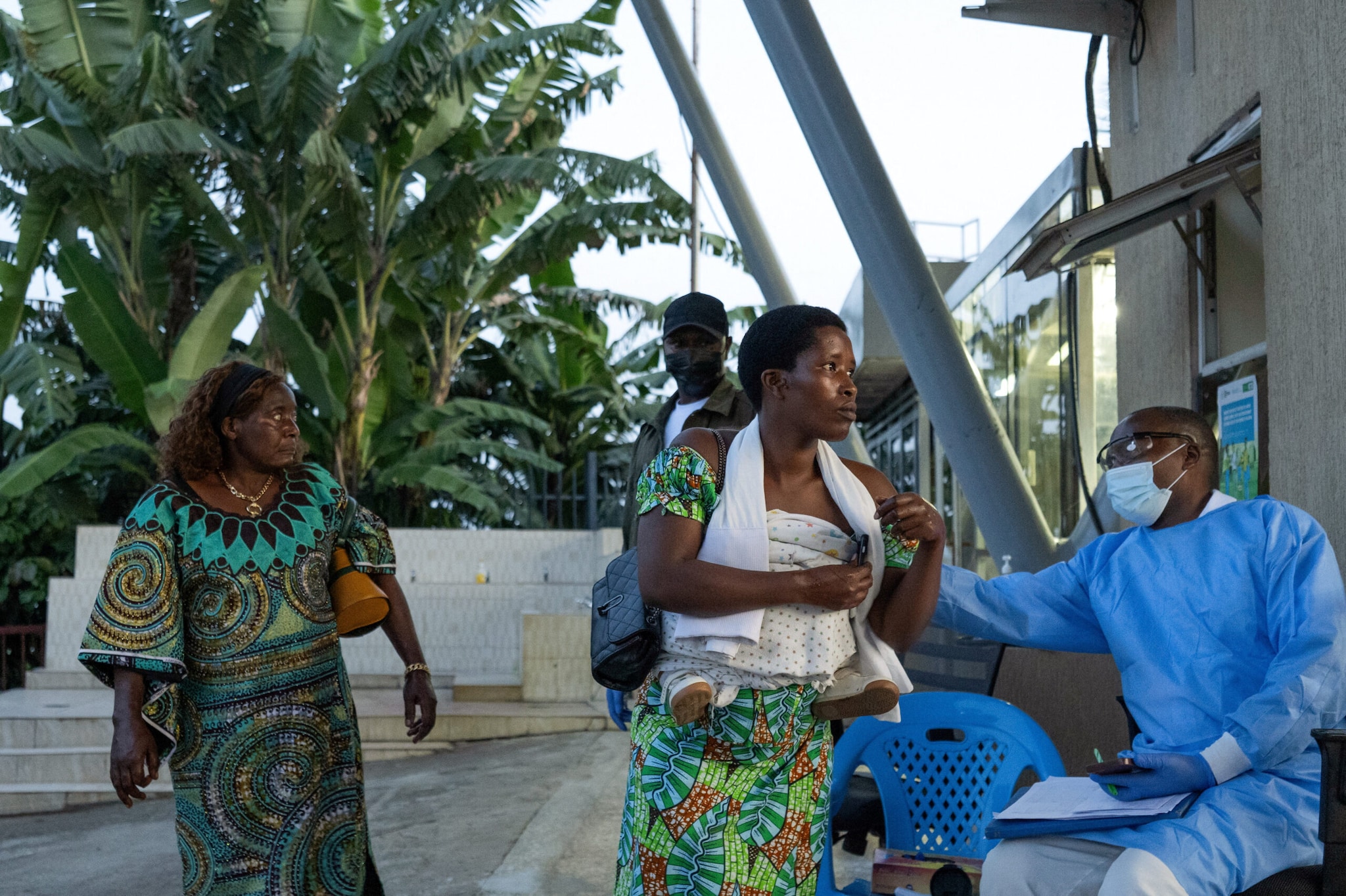
A rare and weaponless fight has returned to the dense, conflict-torn corridors of the eastern Democratic Republic of Congo and crossed into Uganda. The World Health Organization has convened an emergency committee meeting as the official death toll hits 131 out of more than 500 suspected cases, but the real crisis is not just the body count. It is the terrifying reality that health workers are facing a ghost they cannot shoot.
Unlike the high-profile epidemics of the past decade, this outbreak is driven by the Bundibugyo strain of the virus. There is no approved vaccine for it. There is no proven antiviral therapeutic. The international community is relying on infrastructure built for a completely different variant, exposing a massive, systemic blind spot in global pandemic readiness.
The Blind Spot of Biomedical Triumphalism
For years, global health agencies patted themselves on the back for creating highly effective tools against Ebola. The Ervebo vaccine and monoclonal antibody treatments like Ebanga transformed a terrifying death sentence into a manageable, albeit dangerous, medical event. But those breakthrough tools were engineered specifically for the Zaire strain. Against Bundibugyo, they are completely useless.
The current crisis began quietly in late April in the Mongbwalu health zone of Ituri Province. Initial diagnostic tests floundered because local laboratories were geared toward detecting the more common Zaire variant. By the time genomic sequencing confirmed the Bundibugyo strain on May 15, the virus had already used that diagnostic window to hitch a ride on the region's highly mobile population.
Medical teams on the ground are now forced to practice what amounts to 19th-century medicine. Without a vaccine to ring-fence contacts or drugs to stop viral replication, containment relies entirely on rigid isolation and basic supportive care. Aggressive hydration, blood pressure management, and fever reduction are the only tools available. If a patient’s immune system cannot fight off the pathogen on its own, they die. The historical mortality rate for this strain hovers between 30% and 50%, and the current trajectory suggests this outbreak will test the absolute upper limits of those statistics.
A Geography Engineered for Transmission
The physical and political environment of Ituri and North Kivu provinces could not be more hostile to containment efforts. This is an area defined by intense geopolitical friction, active rebel insurgencies, and porous borders that see thousands of traders, miners, and displaced people crossing every day.
- Urban Saturation: The virus has already breached major population centers. Confirmed and suspected cases have surfaced in the provincial capital of Bunia, the mining hub of Mongbwalu, and the volatile city of Goma.
- The Cross-Border Leap: On May 15 and 16, two separate, epidemiologically unlinked cases appeared in intensive care units in Kampala, Uganda. Both individuals had recently traveled from the DRC. When a hemorrhagic fever reaches a capital city with an international airport, local outbreaks officially transform into regional threats.
- The Conflict Factor: Decades of militia violence have left the local population deeply suspicious of outside intervention. Armed groups control significant swathes of territory around mining zones, making systematic contact tracing almost impossible.
When public health teams must travel with armed escorts just to monitor a feverish patient, the virus always wins the race.
The Fatal Cycle of Nosocomial Spread
Perhaps the most alarming detail buried in the latest situation reports is the targeted nature of the early fatalities. At least four healthcare workers have died after displaying symptoms consistent with viral hemorrhagic fever.
In eastern DRC, a vast network of informal, poorly regulated neighborhood clinics serves as the frontline of healthcare. These facilities often lack consistent running water, let even medical-grade personal protective equipment. When an unidentified hemorrhagic fever presents as a standard malaria case or typhoid flare-up, clinicians treat patients without specialized precautions.
The clinic quickly transforms from a sanctuary into an amplifier. A single undiagnosed patient can infect multiple nurses, who then pass the pathogen to dozens of subsequent patients before anyone realizes Ebola is in the room. This breakdown in basic infection prevention and control is precisely how localized spillovers scale into international emergencies.
The WHO’s release of $3.9 million from its contingency fund is a necessary band-aid, but money cannot buy a vaccine that does not exist. International entities are scrambling to figure out if experimental candidates sitting in western research pipelines can be deployed under compassionate-use protocols. But deploying unproven therapeutics in a war zone is an ethical and logistical nightmare.
The global health apparatus spent billions preparing for the last war, leaving itself completely exposed to a variant that ignores our modern medical arsenal. The unfolding tragedy in Central Africa is a stark reminder that nature does not care about our manufacturing timelines.