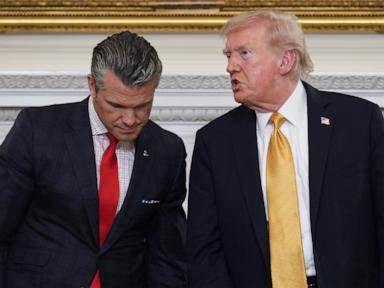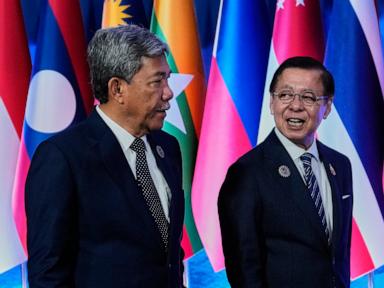
Southeast Asian leaders are preparing to issue a unified call for the peaceful resolution of regional conflicts just as Donald Trump joins the final round of summit talks, a convergence that exposes the deepest fault lines in modern Indo-Pacific diplomacy. While the official communiques from the Association of Southeast Asian Nations (ASEAN) will inevitably emphasize consensus, non-interference, and dialogue, the reality behind closed doors is far more fraught. Regional heads of state are attempting to balance an escalating maritime standoff in the South China Sea, a bloody civil war in Myanmar, and the return of an American president whose transactional approach to alliances upends decades of multilateral orthodoxy.
For years, the standard diplomatic playbook in Southeast Asia relied on predictable American engagement paired with quiet economic integration with China. That era is dead. The upcoming final talks represent a critical stress test for ASEAN centrality—the foundational principle that the ten-member bloc must remain the primary driver of regional architecture rather than a passive chessboard for superpowers. By foregrounding calls for peaceful conflict resolution right before Trump takes his seat at the table, Southeast Asian diplomats are attempting to set the guardrails before Washington can dictate the terms.
The Anatomy of ASEAN Consensus Under Fire
To understand why these leaders are issuing pre-emptive calls for peace, you have to look at how the bloc actually operates. It is slow by design. Founded during the Cold War to prevent smaller nations from being swallowed by superpower proxy wars, ASEAN functions on absolute consensus. Every member state holds an effective veto over joint statements.
When ten nations with wildly divergent political systems and economic dependencies try to speak with one voice, the resulting language is often stripped of sharp edges. Critics routinely dismiss these communiques as empty diplomatic theater. Yet in the high-stakes environment of Southeast Asian statecraft, the exact phrasing of a joint statement serves as an early warning system. Calling explicitly for the peaceful resolution of conflicts is a deliberate signal aimed simultaneously at Beijing and Washington.
The South China Sea Pressure Cooker
The most immediate flashpoint driving this rhetoric is the South China Sea. Over the past several years, confrontations between Chinese coast guard vessels and Philippine resupply missions near Second Thomas Shoal and Sabina Shoal have escalated from tense standoffs to violent ramming incidents and water cannon attacks.
Manila has abandoned the quiet diplomacy of previous administrations, opting instead for a strategy of assertive transparency—publicizing every aggressive maneuver by Beijing to rally international condemnation. Meanwhile, nations like Vietnam, Malaysia, and Indonesia face their own maritime encroachments, though they often choose to manage them quietly to protect massive Chinese infrastructure investments.
A collective call for peaceful resolution accomplishes two things for these leaders:
- It draws a diplomatic boundary against Chinese gray-zone coercion without naming Beijing directly, preserving trade ties while affirming the 1982 United Nations Convention on the Law of the Sea (UNCLOS).
- It signals to the United States that regional nations want deterrence, not a kinetic war fought in their shipping lanes.
The Myanmar Quagmire
While maritime disputes dominate Western headlines, the civil war in Myanmar remains an existential stain on ASEAN’s credibility. Since the military junta overthrew the elected government in 2021, the country has fractured into a brutal multi-front conflict that has displaced millions and turned border regions into hubs for transnational cyber-scam syndicates and narcotics trafficking.
ASEAN’s signature peace framework, the Five-Point Consensus, has been blatantly ignored by the generals in Naypyidaw for years. The bloc has responded by barring Myanmar’s political leaders from high-level summits, leaving an empty chair where a founding member once sat. By reiterating calls for peaceful resolution ahead of the final talks, ASEAN chairs are trying to prove to external partners—including the incoming or sitting U.S. administration—that they have not abandoned their own backyard, even as their diplomatic tools prove largely toothless against a regime fighting for its survival.
The Trump Factor in Multilateral Diplomacy
Enter Donald Trump. Few leaders in modern history disrupt carefully choreographed diplomatic summits quite like him. During his previous tenure, Trump’s attendance at Southeast Asian summits was sporadic, often sending lower-level officials in his place—a move regional diplomats privately viewed as a snub that ceded ground to Beijing. When he did attend, he made no secret of his disdain for sprawling multilateral talk-shops, preferring bilateral deal-making where American economic and military leverage could be applied directly.
His return to the final talks changes the calculus entirely. Southeast Asian leaders know that Trump views international relations through the prism of trade balances, burden-sharing, and tangible wins.
Tariffs and the Supply Chain Tightrope
Over the last decade, Southeast Asia became the primary beneficiary of the U.S.-China trade war. Manufacturing giants shifted assembly lines from southern China to Vietnam, Malaysia, and Thailand to bypass American tariffs. Now, those same nations are squarely in Washington's crosshairs.
Several ASEAN economies run massive trade surpluses with the United States. Vietnam’s trade surplus with Washington alone has surged past $100 billion annually, putting Hanoi near the top of the list for potential punitive tariffs. Furthermore, Washington has grown increasingly aggressive about cracking down on transshipment—the practice of Chinese companies routing goods through Southeast Asian ports with minimal local processing to disguise their origin.
When Trump joins the final talks, economic survival will be just as pressing for Southeast Asian leaders as military security. A nation cannot easily align with Washington on South China Sea security if its export-driven economy is simultaneously being throttled by blanket American tariffs. Diplomats are acutely aware that Trump links trade and security in ways previous administrations avoided. The push for regional peace and stability is inextricably tied to keeping the Indo-Pacific open for commerce without triggering a devastating tariff war.
The Unpredictability of American Deterrence
Security planners in Manila, Singapore, and Jakarta face a profound paradox regarding Trump’s foreign policy. On one hand, his willingness to confront China aggressively on trade and technology appeals to hawks who believe previous administrations were too cautious. On the other hand, his frequent questioning of traditional alliance structures and his transactional view of mutual defense treaties create deep anxiety.
The Philippines, bound to the United States by a 1951 Mutual Defense Treaty, sits on the front lines. While Washington has repeatedly affirmed that an armed attack on Philippine vessels in the South China Sea would trigger treaty obligations, leaders across the region wonder what those guarantees look like under an "America First" doctrine. Would a Trump administration risk a military clash with a nuclear-armed China over a submerged reef in the Spratly Islands? Or would it strike a grand bilateral bargain with Beijing that leaves smaller regional claimants exposed?
Nobody in the summit halls knows for sure. That uncertainty is precisely why Southeast Asian leaders are doubling down on collective diplomatic norms before the final plenary session begins.
The Myth of Choosing Sides
Western analysts routinely frame Southeast Asian geopolitics as a binary choice between Washington and Beijing. That framing fundamentally misunderstands the region. For a prime minister in Kuala Lumpur or a president in Jakarta, choosing one superpower over the other is a recipe for economic ruin or strategic vulnerability.
Instead, the region practices hedging—a sophisticated, continuous balancing act designed to maximize autonomy. You take security assistance, joint military exercises, and high-tech investment from the United States, while simultaneously relying on China as your largest trading partner and primary financier for ports, railways, and power grids.
Why China Still Holds the Geographic Advantage
Geography is merciless. The United States is a Pacific power, separated from Southeast Asia by thousands of miles of ocean. China is a permanent neighbor. Regardless of who occupies the White House, Southeast Asian nations will still share land borders and maritime boundaries with China a century from now.
Beijing understands this permanence and uses it ruthlessly. While Washington offers periodic summits and security aid, China offers immediate, massive capital through the Belt and Road Initiative alongside the implicit threat of economic coercion. When Australia called for an independent investigation into the origins of COVID-19, Beijing slapped crippling tariffs on Australian wine, barley, and coal. Every diplomat in Southeast Asia took notes.
Consequently, when ASEAN leaders call for the peaceful resolution of conflicts, they are carefully calibrating their words so they cannot be weaponized by Beijing as proof that the bloc has joined an American-led containment coalition.
What Happens Behind Closed Doors
The public speeches during the final talks will be scrubbed clean of controversy. Cameras will capture handshakes, forced smiles, and traditional group photos where leaders awkwardly cross arms to hold hands in the customary ASEAN pose. The real work happens in the bilateral pull-asides and unscripted hallway conversations.
Here is what is actually being negotiated away from the microphones:
- Code of Conduct Deadlocks: ASEAN and China have been negotiating a Code of Conduct (COC) in the South China Sea for over two decades. Beijing wants a framework that excludes external militaries—meaning the U.S. Navy—from holding exercises in the region without prior approval. Southeast Asian claimants are resisting a deal that effectively turns the South China Sea into a Chinese lake. Leaders will use the presence of the U.S. president to subtly remind Beijing that they still have powerful external options if negotiations remain stalled.
- Bilateral Tariff Exemptions: Leaders from export-heavy economies like Vietnam, Thailand, and Malaysia will spend every available minute pitching Trump’s economic team on why their countries are vital partners in "friend-shoring" supply chains away from China, rather than mere pass-through hubs for Chinese goods.
- Quiet Security Upgrades: Even nations that publicly preach strict neutrality—such as Indonesia and Malaysia—are quietly upgrading their naval and coast guard capabilities, often utilizing American radar systems, Japanese patrol vessels, and European submarines. They want Washington to keep the intelligence flowing and the arms sales moving without forcing them into loud public declarations against Beijing.
The Limits of Diplomatic Language
There is an inherent fragility to relying on calls for peaceful resolution when the actors involved operate under different rules. Diplomatic communiques work when all parties value international norms and reputational standing. They falter when a major power decides that changing facts on the water is worth the diplomatic blowback, or when another superpower views international institutions as obstacles to bilateral leverage.
Southeast Asian leaders are not naive. Decades of navigating colonial powers, Cold War proxy conflicts, and financial crises have bred a deeply pragmatic diplomatic corps. They know that a joint statement will not stop a coast guard ship from deploying a water cannon, nor will it stop a tariff executive order from being signed in Washington.
Yet abandoning the effort would be worse. In a region where overlapping territorial claims, nationalist domestic politics, and superpower rivalry intersect daily, the sheer act of forcing rival leaders into the same room remains a vital pressure valve. By anchoring the final talks around a unified call for peaceful conflict resolution, Southeast Asian states are doing the only thing they can do to survive the clash of giants: reminding both Washington and Beijing that the region belongs to the people who live there, and they have no intention of becoming collateral damage.