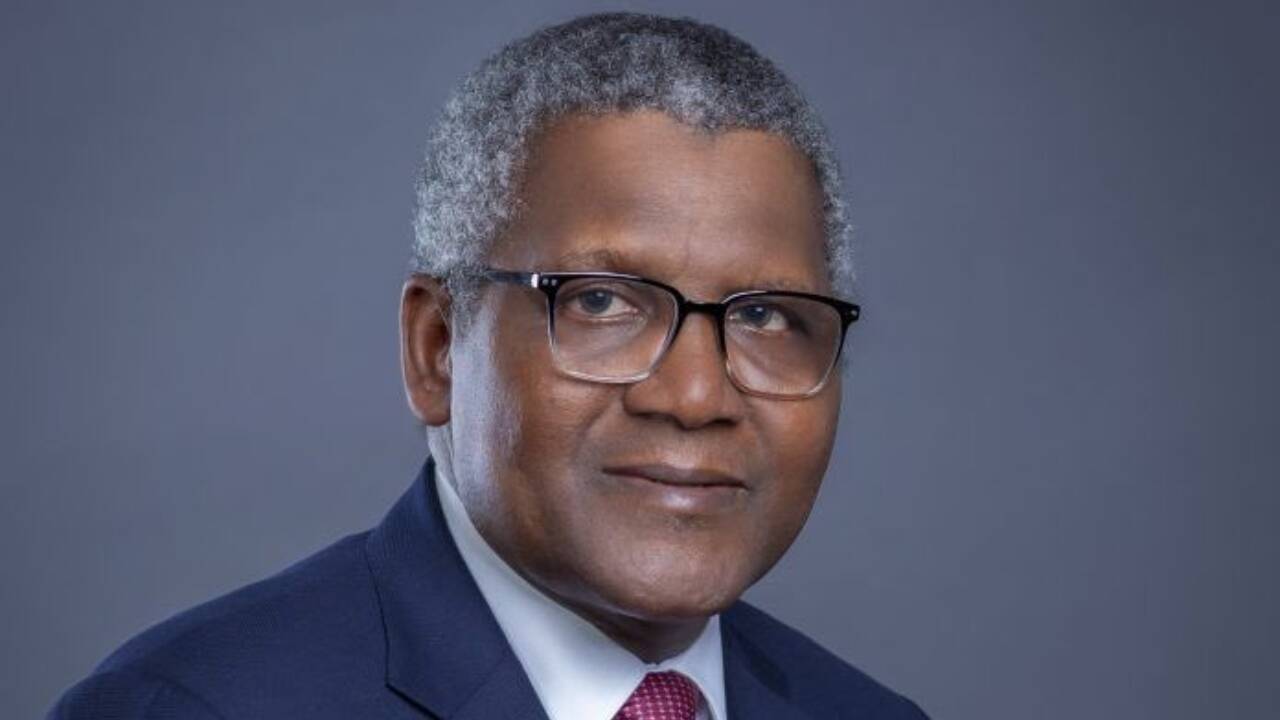
Africa's richest individual, industrialist Aliko Dangote, plans to dedicate one-third of his estimated $36 billion fortune to philanthropic causes as part of an institutionalized succession strategy. Valued at upwards of $12 billion, this monumental capital allocation is formally integrated into the inheritance framework of the Dangote Group, binding his three daughters and legal heirs to a generational pact of structured giving. Rather than a spontaneous impulse of late-life charity, the move anchors the family's multi-industry conglomerate to a permanent mechanism for social spending.
The Mechanics of Structural Giving
Wealth on the scale of the Dangote industrial empire does not sit in cash accounts. It is tied up in clinker, steel, crude distillation units, and supply chain logistics across a continent notorious for high capital friction. When an enterprise of this magnitude maps out a shift in asset ownership, the traditional path involves family protectionism and insular wealth preservation.
The Dangote approach diverges sharply from this historical playbook. By committing 33 percent of the estate to the Aliko Dangote Foundation, the family is aligning corporate endurance with civic obligation. This percentage mirrors traditional Islamic Sharia provisions regarding allowable inheritance allocation, granting the endowment a binding religious and legal foundation that transcends individual whims or future boardroom disputes.
Family members, including his daughters Halima, Fatima, and Mariya, along with his mother, have signed onto the testamentary structure. Ownership transfer in mega-conglomerates usually triggers market jitters. By transparently locking in a massive charitable carve-out alongside executive restructuring, the leadership signals absolute internal cohesion.
Industrial Scale Meets Philanthropic Strategy
To understand the weight of this $12 billion pledge, one must look at the physical footprint of the Dangote Group. This is an operational titan spanning cement production lines, fertilizer complexes, and a massive 650,000-barrel-per-day petroleum refinery outside Lagos. These assets dictate national trade balances and fuel self-sufficiency across West Africa.
Philanthropy tied to industrial capital operates under different rules than tech-wealth giving. Software fortunes can be liquidated with a keystroke. Industrial fortunes rely on continuous reinvestment in heavy infrastructure, power generation, and port logistics.
+-------------------------------------------------------------+
|               DANGOTE CONGLOMERATE STRUCTURE                |
+-------------------------------------------------------------+
|  [Industrial Core]  --> Cement, Fertilizer, Refinery        |
|  [Executive Hand]   --> Halima, Fatima, Mariya (Heirs)      |
|  [Civic Mandate]    --> 33% Allocation to Foundation        |
+-------------------------------------------------------------+
When a significant portion of an industrial estate is permanently earmarked for public health, educational infrastructure, and nutritional programs, the foundation itself must function with corporate rigor. The Aliko Dangote Foundation, established decades ago in 1994, has gradually shifted from ad-hoc disaster relief to structured, data-driven interventions in polio eradication, maternal health, and agricultural development.
The Succession Reality
Most emerging market conglomerates disintegrate upon the departure of their founding visionary. Personality-driven entities struggle to survive the transition to professional management or second-generation oversight.
The Dangote family is attempting to bypass this historical curse through total operational integration. The daughters are not figurehead heiresses. They occupy pivotal executive seats governing international operations, energy divisions, and food-and-cement strategy.
By forcing the next generation to co-sign a multi-billion-dollar philanthropic mandate, the patriarch has hardcoded social responsibility into their fiduciary duties. They cannot dismantle the foundation without violating both the legal letter of the estate and the moral architecture of the brand. Capitalism on the African continent requires social license to operate; without community stability, physical assets remain vulnerable to regulatory shifts and civil unrest. The 33 percent pledge acts as long-term insurance for the enterprise's continued license to build.
External observers often misread these announcements as purely altruistic gestures. In reality, they represent sophisticated risk mitigation. A multi-billion-dollar pool of capital dedicated to health and education shores up the very consumer base that buys cement, sugar, and refined fuel. Healthy populations consume more; educated workforces drive higher industrial productivity.
As the conglomerate targets an enterprise valuation approaching $100 billion by the decade's close, this governance model establishes a new benchmark for family-owned empires globally. The true test will not be the signing of the testament, but the execution of capital allocation when the founder's desk is finally empty. The transition machinery is already running at full capacity.


