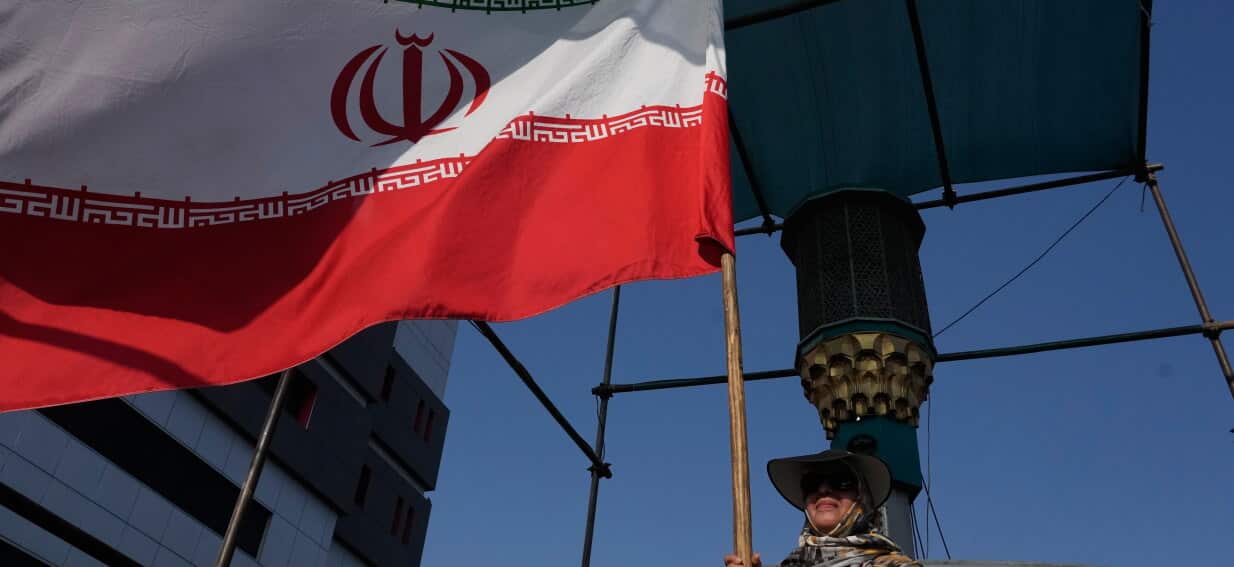
The modern art of statecraft relies heavily on the threat of absolute ruin. When high-stakes diplomacy stalls, actors on both sides of the Persian Gulf pivot instantly toward the vocabulary of total annihilation. Recent rhetoric framing Tehran's posture as a shift toward an uncompromising offensive stance mirrors a familiar cycle. This escalatory theater unfolds against a backdrop of shifting alliances, domestic pressures, and economic attrition. Understanding the mechanics behind this posturing requires looking past the bluster of presidential threats and retaliatory warnings.
Military doctrine in the Islamic Republic has long embraced asymmetric deterrence. For decades, strategists in Tehran built a defense architecture predicated on proxy networks, missile proliferation, and the capacity to disrupt vital global trade conduits like the Strait of Hormuz. When state leaders signal a transition to full offensive operations, they are rarely announcing a sudden conventional invasion. Instead, they are signaling a removal of self-imposed operational restraints on regional militias, cyber units, and maritime harassment tactics. If you enjoyed this piece, you should check out: this related article.
Washington and its regional partners understand this calculus intimately. The introduction of unconventional threats directed at critical infrastructure throughout the Middle East creates an immediate economic shockwave. Energy markets react instantly to whispers of conflict. Insurance rates for commercial tankers spike within hours of a hostile declaration. This structural vulnerability forms the bedrock of Tehran's counter-strategy. By raising the cost of confrontation for external powers, decision-makers in Iran aim to fracture the political consensus supporting economic sanctions.
Maximum pressure campaigns generate their own momentum. When diplomatic channels freeze, intelligence sharing breaks down, and minor tactical miscalculations carry catastrophic weight. The margin for error shrinks to zero. A stray drone or an intercepted transmission can easily be misread as the opening salvo of a broader engagement. Veteran diplomats recognize this dangerous dynamic from past standoffs, yet the political incentives on all sides consistently favor escalation over compromise. For another look on this development, refer to the latest coverage from The New York Times.
The Economic Realities Driving the Posture
Sanctions have hollowed out formal trade networks inside Iran, forcing the state to adapt through smuggling rings, digital currency workarounds, and bilateral barter arrangements with sympathetic powers. The domestic population bears the brunt of this financial isolation. Inflation erodes savings daily, leading to sporadic labor strikes and civil unrest.
Under these conditions, foreign policy serves a dual purpose. External posturing rallies nationalist sentiment against a common adversary, temporarily muting internal dissent. At the same time, maintaining a credible threat posture prevents adversaries from interpreting domestic economic hardship as strategic paralysis.
- State budgets remain heavily strained by defense expenditures relative to public welfare needs.
- Underground commercial networks dictate the survival of vital import channels.
- Regional trade partnerships with neighboring states provide a modest fiscal cushion against total collapse.
Observers often misinterpret these economic constraints as a sign of imminent capitulation. History suggests the opposite reaction occurs. Hardline factions consolidate authority during periods of acute economic stress, viewing concessions as an existential vulnerability rather than a practical compromise.
Maritime Chokepoints and Global Vulnerability
Geography remains an unyielding constraint in any Middle Eastern confrontation. The Strait of Hormuz handles roughly a fifth of the world's petroleum consumption. Closing or severely restricting traffic through this narrow corridor triggers immediate global economic fallout.
Naval forces stationed in the region spend decades mapping every cove, drilling rig, and shipping lane. Asymmetric naval tactics deployed by the Islamic Revolutionary Guard Corps Navy rely on swarming speedboats equipped with anti-ship missiles and naval mines. While these assets cannot withstand a prolonged conventional war against advanced carrier strike groups, they possess the precise capability required to disrupt commercial shipping lanes effectively.
A single mined tanker halts maritime traffic across a multi-billion-dollar energy artery for days, demonstrating how low-cost disruption neutralizes high-tech military superiority.
Insurance syndicates in London and New York adjust underwriting terms overnight when tensions flare. The psychological impact on global supply chains frequently outstrips the physical damage inflicted by actual kinetic strikes. This reality transforms regional flashpoints into worldwide economic concerns.
The Failure of Conventional Deterrence Models
Traditional deterrence theory assumes rational actors weigh costs and benefits logically before taking action. Modern geopolitical realities complicate this neat academic framework. Domestic political survival often supersedes long-term economic stability for leaders facing external existential threats.
When rhetoric escalates to include threats directed at neutral intermediary states or secondary regional players like Oman, the diplomatic architecture strains to the breaking point. Oman has historically served as a vital backchannel for secret talks between Washington and Tehran. Dragging neutral diplomatic facilitators into the public crossfire destroys the confidential spaces where de-escalation actually occurs.
The persistent reliance on threats of total destruction creates an environment of permanent crisis. Eventually, actors become desensitized to the warnings. This normalization of hostility increases the probability of a kinetic clash born purely out of exhaustion or miscalculated bluffing.
As long as foundational grievances regarding security architectures, nuclear development, and regional influence remain unaddressed, the cycle of manufactured crises will persist. Each iteration brings the region closer to an irreversible threshold where diplomatic off-ramps vanish entirely, leaving only the grim mechanics of open conflict in their wake