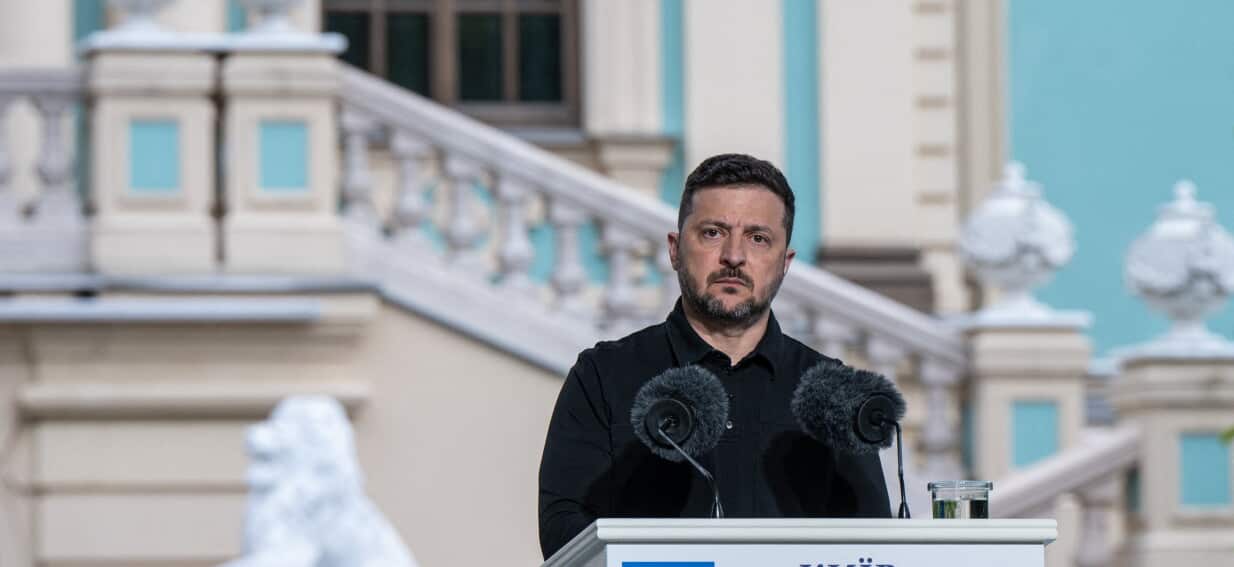
The United States government escalated its economic campaign against Havana on Thursday by blacklisting Cuban President Miguel Díaz-Canel, his immediate family, and key pillars of the island’s military and civilian infrastructure. The Treasury Department’s Office of Foreign Assets Control (OFAC) added Díaz-Canel, First Lady Lis Cuesta Peraza, and her son Manuel Anido Cuesta to the Specially Designated Nationals list. They were joined by Alejandro Castro Espín—the son of former leader Raúl Castro—and a sweeping network of state entities including the Ministry of the Revolutionary Armed Forces (MINFAR) and the local surveillance apparatus known as the Committees for the Defense of the Revolution (CDR).
On paper, the move blocks any U.S. property held by these individuals and freezes them out of the American financial system. In reality, the Cuban elite rarely holds assets under U.S. jurisdiction. The true mechanism of this policy operates beneath the surface, utilizing aggressive secondary sanctions designed to isolate Cuba from global commerce entirely.
This escalation unfolds against a backdrop of severe domestic hardship on the island, where an ongoing energy blockade has choked off fuel shipments, crippled the power grid, and left nearly three million citizens without stable water access.
The Mechanics of the Economic Squeeze
Sanctioning a sitting head of state is a rare diplomatic hammer, previously reserved for figures like Venezuela's Nicolás Maduro or Syria's Bashar al-Assad. The logistical reality is that Díaz-Canel is not buying real estate in Miami or routing personal funds through Wall Street banks. To understand why the Treasury Department issued this directive, one must look at the secondary sanctions framework established by an executive order signed on May 1.
The directive grants Washington the authority to penalize foreign financial institutions that conduct or facilitate transactions on behalf of blacklisted individuals or entities.
A European or Latin American bank processing a routine commercial transaction involving the Cuban presidency, the military-run mining venture Minera La Victoria SA, or even the state-backed travel agency Amistur Cuba SA now faces a binary choice. They can maintain their relationship with Havana, or they can preserve their access to the U.S. dollar clearing system.
They will choose the dollar. Every time.
The commercial isolation ripples into every sector of the Cuban economy. By blacklisting the tourism agency Amistur and the Ministry of the Revolutionary Armed Forces, the U.S. is targeting Grupo de Administración Empresarial S.A. (GAESA), the sprawling military conglomerate that controls the vast majority of Cuba’s retail, hotel, and trade infrastructure.
A Strategy of Assisted Collapse
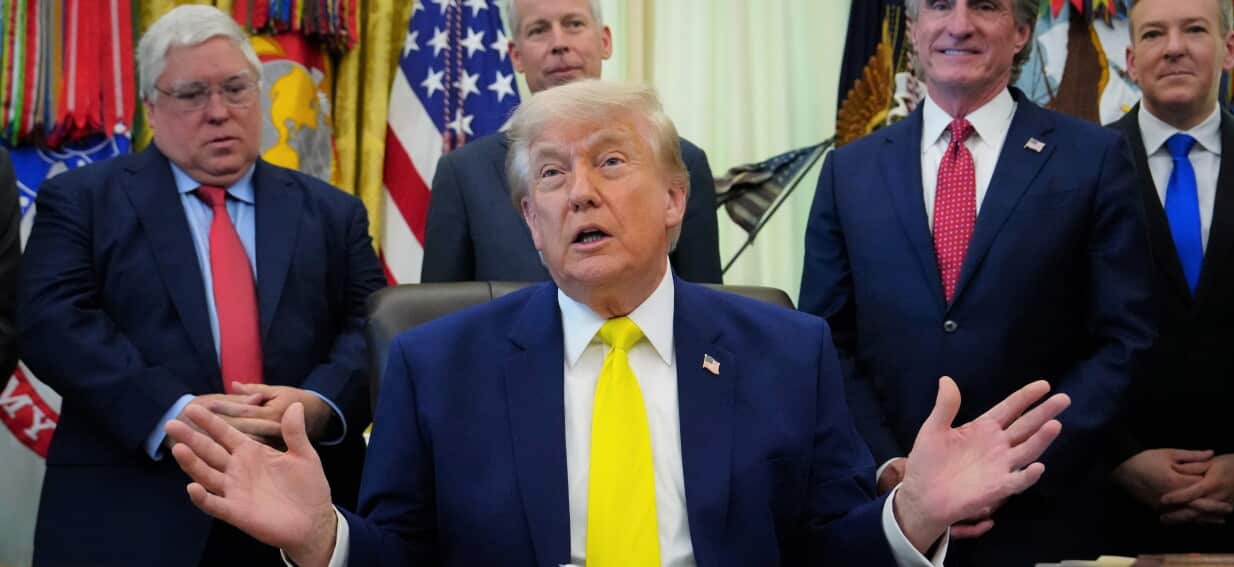
The White House has phrased its objectives in humanitarian terms. When asked if the sanctions were intended to trigger a definitive systemic collapse, the administration demurred, stating the goal is simply to see Cuba run as a stable nation that can sustain its population. The president noted that the island is currently starving, lacking energy, oil, and capital.
However, the strategy on the ground tells a more aggressive story. The blacklisting of Díaz-Canel follows a string of federal indictments unsealed weeks ago against Raúl Castro and five other officials over the 1996 downing of two Brothers to the Rescue aircraft.
Havana has long maintained that those flights violated sovereign airspace and characterized the new legal and economic measures as a manufactured escalation. Cuban Foreign Minister Bruno Rodríguez responded by calling the designations a vile interventionist maneuver intended to provoke a national security conflict.
The underlying reality is that the Cuban state is more vulnerable today than at any point since the Special Period of the 1990s. The current energy blockade has driven domestic oil production down to just 40 percent of what the island requires to function.
The resulting blackouts are not mere inconveniences. They stop water pumps from running, disrupt food refrigeration, and bring what remains of private manufacturing to a standstill.
Cuban Domestic Fuel Production: [████░░░░░░] 40%
Deficit Supplied by Diminishing Imports: [░░░░██████] 60%
Secretary of State Marco Rubio defended the escalation, arguing that the entities targeted fund radical revolutionary movements and institutional warfare directed against American interests. While the administration maintains that its preference is a negotiated economic opening, officials openly express skepticism that any diplomatic resolution can be reached with the current leadership cadre.
The Blind Spot in Washington Playbook
The assumption underpinning this maximum-pressure campaign is a familiar one. It posits that if an economy is squeezed tightly enough, the internal contradictions and popular misery will force the ruling elite to capitulate or face a domestic uprising.
History suggests otherwise. Decades of embargo have shown that comprehensive economic restrictions rarely dislodge entrenched regimes; instead, they frequently hand those regimes a permanent justification for their own administrative failures.
The immediate consequence of this policy is not a transition to a market economy, but a compounding humanitarian crisis that drives migration. When the power grid fails and water stops flowing, those who can leave choose to do so.
Furthermore, total Western isolation forces Havana deeper into the orbits of alternative geopolitical actors. With Western banks paralyzed by the fear of secondary OFAC sanctions, Cuba has few options but to look to illicit shipping networks, alternative currency clearinghouses, and geopolitical adversaries willing to barter fuel for long-term intelligence or military access.
Washington is operating on the premise that it can manage these global flashpoints sequentially. The administration signaled that it intends to conclude its primary operations regarding Iran before turning its full attention to forcing a restructuring in Cuba.
But geopolitical realities rarely wait in a neat queue. By executing a strategy designed to bring an island 90 miles from the Florida coast to the brink of absolute insolvency, the U.S. is testing a volatile hypothesis: that a collapsed state on its doorstep will somehow be easier to manage than a sanctioned one.