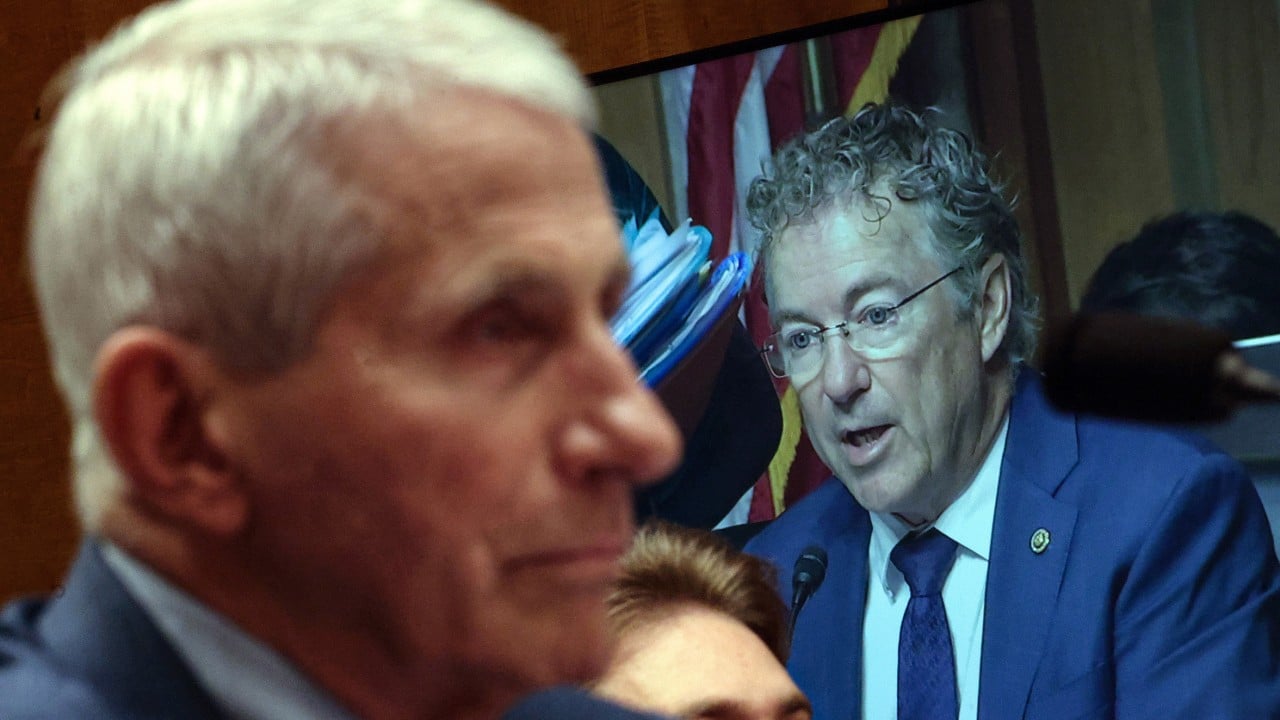
The United States Senate panel vote to hold Dr. Anthony Fauci in contempt of Congress marks a turning point in legislative oversight and public health accountability. Beneath the procedural motion lies a deeper partisan struggle over the handling of the COVID-19 pandemic, the origins of the virus, and the limits of executive branch immunity during national emergencies.
For decades, career civil servants operated with a quiet insulation from the partisan brawls of Capitol Hill. Scientific advisory positions carried a presumption of technical authority that typically shielded officials from direct legislative cross-examination. That era is over. The decision by a Senate committee to advance contempt proceedings against the nation's former top infectious disease expert illustrates how deeply public health policy has collided with raw political combat.
The Mechanics of Legislative Contempt
Contempt of Congress is a rare, high-stakes instrument. When a committee votes to hold a witness in contempt, it triggers a sequence that rarely yields a simple resolution. The measure moves from the originating panel to the full chamber for a floor vote. If approved, the referral lands on the desk of a United States Attorney, who must then decide whether to present the matter to a grand jury for criminal indictment.
Historically, executive branch officials and high-ranking advisors have invoked various privileges to avoid compliance with congressional subpoenas. Yet, retired or former officials occupy a complex legal gray area. While executive privilege protects internal deliberations of sitting presidents and their immediate advisors, extending that protection indefinitely after a transition of power remains legally contested.
Lawmakers on the committee pushing the contempt charge argue that full transparency is non-negotiable. They point to missing electronic communications, disputed recollections of meetings regarding gain-of-function research funding, and inconsistencies in previous testimony. To these legislators, the vote is not about retribution. It is about enforcing the fundamental constitutional power of the purse and legislative oversight.
The Underlying Friction Points
The specific catalysts for the contempt action involve a web of correspondence, grants, and advisory memos. Investigators have spent years parsing email trails to determine what federal health agencies knew about viral research collaborations in Wuhan, China, and when they knew it.
Critics of the former director of the National Institute of Allergy and Infectious Diseases contend that public statements downplaying certain origin theories contradicted internal agency discussions. They argue that a concerted effort was made to deflect attention away from federally funded research grants that may have supported risky coronavirus experiments.
On the other side, defenders characterize the investigation as a prolonged exercise in political scapegoating. They maintain that the public record has been thoroughly combed, that thousands of pages of documents have been surrendered voluntarily, and that hours of closed-door depositions have already taken place. From this perspective, the contempt vote represents an escalation designed to score political points rather than uncover new facts.
Science does not operate in a political vacuum, but politics rarely grasps the nuances of scientific risk assessment. During a global crisis, decisions are made under conditions of extreme uncertainty. Data changes. Guidance shifts. When lawmakers attempt to apply strict legal standards of absolute certainty to dynamic medical judgments made months or years prior, the friction is inevitable.
The Precedent for Future Administrations
The fallout from this legislative showdown extends far beyond one individual. Future public health emergencies will require rapid mobilization of top scientific minds. If elite researchers and agency heads believe that participating in crisis management exposes them to retroactive criminal investigations and partisan contempt citations, the pool of willing experts will shrink dramatically.
Top-tier epidemiologists, virologists, and logisticians will think twice before accepting government appointments. The bureaucratic self-preservation instinct, already strong within federal agencies, will harden into an impenetrable wall of silence and documentation avoidance. Bureaucrats will learn to communicate exclusively through sanitized channels, prioritizing legal defense over open scientific exchange.
Conversely, proponents of aggressive oversight argue that accountability must have teeth. Without the threat of contempt, powerful agency leaders could routinely stonewall congressional inquiries, withhold crucial grant data, and mislead elected representatives without consequence. The legislative branch, responsible for allocating billions of dollars in taxpayer funds for biomedical research, requires unobstructed access to the truth to draft effective legislation.
The Legal Reality Check
Despite the political theater, criminal prosecution following a congressional contempt citation remains a steep climb for prosecutors. Courts must weigh competing constitutional interests, the exact phrasing of the subpoena, and the good-faith efforts of the witness to comply.
Past cases involving high-profile contempt citations demonstrate that legal battles can drag on for years, often ending in negotiated compromises or appellate rulings that clarify the boundaries of legislative power without delivering decisive victories to either side. The Department of Justice faces a delicate balancing act when deciding whether to prosecute officials from previous administrations, weighing institutional norms against statutory obligations.
The Senate panel's vote ensures that the battles of the pandemic era will be litigated well into the future. As the resolution heads toward broader legislative debates, the fundamental tension between executive expertise and legislative authority remains unresolved, leaving a permanent scar on the relationship between science and the state.