In the dense mining corridors of Ituri province, eastern Democratic Republic of Congo, every unchecked hour represents a profound hazard. When an Ebola outbreak accelerates past the operational capacity of local response teams, the mathematical reality of viral transmission shifts from a controllable curve into an exponential threat. Between sixty and seventy percent of new infections now emerge completely outside monitored contact lists. This statistical chasm reveals a surveillance apparatus severely overwhelmed by the sheer velocity of the pathogen. Health workers are not merely losing ground; they are trying to contain an active fire with empty buckets while navigating active zones of conflict, chronic institutional neglect, and deep community mistrust.
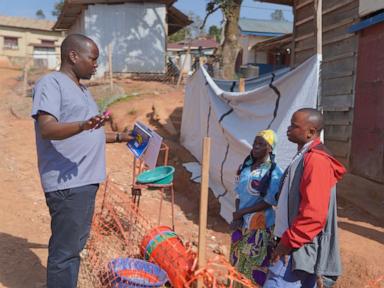
Public health containment relies on a precise formula. Find the patient, isolate the danger, identify every individual who crossed their path, and monitor those contacts for twenty-one days. Yet this theoretical framework collapses when applied to eastern Congo's current operational reality. Surveillance officers like Gédéon Banga Ngbape routinely field up to seventy alerts a day across rugged terrain, working seventeen-hour shifts that stretch past midnight. They walk paths soaked in mud, dodge rebel checkpoints, and confront a populace exhausted by decades of war and neglected public infrastructure. Recently making headlines in this space: The Anatomy of Immunization Governance: Decoding State Resistance to Federal Policy Shifts.
The arithmetic of modern epidemiology dictates that in high-density settlements and active trade hubs, a single infected individual interacts with dozens of people before showing severe symptoms. When contact tracing drops below functional thresholds, transmission chains multiply unseen. Patients arrive at treatment centers only after they have already seeded new outbreaks across multiple neighborhoods.
The Cost of Unpaid Labor
The infrastructure protecting the international community from widespread contagion rests on the shoulders of individuals who have not received a salary in months. In zones like Nizi, treatment center closures triggered by strikes highlight a systemic betrayal of frontline staff. Medical personnel face the dual burden of treating hemorrhagic fever with inadequate personal protective equipment while worrying about how to feed their own families. Community health workers receiving meager monthly stipends risk their lives daily, knowing that administrative bottlenecks in Kinshasa or international funding delays directly translate to operational paralysis on the ground. Further information regarding the matter are covered by World Health Organization.
When workers walk off the job because they cannot afford basic survival necessities, isolation wards lock their doors. This closure immediately severs the fragile link between frightened communities and medical care. Patients turn away from institutional settings and seek help from traditional healers or hide symptoms at home, multiplying exposure risks within family compounds.
Navigating the Wall of Mistrust
Epidemiological containment requires more than medical supplies; it demands social legitimacy. Decades of institutional abandonment have left eastern Congolese communities deeply skeptical of outsiders bearing medical interventions. Rumors spread rapidly through marketplaces, claiming that treatment centers are vectors of disease rather than places of healing. Armed opposition groups operating in the Kivus and Ituri further restrict movement, turning humanitarian corridors into perilous flashpoints where response teams face outright hostility.
Overcoming this resistance requires shifting authority directly to local leaders, women's groups, and youth networks who understand the cultural nuances of the region. When outsiders dictate protocols without local buy-in, communities respond with suspicion or resistance. Conversely, when local voices lead the outreach, fear yields to cooperation.
Stopping the current trajectory requires an immediate operational reset. Frontline personnel must receive guaranteed, hazard-adjusted compensation distributed without bureaucratic friction. Security frameworks must adapt to protect treatment facilities from partisan attacks, and logistical pipelines must flood affected health zones with rapid diagnostic tests and transport vehicles. Without these structural corrections, the epidemic will continue to outpace the medical response, turning regional containment zones into permanent transmission incubators.