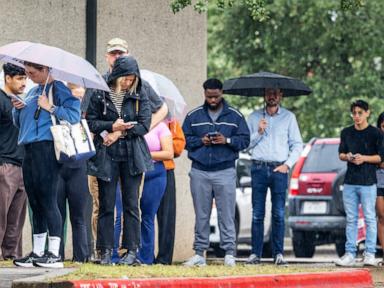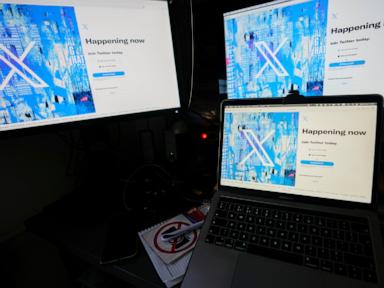
Graphika uncovered a coordinated network of China-linked Spamouflage accounts on X masquerading as everyday American voters to widen political divisions ahead of the US election. These fake personas adopt stolen profile pictures, recycle partisan memes, and mimic domestic outrage across both left- and right-leaning ideological lines. Rather than championing Beijing directly, the network injects cynicism, amplifies wedge issues, and erodes public trust in American democratic institutions from the inside out.
For anyone who has tracked state-sponsored information operations over the past decade, this pivot looks painfully familiar. Moscow wrote the modern playbook during the 2016 election cycle through the Internet Research Agency, proving that foreign actors do not need to invent political grievances when they can simply pour gasoline on existing fires. Beijing took longer to adopt that exact posture. Historically, Chinese influence campaigns were clumsy, predictable, and easy to spot. They relied on state media amplification, robotic praise for Communist Party policies, and awkward English phrasing that screamed foreign origin within three seconds of reading a post.
That era is over.
The recent findings from social media intelligence firm Graphika expose a sharper, more patient adversary. By infiltrating X—formerly Twitter—under the guise of disillusioned Midwestern conservatives, progressive activists, and frustrated independent voters, the Spamouflage network has graduated from state-sponsored cheerleading to covert domestic impersonation.
Anatomy of a Digital Sleeper Cell
To understand why this matters, you have to look at how the accounts actually operate on the ground. Graphika researchers identified a cluster of profiles that spent months building mundane, believable backstories before ever touching a political third rail.
In the early stages of an operation, these accounts post benign content. They share photos of pets, complain about local traffic, repost viral sports clips, and engage in harmless banter about pop culture. This is standard account warming. Social media algorithms—and skeptical human users—treat brand-new accounts spewing political vitriol with immediate suspicion. By establishing a baseline of ordinary human behavior, the operators age the accounts past automated spam filters.
Once the profiles look lived-in, the pivot begins.
The avatars are rarely generated from scratch anymore, though AI-generated faces still appear in the mix. More often, operators scrape authentic photos from obscure regional blogs, defunct Instagram pages, or small-town Facebook groups. They pair these stolen identities with hyper-local cues—a mention of a specific state university, a complaint about property taxes in a swing county, or an American flag emoji tucked neatly next to a biblical verse or a progressive slogan.
Then comes the content injection. Instead of posting links to Xinhua or CGTN, the accounts repost genuine grievances from real American commentators. They take a viral clip of a heated school board meeting, a video of urban crime, or a thread about rising grocery prices, and add a layer of fatalistic commentary. The goal is never to convince an American voter that Beijing has a better system of governance. The goal is to convince that voter that their own system is irredeemably broken, corrupt, and unworthy of participation.
Why Beijing Abandoned Its Old Playbook
State-backed influence campaigns evolve when their previous tactics fail to generate return on investment. For years, Spamouflage—also known across the threat intelligence community as Dragonbridge—operated like a noisy spam cannon. Thousands of accounts would flood hashtags simultaneously with identical text, poorly edited cartoons, and heavy-handed attacks on critics of the Chinese government.
Platforms caught them easily. Researchers mapped them in days. Ordinary users ignored them because the content felt alien to the native cadence of American social media.
The shift toward impersonating US voters reflects a cold strategic calculation in Beijing. Direct propaganda triggers an immediate immune response in Western audiences. When an account with an obvious state affiliation lectures Americans about foreign policy or human rights, users dismiss it instantly. However, when a perceived neighbor from Ohio or Pennsylvania expresses disgust with both major political parties and questions the legitimacy of mail-in ballots, the message bypasses ideological defenses.
Consider a hypothetical example of how this dynamic plays out in real time. Imagine a genuine voter in a battleground state scrolling through X late at night, already frustrated by inflation and polarized cable news. They encounter a reply from an account claiming to be a retired union worker from Michigan. The account uses local slang, references a real factory closure, and argues that voting is pointless because both parties serve corporate elites. That single interaction carries vastly more psychological weight than ten thousand bot posts praising Chinese infrastructure.
The Structural Vulnerability of X
You cannot separate the evolution of Spamouflage from the shifting architecture of the platform it exploits. X remains the central nervous system for real-time political news, journalist sourcing, and elite public discourse in the United States. Even with a smaller overall user base than Facebook or TikTok, its outsized influence on media narratives makes it a prime target for information operations.
Over the past two years, significant reductions in trust and safety personnel, paired with changes to verification systems, altered the defensive posture of the platform. When blue checkmarks shifted from a signal of verified identity to a paid subscription feature, the cost of buying algorithmic visibility dropped to a few dollars a month.
Influence operators read the room immediately.
Paid accounts receive priority ranking in reply threads. For a covert network trying to hijack organic conversations, paying a nominal monthly fee to push fabricated voter commentary to the top of a politician's replies is an extraordinary bargain. Automated detection systems still catch massive, synchronized botnets that post identical links every ten seconds. They struggle far more with smaller, disciplined cells of human-curated accounts that post original replies, engage in back-and-forth arguments, and behave like genuine partisans.
The Double-Edged Sword of Foreign Amplification
One of the most misunderstood aspects of modern astroturfing is how foreign networks interact with domestic politics. Many observers assume these campaigns invent false narratives out of thin air. In reality, fabrication is expensive and risky. Amplification is cheap and devastatingly effective.
Spamouflage operators spend hours monitoring trending domestic hashtags to see what Americans are already fighting about. When a divisive issue erupts—whether it involves border security, foreign aid to Ukraine and Israel, or domestic civil rights—the network steps in to amplify the most extreme voices on both sides.
They do not pick a single candidate to support. In fact, Graphika's findings underscore that these accounts frequently attack figures across the entire American political spectrum. One cluster might attack President Joe Biden as weak and incompetent, while an adjacent cluster within the same overarching network attacks Donald Trump as erratic and dangerous.
This ideological agnosticism confuses casual observers, who often look for a clear partisan bias to prove foreign interference. When a network attacks everyone, it is not acting out of confusion. It is executing a strategy of asymmetric polarization. By feeding outrage to both the far left and the far right simultaneously, the operators widen the gap between American citizens, making bipartisan compromise politically toxic and weakening Washington's ability to project unified foreign policy abroad.
The Mechanics of Cross-Platform Laundering
While X serves as the primary megaphone for breaking political narratives, Spamouflage rarely confines itself to a single app. Threat intelligence analysts consistently observe a technique known as cross-platform laundering.
A narrative or meme might originate on a niche forum or a low-moderation video platform. Operators then carry that asset over to X, where fake voter accounts engage with it to create the illusion of grassroots momentum. Once the topic gains traction on X, screenshots of those fake voter tweets are exported to Facebook groups, Instagram reels, and TikTok videos.
By the time a casual user sees a screenshot of an "American voter" expressing outrage on their Instagram feed, the original context is completely stripped away. The platform where the account originated may have already suspended the profile, yet the visual artifact continues to circulate freely across the broader internet ecosystem.
What Threat Researchers Actually See Behind the Curtain
Uncovering these networks requires painstaking forensic work that goes far beyond reading tweets. When firms like Graphika, Mandiant, or the Stanford Internet Observatory attribute an operation to China, they rely on technical breadcrumbs left behind by human operators working on a schedule.
Human beings are creatures of habit, even when running covert intelligence operations. Analysts look at temporal patterns—when accounts log in, when they post, and when they go silent. Despite efforts to mask their locations using virtual private networks based in the United States, operator activity frequently dips during Beijing lunch hours and stops entirely during major Chinese national holidays.
Linguistic slip-ups also betray the origin of the accounts. Even skilled English speakers occasionally drop articles, misuse prepositions, or rely on subtle syntactic structures carried over from Mandarin. In some cases, operators accidentally post simplified Chinese characters into an English-language thread before rapidly deleting the message—a digital mistake captured instantly by automated archiving tools.
Technical infrastructure provides the final link. Accounts within a cluster often share registration patterns, recycle specific image metadata, or interact with one another in closed loops during the initial testing phases before launching into public threads.
The Limits of Platform Takedowns
Every time a major investigative report exposes a covert influence network, the affected platform typically responds with a predictable press release announcing that the accounts have been removed for violating policies against coordinated inauthentic behavior.
Takedowns are necessary, but they are a game of digital whack-a-mole.
The barrier to entry for creating a new persona is effectively zero. Large language models have eliminated the language barrier that once exposed foreign trolls instantly. Today, an operator sitting in an office building in Shanghai or Beijing can instruct an AI model to rewrite a political rant in the exact vernacular of a twenty-five-year-old college graduate from Austin or a sixty-year-old retiree from Tampa.
Furthermore, once a fake persona builds a modest following and successfully injects a divisive talking point into the bloodstream of a genuine political movement, suspending the account does not undo the damage. Real influencers, partisan pundits, and everyday voters pick up the talking point and repeat it organically. At that point, the foreign operator can walk away entirely; domestic users do the rest of the work for free.
Navigating a Compromised Information Environment
Expecting social media companies or federal agencies to sanitize the internet before an election is a fantasy. The volume of daily content is too vast, the constitutional protections around free speech in the United States rightly limit government intervention, and the commercial incentives of engagement-driven algorithms naturally reward outrage over nuance.
Recognizing the fingerprints of covert manipulation requires shifting how you consume political media.
Accounts that exist solely to stoke existential dread, demand total ideological purity, or insist that democratic participation is entirely futile are rarely acting in good faith—whether they are run by a state-backed unit in China or a domestic engagement farmer chasing ad revenue. Look closely at profiles that rely on generic stock imagery, exhibit sudden shifts in posting history from mundane topics to relentless political agitation, or engage exclusively in inflammatory replies without ever demonstrating verifiable ties to the communities they claim to represent.
The most dangerous illusion in modern politics is believing that the loudest voices on your screen represent the true consensus of your neighbors. Foreign influence operations survive because they flatter our worst assumptions about the people living across the political aisle. Strip away the algorithmic amplification and the stolen avatars, and you are left with a simple reality: a foreign adversary is betting that Americans will tear their own house down if someone simply hands them the matches.