The ballots from the November 2026 midterm elections were barely dry before the knives came out inside the Republican Party. Facing a catastrophic loss of both the House and the Senate, potential successors to President Donald Trump immediately fractured over the root cause of the defeat, turning a post-election autopsy into an early proxy war for the 2028 presidential nomination.
Vice President JD Vance drew the first and sharpest battle line the morning after Election Day, pinning the collapse squarely on the administration's ongoing military conflict with Iran. Within days, Secretary of State Marco Rubio, Florida Governor Ron DeSantis, and Senator Ted Cruz offered sharply competing diagnoses—blaming everything from tariff-driven inflation and Strait of Hormuz oil shocks to flawed domestic messaging—while Trump himself refused to crown an heir or back down from his foreign policy.
What looks on the surface like routine political finger-pointing is actually a structural crisis over what the Republican Party becomes once Trump is no longer on the ballot.
The Architecture of a Historical Blowout
To understand why the blame game turned toxic so quickly, you have to look at the scale of the damage. Midterm losses for a sitting president's party are an iron law of American politics, dating back to the Civil War. Only twice in the modern era—1998 and 2002—has a president's party gained House seats in a midterm.
Yet the November 3, 2026, results went far beyond normal historical gravity. Democrats surged to at least 258 House seats, their largest majority since 1992, while flipping the Senate and knocking off long-entrenched incumbents like Maine Senator Susan Collins. Outgoing House Speaker Mike Johnson declined to even seek the minority leadership role, leaving Representatives Steve Scalise and Jim Jordan to scrap over the wreckage of a diminished caucus.
For eight years, the modern GOP operated on a single, unspoken rule: electoral losses were blamed on election administration, media bias, or disloyal moderates, never on the core policy choices of the White House. That consensus shattered overnight. When the party lost nearly 50 House seats despite high turnout among its core base, the usual excuses evaporated. Someone had to take the fall, and every ambitious Republican with an eye on Iowa and New Hampshire knew that whoever defined the problem of 2026 would own the solution for 2028.
Vance Bets the Farm on America First Restraint
JD Vance did not wait for focus groups or party elders to issue a consensus memo. On November 4, he took to X with a blunt, unvarnished postmortem that stunned Washington.
"The reason we lost is the war," Vance wrote, referring to the military operations Trump launched against Iran in February 2026. "If you'd like to argue it was worth it, that losing the Senate for the next 6 years was worth it, then do so. Argue it was a worthwhile cost to pay. Agree or disagree, that's at least honest."
Vance's diagnosis rested on four specific grievances he claimed drove MAGA-aligned voters to stay home or defect to Democrats:
- Ending foreign entanglements: The prolonged conflict in Iran, which left Tehran blocking critical oil shipments through the Strait of Hormuz, contradicted the anti-interventionist promise that brought millions of working-class voters into the movement.
- The cost-of-living squeeze: Rising fuel costs from the blockade collided with aggressive import tariffs, keeping consumer prices elevated despite Trump's 2024 pledge to bring costs down immediately.
- Economic nationalism over global policing: Vance argued the administration drifted away from a strict domestic focus.
- Reassessing regional alliances: He explicitly pointed to voter frustration over the U.S. relationship with Israel, a sentiment that coincided with Trump's surprise Election Day announcement suspending $4 billion in annual Israeli assistance.
By firing the first shot, Vance executed a high-risk maneuver. As Vice President, he is tied to the administration's record whether he likes it or not. By publicly indicting the war, he attempted to inoculate himself against the defining vulnerability of the 2026 cycle while positioning himself as the true guardian of populist restraint.
The gamble carried an immediate price. While Trump publicly called Vance's assessment "largely true" due to short-term gas prices, the president defended the strikes as essential to stopping an Iranian nuclear weapon and privately bristled at his deputy's public airing of grievances. In a party where loyalty to the top remains the primary currency, Vance handed his rivals an opening.
Rubio and the Return of the Hawkish Kitchen Table
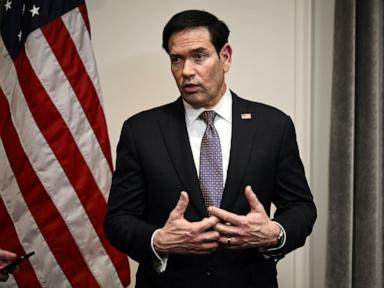
Enter Marco Rubio. For months, the Secretary of State has walked a tightrope—serving as the administration's top diplomat while delivering speeches in Greece and across the U.S. that sounded unmistakably like early presidential stump addresses.
Where Vance saw a catastrophic foreign policy blunder, Rubio saw an unavoidable national security necessity paired with a domestic affordability crisis. Speaking days after the election, Rubio defended the military campaign against Iran, arguing that preventing Tehran from acquiring a nuclear weapon outweighed short-term political pain. At the same time, he pivoted sharply toward economic empathy, acknowledging that "people are struggling" with high gasoline prices, tariff-induced supply chain friction, and rapid technological disruptions threatening white-collar and blue-collar jobs alike.
Rubio's counter-argument highlights a deep ideological fault line that never truly disappeared from the Republican coalition. During the Trump era, traditional defense hawks suppressed their instincts to stay in good standing with the populist base. The 2026 wipeout brought that tension roaring back. Rubio is betting that by 2028, primary voters will want a candidate who can defend Trump's record without apologizing for it, while offering a more disciplined, reassuring tone to suburban swing voters who fled the GOP in droves.
Early polling suggests the strategy has traction. In the immediate aftermath of the midterms, early surveys showed Rubio leading the Republican 2028 field at 18 percent, particularly strong among Hispanic Republicans in Florida, while Vance absorbed the brunt of post-election anxiety. When Trump traveled to Asia in late November, it was Rubio—not Vance—whom the White House tapped to deliver the administration's public response to domestic economic anxiety over technological disruption. In Washington, seating charts and speaking assignments are rarely accidental.
Governors, Senators, and the Culture-War Trap
Outside the West Wing bubble, state-level executives and Senate veterans have drawn an entirely different lesson from the wreckage.
Florida Governor Ron DeSantis, who watched his state's GOP machinery weather the national blue wave better than almost any other Republican stronghold, framed the defeat around governance, discipline, and kitchen-table execution. DeSantis has long argued that cultural grievances and online theatrics cannot substitute for tangible economic results when voters are paying four dollars a gallon at the pump. Without attacking Trump directly, DeSantis's allies point out that Florida Republicans held their ground by focusing on state-level tax relief and local cost-of-living issues, contrasting sharply with national candidates bogged down in foreign wars and erratic trade announcements.
Meanwhile, Texas Senator Ted Cruz and a chorus of conservative commentators have pointed fingers at campaign execution, corporate influence, and misaligned messaging. In Texas, where Republicans saw their margins shrink noticeably even in traditionally safe territory, Cruz's postmortem sparked fierce pushback from local party officials who accused national figures of ignoring the real economic pain caused by broad tariffs.
Consider a hypothetical voter in a suburban Michigan or North Carolina district—the exact type of swing territory that flipped blue in November. That voter did not walk into the booth thinking about the finer points of conservative foreign policy doctrine. They walked in angry that groceries, insurance, and gas cost more than they did two years earlier, while Washington seemed preoccupied with an open-ended conflict in the Middle East and sweeping tariffs that raised prices on everyday goods.
The competing postmortems among 2028 hopefuls fail to resolve this basic contradiction. Vance wants to end the war but keep the tariffs. Rubio wants to see the war through while softening the economic blow. DeSantis wants to shift the spotlight back to state-level fiscal restraint. None of them has yet explained how to unwind the economic policies that voters just rejected without directly repudiating the president whose endorsement they all still crave.
The Lame-Duck Trap Nobody Wants to Name
There is an elephant sitting in the middle of every 2028 strategy session, and nobody in the Republican field can afford to mention it by name. Donald Trump is a constitutionally term-limited president who will remain in the Oval Office for two more years, wielding enormous influence over the primary electorate while bearing zero responsibility for winning another election himself.
Look at how Trump reacted to the midterm rout. While candidates and strategists panicked over lost Senate seats and incoming Democratic subpoenas, the president spent his first post-election public appearances discussing White House construction projects, defending his personal financial gains, and insisting he would launch the Iran strikes all over again.
This creates an impossible bind for every 2028 contender:
- Distance means death in the primary. Any candidate who openly breaks with Trump on tariffs, foreign intervention, or executive style risks immediate excommunication by a base that still views Trump as its champion.
- Embrace means death in the general. Running in 2028 as an uncritical extension of an administration that just suffered a historic midterm rebuke hands Democrats an easy playbook to nationalize the race all over again.
Former House Speaker Newt Gingrich noted immediately after the election that the scale of the loss blew the 2028 Republican primary wide open. Iowa conservative leader Bob Vander Plaats predicted the field could quickly swell to rival the chaotic 17-candidate free-for-all of 2016.
When a political movement loses its unifying figure—or watches that figure enter a lame-duck presidency weakened by a massive congressional defeat—ambition overrides loyalty. In 2016, a fractured field allowed a charismatic outsider to pick off traditional rivals one by one. In 2028, every major contender is trying to wear the outsider's mantle while running away from the incumbent's baggage.
What Happens When the Bill Comes Due
Over the next 24 months, the incoming Democratic majorities in Congress will make life miserable for the White House. House committees will launch sweeping investigations into administration officials, challenge executive tariff authorities, and move to restrict military funding for the conflict in Iran. Every subpoena and floor vote will force the 2028 hopefuls to choose sides in real time.
Vance will have to decide whether to defend administration policies he has already declared politically fatal, or risk alienating the president he serves. Rubio will have to manage a volatile global crisis while proving he has the populist grit to survive a primary against hardened domestic brawlers. Governors like DeSantis and Glenn Youngkin will try to pitch themselves as competent executives untainted by Washington's dysfunction, gambling that primary voters finally care more about electability than ideological purity.
The media narrative treats this clash as a simple disagreement over whether Iran or inflation cost the GOP its majority. That misses the deeper reality. The 2026 midterm wipeout exposed a party that built an unstoppable coalition around one man's instincts, without ever building a coherent governing philosophy that could survive his absence. Until one of Trump's would-be successors figures out how to separate the movement's populist energy from its self-inflicted policy wounds, the Republican civil war has only just begun.