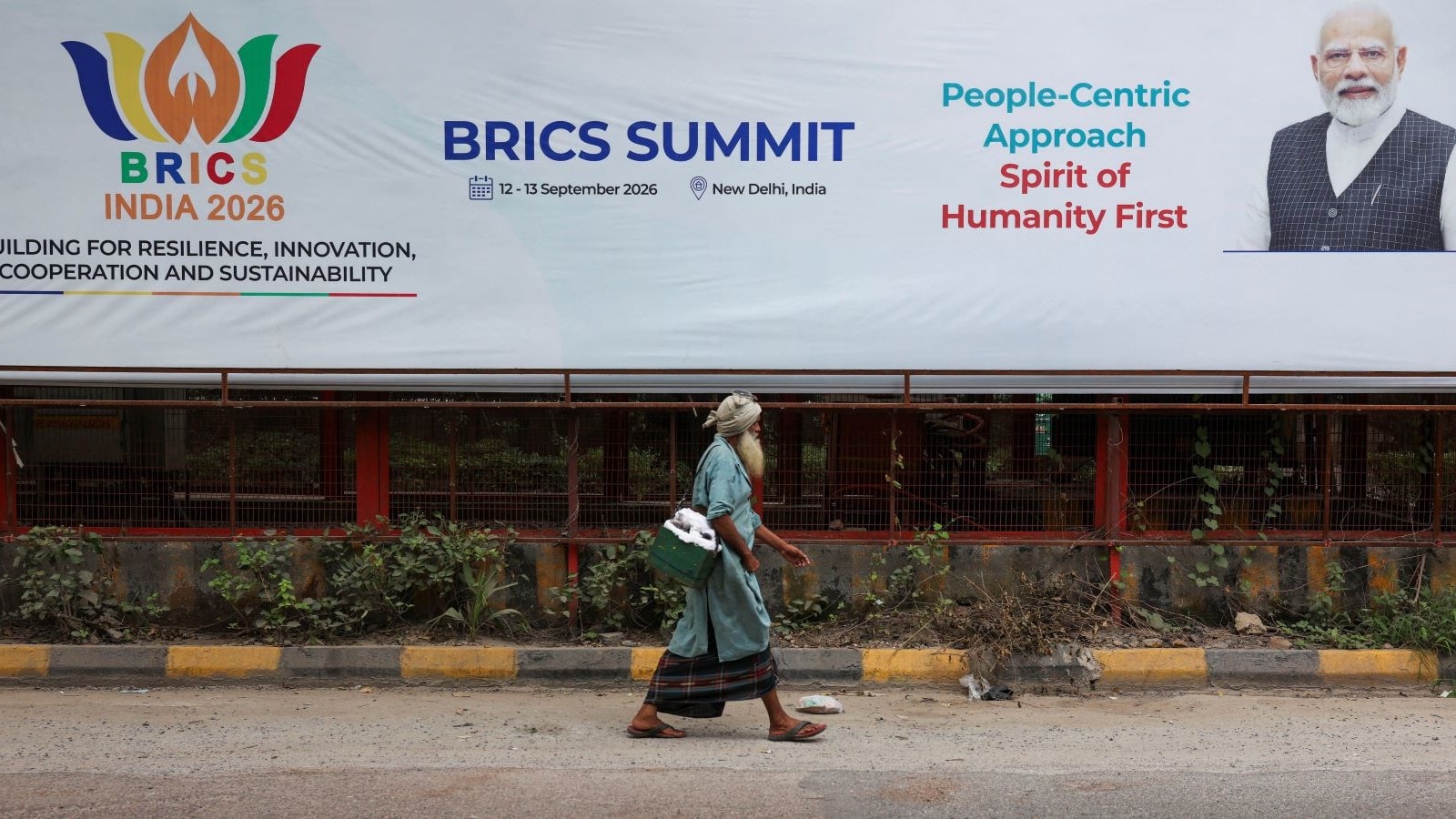
India plans to aggressively raise market access barriers and persistent trade imbalances with its BRICS partners, confronting a widening economic chasm that has seen the nation's trade deficit with the bloc triple to $226.1 billion over a five-year window. As New Delhi prepares to host the 18th BRICS Summit, policymakers face an uncomfortable reality. While overall merchandise trade within the bloc doubled to $417.5 billion between fiscal year 2021 and fiscal year 2026, the velocity of imports has thoroughly outpaced exports. Imports swelled by 131.8 percent to hit $321.8 billion, whereas exports limped upward by only 48.8 percent to reach $95.7 billion.
The resulting deficit is not merely a statistical anomaly. It represents a structural vulnerability that threatens India's manufacturing ambitions and foreign exchange reserves.
The Anatomy of an Imbalance
Look closely at the numbers behind the bloc's commerce, and the architecture of the deficit becomes clear. China and Russia alone anchor the lion's share of the import surge. Imports from China doubled over the five-year period to touch $131.6 billion, accounting for roughly 41 percent of India's total imports from the grouping. Meanwhile, purchases from Russia multiplied more than tenfold, soaring from $5.5 billion to $55.4 billion, overwhelmingly driven by discounted crude oil imports following shifts in global energy markets.
Yet, destination markets within the bloc have failed to absorb a symmetrical volume of Indian goods. The BRICS share of India's overall exports actually slipped slightly from 22 percent to 21.7 percent.
For years, official communiques have celebrated the expansion of alternative payment mechanisms, local currency settlements, and grandiose trade corridor projects like the International North-South Transport Corridor. But logistics mean little if the destination country maintains administrative roadblocks against incoming finished goods. Indian pharmaceuticals, agricultural goods, and specialized engineering products routinely run into heavy non-tariff obstacles, customs friction, and rigid regulatory gatekeeping in key partner economies.
The Non-Tariff Wall
Tariffs are transparent. Non-tariff barriers are calculated friction. When an Indian generic drug manufacturer faces months of redundant domestic testing, or an agricultural exporter runs into shifting phytosanitary standards, the cost of entry outweighs the margin.
Consider a hypothetical mid-sized engineering firm from Pune attempting to export precision machine components to a partner economy within the bloc. On paper, bilateral trade agreements suggest preferential or stable terms. In practice, the enterprise encounters labyrinthine inspection protocols, opaque standards certification, and local content mandates that systematically favor domestic producers. The shipment stalls at the port. Weeks of demurrage charges accumulate. The export becomes economically unviable.
This is the invisible machinery keeping the trade deficit wide open. South-South cooperation is frequently framed in diplomatic circles as a frictionless alternative to Western-dominated trade systems. On the ground, commercial reality is far less forgiving. Without aggressive diplomatic intervention to dismantle these structural impediments, talk of doubling bilateral targets remains wishful thinking.
Strategic Realities at the Summit
The upcoming summit in New Delhi forces these economic contradictions into the open. India occupies a delicate diplomatic tightrope. It must champion the Global South and preserve strategic autonomy while refusing to let the bloc morph into a vehicle for Chinese industrial dominance.
If the grouping is to offer genuine economic value to its members, the conversation must shift from raw tonnage of commodities to reciprocal market access. Importing cheap energy and heavy machinery is essential for industrial growth, but it cannot come at the expense of hollowing out domestic export potential.
New Delhi is expected to push for concrete mechanisms targeting regulatory transparency, faster customs clearance, and streamlined dispute resolution frameworks. Trade ministers will face pressure to prove that plurilateral frameworks can deliver equitable growth rather than unidirectional supply chains.
A trading arrangement where members act primarily as captive markets for raw material extraction and heavy industrial dumping is unsustainable over the long term. Success in New Delhi will not be measured by the length of the final joint declaration, but by whether the bloc can pivot from hollow diplomatic posturing toward genuine, reciprocal economic parity.