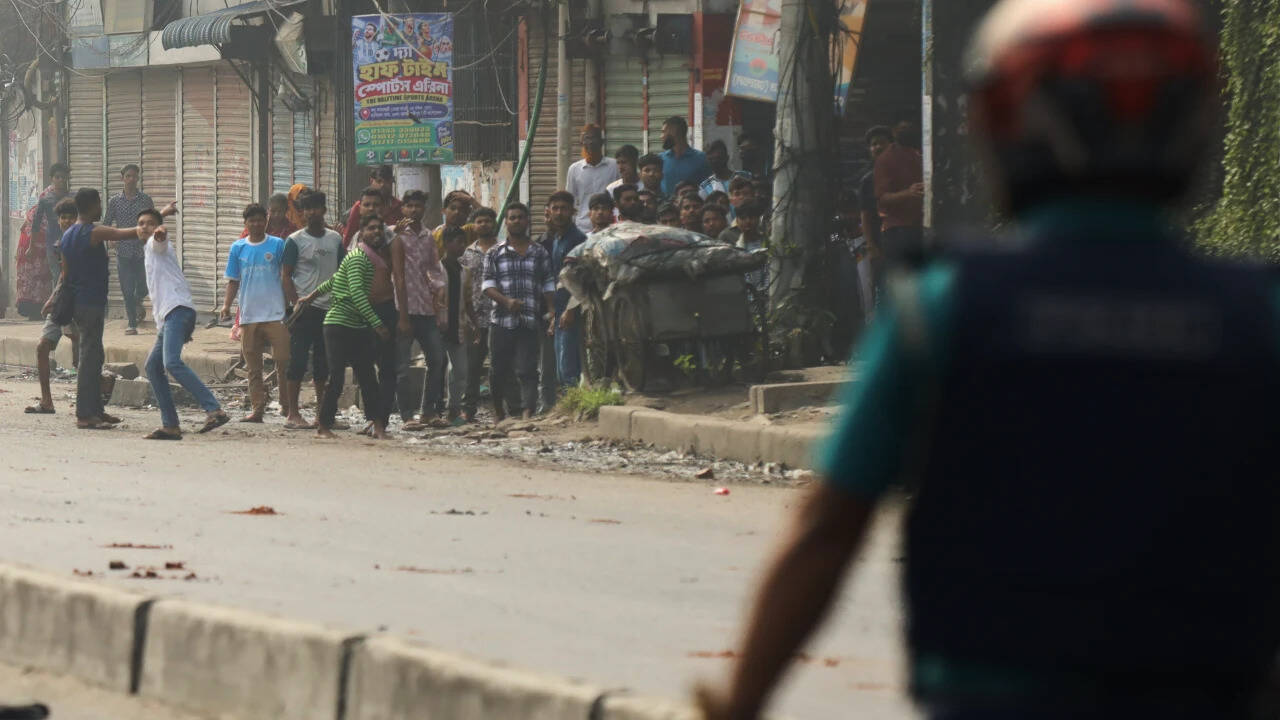
Bangladesh garment manufacturers are preparing to table a 15 percent wage hike for millions of factory workers, a figure labor unions are already dismissing as an insult that fails to cover basic survival costs. For four million people sewing clothes for the world’s largest fast-fashion brands, a 15 percent bump on an entry-level salary does not even neutralize the brutal inflation eating through Dhaka’s working-class neighborhoods. The collision course is set. Factory owners claim higher wages will bankrupt smaller suppliers and drive international buyers to Vietnam or India, while workers argue they are subsidizing Western profit margins with their own malnutrition.
To understand why a 15 percent raise feels like a pay cut to a sewing machine operator in Gazipur or Ashulia, you have to look at the baseline math. Historically, minimum wage adjustments in Bangladesh’s ready-made garment (RMG) sector happen roughly every five years, creating a structural lag where purchasing power erodes steadily before any correction occurs. In late 2023, following violent protests that left workers dead and hundreds of factories temporarily shuttered, the government raised the minimum monthly wage from 8,000 taka to 12,500 taka (roughly $113 at the time). Expanding on this theme, you can find more in: Asian Equity Intervention Mechanics During The AI Valuation Contraction.
The Math Behind the Factory Floor Revolt
Numbers do not lie, even when negotiated behind closed doors in Dhaka. When factory owners propose a 15 percent increase—whether as an annual increment mechanism or a fresh baseline adjustment—they are calculating percentages off a floor that labor advocates say was already set below the poverty line.
Consider a hypothetical example to see how this plays out in a worker’s household. Suppose a junior operator earns 12,500 taka a month. A 15 percent raise adds 1,875 taka to their paycheck. On paper, that looks like progress. In the markets of Savar or Narayanganj, however, where the prices of rice, cooking oil, lentils, and shared tin-shed housing have surged relentlessly, that extra 1,875 taka vanishes before the second week of the month. Rent hikes alone frequently absorb half of any announced wage bump, because local landlords track the minimum wage board announcements just as closely as the factory owners do. Analysts at Bloomberg have provided expertise on this situation.
Workers are not calculating percentages; they are calculating calories and rent. Unions have consistently pushed for a minimum wage closer to 23,000 or 25,000 taka—a figure grounded in basic living-wage benchmarks calculated by independent labor researchers. Between the owners' 15 percent offer and the unions' demand lies a chasm that cannot be bridged by standard collective bargaining.
Why Overtime Is a Broken Safety Valve
For decades, the unspoken agreement in Bangladesh’s apparel industry was simple: base pay stayed artificially low, and workers survived on overtime. You worked ten, twelve, or fourteen hours a day, six days a week, to turn a starvation base wage into a livable income.
That mechanism is breaking down. Global demand fluctuations, shifting order patterns from European and North American retailers, and tighter compliance audits on working hours mean overtime is no longer guaranteed. When orders slow down, workers are sent home after an eight-hour shift, leaving them stranded on their base salary. A 15 percent hike on a base rate that cannot support a single adult—let alone a family—leaves zero margin for error when global fashion orders dip.
The Squeeze From Western Fashion Brands
If you walk into the boardrooms of the Bangladesh Garment Manufacturers and Exporters Association (BGMEA), you will hear a very different story—and parts of it are rooted in hard economic reality. Factory owners are caught in a vise, and the top jaw is controlled by multinational apparel corporations in New York, London, Stockholm, and Madrid.
Bangladesh built its $40-billion-plus apparel export empire on one primary competitive advantage: the lowest labor costs among major manufacturing hubs. For forty years, that single metric turned the country into the world’s second-largest garment exporter, trailing only China. Now, manufacturers face a triple squeeze:
- Stagnant buyer prices: Western brands routinely demand faster turnaround times and stricter environmental compliance while refusing to raise the Free on Board (FOB) prices they pay factories. In many cases, brands have pushed unit prices down even as raw material and energy costs climbed.
- Energy and utility spikes: Industrial gas and electricity tariffs in Bangladesh have risen sharply, forcing factories to rely on expensive diesel generators during grid outages just to meet shipping deadlines.
- Borrowing costs: High domestic interest rates make it punishingly expensive for mid-sized factories to finance working capital or upgrade machinery.
When a factory owner says a massive wage hike will force them to close their doors, they are not always bluffing. Hundreds of smaller, subcontracting factories operate on razor-thin margins, surviving on overflow orders from larger, compliant Tier-1 suppliers. Unlike the massive, LEED-certified green factories that dominate industry press releases, these smaller units lack the capital reserves to absorb a sudden 40 or 50 percent jump in payroll overnight.
The Sourcing Bluff
Manufacturers always play the same trump card during wage disputes: the threat of capital flight. If wages rise too fast, they warn, international brands will pack up their purchase orders and move to Vietnam, Cambodia, Ethiopia, or India.
This argument is half-true and half-theatrical. Brands constantly threaten to shift sourcing when labor costs rise, using supplier competition to keep prices suppressed. Yet moving supply chains at scale is notoriously difficult. Bangladesh offers an unmatched combination of massive production capacity, vertical integration in knitwear, and decades of specialized manufacturing infrastructure. Vietnam already has significantly higher wages and a much tighter labor market. India struggles with fragmented regulatory regimes across different states. Brands cannot easily replace Bangladesh’s sheer volume, which means the industry has far more leverage to demand higher prices from Western buyers than factory owners care to admit.
How the Wage Board System Fuels Industrial Unrest
To understand why these negotiations inevitably spill onto the streets in tear gas and burned buses, you have to examine the institutional machinery governing Bangladeshi labor. Wages are not set through free, sector-wide collective bargaining. They are determined by a government-appointed Minimum Wage Board comprising representatives from the government, factory owners, and labor.
On paper, it is a tripartite system designed for consensus. In practice, labor representation on the board is frequently criticized by independent unions and international rights groups as compromised or overly aligned with ruling political interests. Unionization rates inside factories remain abysmally low, often hindered by bureaucratic registration hurdles, anti-union discrimination, and the dismissal of organizers.
Without strong, independent plant-level unions to channel grievances through formal negotiations, frustration builds silently inside the sewing lines until it explodes. A 15 percent proposal from employers does not just get rejected at a bargaining table; it acts as a spark in an industrial corridor where hundreds of thousands of workers live in dense, frustrated proximity.
The Macroeconomic Vulnerability
The timing of this standoff could hardly be worse for Bangladesh’s broader economy. Ready-made garments account for more than 80 percent of the country’s total export earnings and serve as the primary source of foreign currency reserves alongside remittances from overseas workers.
Any prolonged strike or factory shutdown in Dhaka or Chattogram immediately starves the central bank of US dollars. When shipments miss their vessel windows, brands cancel orders or demand steep air-freight discounts that wipe out a factory’s entire profit for the season. The government knows this, which is why state security forces historically intervene swiftly—and often forcefully—to clear highways and force factories back open.
What Actually Breaks the Deadlock
History shows how these standoffs usually end in Bangladesh, and it rarely satisfies anyone. Employers float an opening bid—like 15 percent—knowing it will be rejected. Workers stage wildcat walkouts. Clashes erupt between protesters and industrial police. Eventually, the prime minister or senior commerce officials step in to broker a compromise number slightly above the owners' initial offer, coupled with promises of subsidized food rations that often fail to reach the workers who need them most.
That cycle is no longer sustainable. The global apparel market is changing, and Bangladesh is approaching a critical structural transition as it prepares to graduate from the United Nations' Least Developed Country (LDC) status. Graduation will eventually strip away crucial duty-free trade preferences in major markets like the European Union unless the country meets strict labor and human rights benchmarks under schemes like GSP+.
If the European Union or the United States ties tariff-free market access directly to verifiable wage standards and freedom of association, a 15 percent wage offer will not just trigger strikes in Gazipur—it could trigger trade penalties in Brussels and Washington.
The Missing Signature on the Contract
The central flaw in every Bangladeshi wage negotiation is the empty chair at the table. The Western fashion brands—the companies that dictate the price of every t-shirt, pair of jeans, and hoodie leaving Chattogram port—are legally absent from the wage board.
Until purchasing practices change, factory owners and workers will continue fighting over crumbs while the bulk of the value remains in Western retail markups. Responsible sourcing initiatives have spent a decade auditing fire exits and building structural safety, which dramatically reduced catastrophic building collapses. Yet those same brands have largely refused to ring-fence labor costs in their supplier contracts—a mechanism where the buyer explicitly agrees to adjust the unit price paid to the factory whenever local minimum wages increase.
Without brand-backed price adjustments, a 15 percent raise leaves workers hungry, while a 50 percent raise bankrupts mid-tier suppliers. Factory owners know their initial 15 percent offer will be torn apart on the factory floor, and workers know that accepting it means another year of skipping meals to pay rent. Until the brands writing the purchase orders are forced to underwrite the true cost of labor, every wage hike in Dhaka will remain a prelude to the next strike.