Food security is no longer merely a matter of rainfall, soil chemistry, and manual labor. It has transformed into a high-stakes computing race.
Recent disclosures from research institutions in Beijing regarding artificial intelligence and robotic systems designed for crop breeding point to a profound structural shift in how nations intend to feed their populations. While mainstream reports often frame these developments as quirky technological novelties for farmers, the reality is far more strategic. These machines are not out in commercial production fields harvesting grain for market; they are inside sterile growth chambers and high-security greenhouses performing the delicate, tedious genetic cross-pollination required to engineer the next generation of climate-resilient staple crops.
The bottleneck of modern agriculture has never been our capacity to plant seeds or drive tractors. The bottleneck is the biological clock of human-managed plant breeding.
Developing a new, high-yielding, drought-tolerant strain of wheat or rice traditionally requires up to a decade of painstaking manual selection, emasculation of flowers, and cross-fertilization. Human agronomists walk rows of plants with magnifying glasses and tweezers, performing delicate microscopic surgery on floral organs. It is slow, expensive, subjective, and prone to high error rates. As climate volatility accelerates, waiting ten years to stabilize a heat-tolerant wheat cultivar is a luxury agricultural economies can no longer afford.
Enter autonomous robotic systems like the GEAIR platform developed by the Chinese Academy of Sciences. These units deploy advanced computer vision and deep learning algorithms to identify floral structures, isolate target stigmas, and execute precision mechanical pollinations around the clock.
Yet, machine-learning vision alone was not enough to solve the problem. Plant biology evolved over millions of years without
The Quiet Automation of the Harvest Field
technology, business
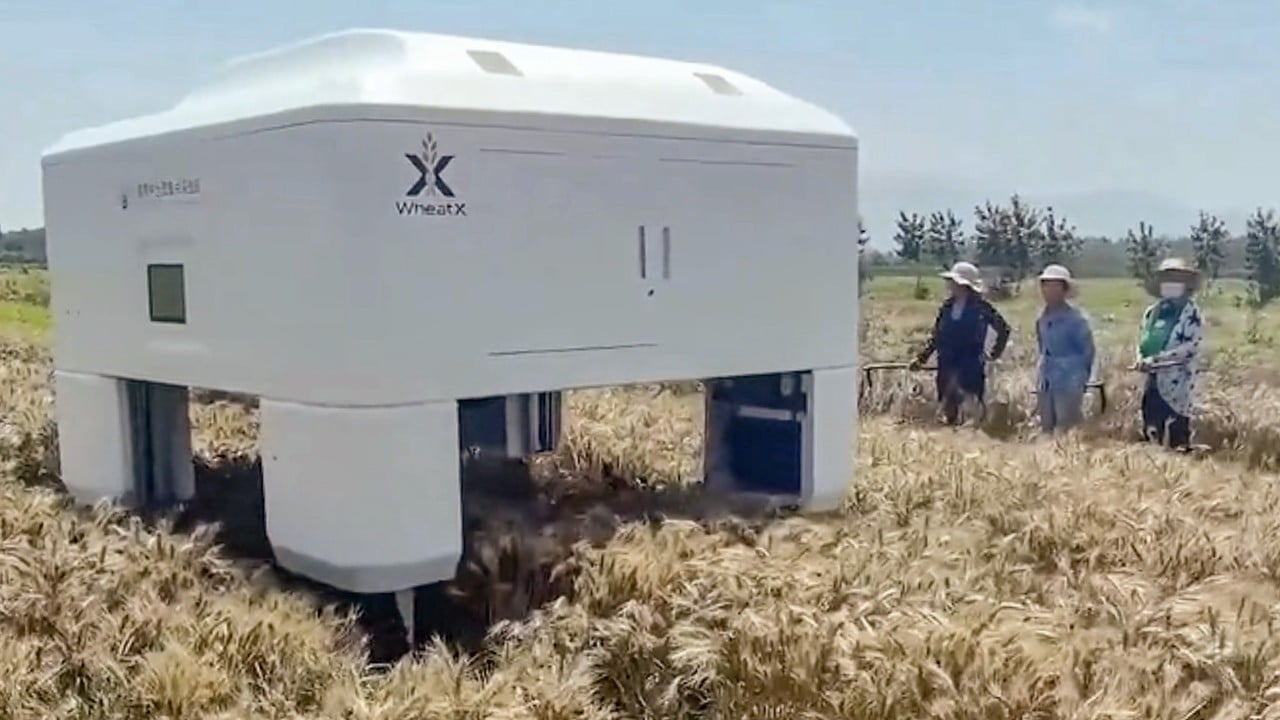
Crop genetics has always been a game of statistical patience. For decades, traditional agronomists walked endless grid patterns across experimental fields, manually measuring stalk heights, assessing disease resistance, and counting kernels by hand under the punishing weight of summer sun. It is a slow, methodical science defined by high error rates and physical exhaustion. Now, automation is rewriting that fundamental equation. China has introduced an artificial intelligence-driven robotic system specifically engineered to assist agricultural researchers in breeding superior wheat strains. This machinery does not just save labor; it fundamentally alters how genetic traits are isolated and multiplied in staple crops.
The core premise behind this robotic breeder is straightforward removal of human fatigue from high-throughput phenotyping. Wheat breeding requires evaluating thousands of individual genetic lines under rigorous field conditions. Human evaluators get tired, make subjective estimates of vigor, and miss micro-variations in leaf angle or spike density. The newly deployed hardware platform integrates multi-spectral imaging, precision mechanical actuators, and autonomous navigation to map every single plant down to the millimeter.
We have seen this narrative before in industrial manufacturing, but agriculture presents a chaotic, messy variable that silicon struggles to digest. Soil moisture shifts unpredictably. Wind bends stalks, throwing off camera calibrations. Dust coats optical sensors within minutes of operation. Engineering a machine that survives the farm is vastly different from building one that operates in a clean room.
The Mechanics of Silicon Selection
To understand what this robotic system actually accomplishes, one must look past the press releases and examine the physical mechanism. Traditional wheat breeding relies on crossing different parent strains, harvesting the hybrid seeds, and planting millions of offspring in progeny rows. Researchers must then select the top one percent based on yield potential, protein content, and drought tolerance.
The machine automates the evaluation phase through dense sensor arrays. As it rolls down the furrows of an experimental test plot, it deploys a battery of optical tools. High-resolution RGB cameras capture surface textures and color anomalies signaling fungal infections like powdery mildew. Thermal sensors map canopy temperature differentials, revealing which individual plants manage water efficiently during peak heat stress without wilting. Laser-induced fluorescence measures photosynthetic efficiency in real-time.
All of this data streams into an on-board inference engine running localized neural networks. Instead of sending terabytes of imagery back to a distant server over spotty rural cellular networks, the robot makes split-second decisions at the edge. It tags individual plants with biodegradable markers or logs their exact GPS coordinates down to the centimeter. Breeders return to the field armed not with notebooks and guesswork, but with precise digital manifests detailing which specific crossbreed earned its survival.
This speed changes the breeding cycle. Conventional methods take up to a decade to stabilize a new wheat variety through successive generations of backcrossing and field trials. By accelerating the selection phase and eliminating noise from human visual assessment, automated phenotyping compresses that timeline.
The Geopolitical Stakes of Staple Crops
Agriculture is national security disguised as botany. Wheat feeds a massive portion of the global population, and climate volatility threatens traditional breadbaskets across North America, Europe, and Asia. Shifting rainfall patterns and unseasonal heat waves mean that the wheat varieties developed in the twentieth century are increasingly ill-equipped for twenty-first-century weather.
When a nation invests heavily in automated crop breeding, it is engaging in a quiet race for food sovereignty. China faces severe arable land constraints alongside rapid urbanization and groundwater depletion in its northern agricultural plains. Growing more calories on fewer acres with less water is not an optimization problem; it is an existential threshold.
Western agribusiness giants have quietly pursued similar technological pathways for years, utilizing tractor-mounted sensor towers and drone fleets. Yet the integration of dedicated robotic agents designed specifically for the micro-scale environment of breeding nurseries—rather than macro-scale commercial harvesting—represents a different tactical focus. It shifts the automation downstream, targeting the creation of the seed itself rather than just the management of the final crop.
Yet, treating AI as a silver bullet for agricultural adaptation ignores the stubborn biology of plants. A robot can measure a thousand physical parameters per second, but it cannot invent a gene that does not exist within the available genetic library.
The Genetic Bottleneck Paradox
There is an unspoken anxiety rattling through agronomy departments worldwide. Automation makes existing workflows exponentially faster, but speed can amplify blind spots. If an algorithm is trained to select for high yield under current fertilizer regimens and standard irrigation protocols, it will ruthlessly optimize for those exact conditions.
This creates a hidden danger of genetic erosion. By hyper-focusing on immediate, quantifiable metrics of success, robotic selection systems risk discarding unusual, ugly, or slow-growing mutant strains that might harbor critical resilience genes for future crises. Evolution is messy. Nature often buries hardiness in strange, unpromising phenotypes that a strict efficiency algorithm might flag as anomalous and weed out.
Furthermore, proprietary algorithms create a new layer of dependency. When the software determining which seed survives belongs to a corporate entity or a state-backed research institute, the control over the food supply shifts away from the grower and toward the programmer. A farmer becomes a passive consumer of software-vetted genetics, disconnected from the empirical intuition that generations of agriculturalists developed through direct contact with the soil.
The machine does not know why a wheat plant feels right; it only knows that the numbers match a target threshold. That detachment is the hidden cost of progress.
Moving Past the Hype
The deployment of autonomous breeding robots in test fields marks a generational shift in how we manipulate the food supply, but it is not a magical escape from biological reality. Weather remains fickle. Pathogens mutate faster than software patches can deploy. Soil microbiomes are infinitely more complex than any synthetic training set currently in existence.
The true value of these machines lies not in their ability to replace human judgment, but in their capacity to handle the brutal, repetitive monotony of data collection. They free agronomists from the tyranny of counting leaves so that researchers can focus on the deeper questions of ecological resilience and nutritional density.
The future of wheat will not be decided by silicon alone, nor by the traditional plow. It will be forged in the tension between raw computational speed and the slow, stubborn truths of the earth.