Australia’s native stingless bees produce a rare medicinal honey—known locally as sugarbag honey—that kills dangerous, drug-resistant bacteria even after being heated and stored for years. Unlike commercial European honey, which loses its germ-fighting punch when exposed to heat or light, stingless bee honey maintains stable antimicrobial activity through non-peroxide mechanisms, offering a potent new weapon against antibiotic resistance. Researchers at institutions including the University of Sydney and the University of Queensland have confirmed that this ancient Indigenous remedy disrupts bacterial cell walls and destroys stubborn biofilms where conventional drugs fail. Yet turning a wild forest harvest into a scalable clinical therapy faces massive supply, regulatory, and chemical standardization hurdles.
The Quiet Collapse of Modern Antibiotics
Walk into any hospital infectious disease ward today, and the mood is grim. For eighty years, medicine operated on a simple, arrogant assumption. Whenever a bacterium mutated to dodge one drug, pharmaceutical chemists would synthesize another.
That pipeline has dried up. Developing a new antibiotic costs over a billion dollars and takes more than a decade, yet hospitals immediately lock the drug away as a last-resort treatment to preserve its effectiveness. For publicly traded drugmakers, the math makes no sense. You cannot recoup a billion-dollar investment selling a pill that doctors refuse to prescribe until a patient is days from death.
Meanwhile, the microbes are winning. Antimicrobial resistance occurs when bacteria evolve genetic defenses that neutralize the drugs designed to kill them. Common infections—urinary tract infections, pneumonia, minor surgical site wounds—are once again turning lethal. Methicillin-resistant Staphylococcus aureus (MRSA) and vancomycin-resistant Enterococci (VRE) routinely shrug off frontline treatments.
Desperate researchers have started looking backward instead of forward. Before penicillin changed history in 1928, physicians relied on natural antiseptics. Honey was at the top of that list. Every ancient civilization from Egypt to Rome packed wounds with honey to prevent rot and sepsis.
For the last twenty years, modern medicine has largely focused on Manuka honey, produced by European honeybees (Apis mellifera) foraging on Leptospermum tea trees in New Zealand and Australia. Manuka became a global juggernaut because of a specific chemical compound called methylglyoxal (MGO). Standard honey relies on hydrogen peroxide to kill bacteria, which human body enzymes rapidly neutralize upon contact with a wound. Manuka’s MGO bypasses those enzymes.
There is a catch, however. Bacteria are adaptable, and relying on a single dominant chemical compound invites resistance over time. Furthermore, Manuka production is heavily concentrated, expensive, and vulnerable to climate shifts and agricultural pests like the Varroa mite.
Enter Australia’s native stingless bees.
Why Sugarbag Honey Breaks the Rules
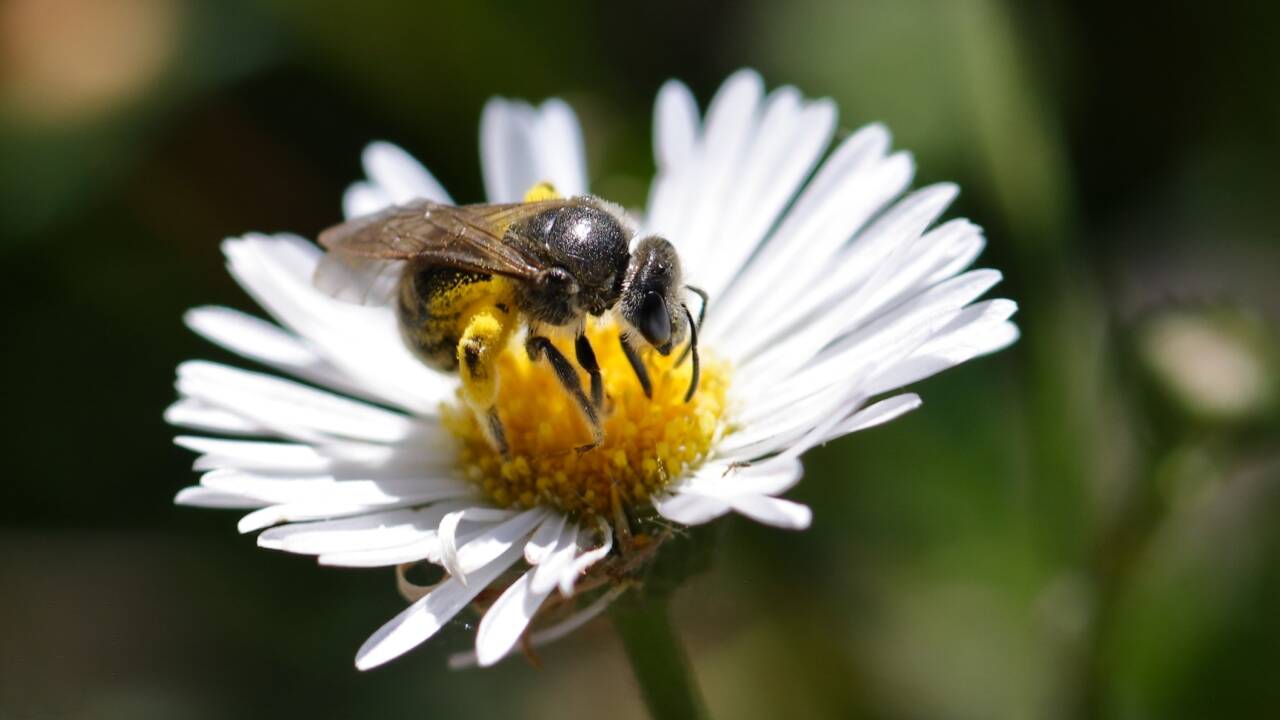
Australia is home to roughly 1,700 species of native bees, and about eleven of them are social, stingless species belonging primarily to the genera Tetragonula and Austroplebeia. Found across the tropical and subtropical north—from northern New South Wales up through Queensland and the Northern Territory—these insects look more like tiny black flies than the striped European honeybees people recognize.
They do not sting. Instead, they defend their nests by biting and coating intruders in sticky plant resins.
More importantly, they store their honey differently. European honeybees build neat, hexagonal combs out of pure beeswax. Stingless bees construct irregular, grape-like clusters of pots made from cerumen—a complex blend of beeswax and propolis, the antimicrobial resin bees collect from native eucalyptus, Corymbia, and Acacia trees.
The honey sits inside these resin-rich pots for months. During that time, chemical compounds from the native Australian flora leach directly into the nectar.
Microbiologists studying species like Tetragonula carbonaria and Tetragonula hockingsi found something remarkable when they tested sugarbag honey in the lab. When researchers treated the honey with catalase—an enzyme that destroys hydrogen peroxide—the honey kept killing bacteria.
It wasn't just surviving the enzyme test. It was thriving.
The Multi-Pronged Attack on Superbugs
To understand why pharmaceutical researchers are paying attention, you have to look at how honey kills a pathogen. Conventional antibiotics act like snipers. Penicillin targets cell wall synthesis. Tetracycline blocks protein production. Because a single biological pathway is targeted, a single random mutation in the bacterium's DNA can render the drug useless.
Stingless bee honey acts more like a demolition crew.
First, there is osmotic pressure. Honey is supersaturated with sugars, leaving very little free water. When honey touches a bacterial cell, physics takes over, drawing water out of the microbe through its membrane until the cell shrivels and dies.
Second is acidity. Stingless bee honey typically has a pH between 3.5 and 4.2, an acidic environment hostile to most human pathogens.
Third—and most critical for Australian stingless bees—is the phytochemical cocktail absorbed from cerumen pots and native blossoms. Unlike Manuka honey, which relies heavily on MGO, sugarbag honey contains a diverse array of phenolic acids, flavonoids, and unique antimicrobial peptides.
Laboratory assays have demonstrated that this chemical matrix attacks bacteria on multiple fronts simultaneously:
- Membrane disruption: Specific plant-derived compounds punch microscopic holes in bacterial outer membranes, causing cellular contents to leak out.
- Biofilm penetration: Chronic wounds—such as diabetic foot ulcers—often fail to heal because bacteria encase themselves in a slimy, protective shield called a biofilm. Standard antibiotics cannot penetrate this matrix. Stingless bee honey dissolves the structural integrity of biofilms, exposing the dormant bacteria inside.
- Quorum sensing interference: Bacteria communicate using chemical signals to coordinate attacks and build biofilms. Compounds in sugarbag honey disrupt this signaling, preventing the microbes from organizing.
Because the honey attacks the cell physically, chemically, and structurally at the exact same time, a bacterium cannot easily mutate its way out of the trap. Developing resistance would require simultaneous, coordinated mutations across multiple independent survival mechanisms—an evolutionary hurdle microbes rarely clear.
Thermal Stability Changes the Game
One of the biggest failures of standard honey in clinical settings is fragility. If you heat standard clover honey to sterilize it for medical use, the enzyme glucose oxidase breaks down. No enzyme means no hydrogen peroxide. The antimicrobial power vanishes.
Australian researchers subjected stingless bee honey to prolonged heating and long-term storage to see if it suffered the same fate. It did not.
Even after thermal treatment and years on a shelf, Tetragonula honey retained potent non-peroxide activity against Staphylococcus aureus and Pseudomonas aeruginosa—two of the most notorious hospital-acquired pathogens on earth.
For medical device manufacturers, stability is everything. You cannot put a raw agricultural product onto an open surgical wound because raw honey naturally contains dormant bacterial spores, including Clostridium botulinum. Medical-grade honey must be sterilized—usually via gamma irradiation—to meet regulatory safety standards. A honey whose active ingredients survive processing and storage without degrading is worth its weight in gold.
The Trehalulose Discovery
For years, chemists assumed sugarbag honey was chemically similar to European honey, just with extra tree resin mixed in. In 2020, researchers at the University of Queensland shattered that assumption.
Using nuclear magnetic resonance spectroscopy, scientists analyzed the sugar profile of stingless bee honey from Australia, Malaysia, and Brazil. They expected to find fructose and glucose—the dominant sugars in almost all commercial honey.
Instead, they found massive concentrations of trehalulose, a rare disaccharide making up between 13% and 44% of the total sugars.
Trehalulose is chemically fascinating. It has a low glycemic index, meaning it releases glucose into the bloodstream slowly rather than causing a sharp insulin spike. It is also non-cariogenic, meaning it does not feed the oral bacteria that cause tooth decay.
In the context of wound care and infectious disease, the presence of trehalulose highlights just how fundamentally different stingless bee metabolism is. Stingless bees possess unique gut enzymes that convert sucrose from plant nectar into trehalulose rather than standard glucose and fructose.
These same symbiotic gut bacteria—including specialized strains of Lactobacillus and Bifidobacterium living inside the bees' crops—also produce bacteriocins, natural antimicrobial proteins that prevent the honey from spoiling inside warm, humid tropical hives. When the bees regurgitate nectar into their cerumen pots, those microbial byproducts become part of the final medicinal product.
The Brutal Reality of Scale and Supply
If you read superficial science coverage, you might assume sugarbag honey will be stocked in every hospital pharmacy by next year. That is pure fantasy. Anyone who has spent time tracking pharmaceutical commercialization knows that lab efficacy is only ten percent of the battle.
The biggest obstacle facing Australian stingless bee medicine is brutally simple: volume.
A healthy hive of European honeybees can produce 30 to 50 kilograms of honey in a single year. In prime conditions, commercial apiarists pull over 100 kilograms per hive.
An Australian stingless bee hive produces about one kilogram of honey per year.
You cannot scale a global hospital supply chain on one kilogram per hive. Even with thousands of managed hives across Queensland and New South Wales, total annual Australian production of stingless bee honey is measured in single-digit tonnes—a drop in the ocean compared to the tens of thousands of tonnes of commercial honey produced annually.
Harvesting and Standardization Nightmares
Extraction is equally difficult. Commercial beekeepers pull rectangular frames from a hive, slice off the wax caps with a hot knife, and spin the frames in a centrifuge. The comb remains intact and goes straight back into the hive.
Stingless bees do not use frames. They build three-dimensional, chaotic clusters of delicate cerumen pots. Harvesting requires opening the hive box, piercing individual pots, and draining or suctioning the honey out without drowning the colony or destroying the brood comb located inches away. It is slow, labor-intensive handwork.
Then comes the problem of chemical consistency.
Pharmaceutical regulators—such as Australia’s Therapeutic Goods Administration (TGA) or the U.S. Food and Drug Administration (FDA)—do not approve vague natural remedies. They approve standardized medical products with guaranteed minimum potency.
Manuka honey solved this problem by building an entire grading system around a single chemical marker: MGO. A jar labeled MGO 800+ contains a verified concentration of methylglyoxal that correlates directly with bacterial kill rates.
Stingless bee honey has no single MGO equivalent yet. Its antimicrobial power comes from a complex, shifting symphony of plant resins and nectar sources. A hive located near coastal Melaleuca trees in Byron Bay will produce honey with a different chemical fingerprint than a hive foraging in dry eucalyptus woodland outside Brisbane.
To pass regulatory muster, researchers must first isolate and map the exact bioactive compounds responsible for the non-peroxide antibacterial effect, establish a reliable potency assay, and prove batch-to-batch consistency.
Intellectual Property and Indigenous Rights
There is also an ethical and legal dimension that mainstream biotech investors frequently overlook. Long before university microbiologists put sugarbag honey in a petri dish, Aboriginal and Torres Strait Islander peoples harvested it as both a prized food source and a traditional topical medicine for cuts, burns, and skin infections.
Under international frameworks like the Nagoya Protocol and evolving Australian bio-discovery laws, commercializing native biological resources tied to Indigenous traditional knowledge requires formal access and benefit-sharing agreements.
Companies cannot simply prospect native forests, patent a compound derived from sugarbag honey, and pocket the profits. Legitimate commercialization requires genuine partnerships with Traditional Owners—structuring royalties, supporting Indigenous-led meliponiculture (stingless beekeeping) enterprises, and protecting native bushland from clearing.
How This Actually Reaches the Clinic
Because raw sugarbag honey will never be cheap or abundant enough to replace basic hospital antiseptics, its clinical future lies in targeted, high-value applications rather than bulk sales.
Consider how the technology is actually moving toward the market:
| Application Area | Mechanism of Action | Commercial Viability |
|---|---|---|
| Advanced Wound Dressings | Honey-impregnated hydrocolloid or alginate pads placed directly over chronic diabetic ulcers or burn sites. | High. Requires only grams of medical-grade honey per dressing while commanding premium medical device pricing. |
| Biofilm Eradication Gels | Topical formulations designed to strip resistant bacterial biofilms from surgical sites or prosthetic implants. | High. Addresses an urgent unmet clinical need where systemic IV antibiotics fail. |
| Synthetic Analogues | Isolating the specific phenolic compounds or antimicrobial peptides from the honey and synthesizing them in a lab. | Medium-Long Term. Bypasses agricultural supply limits entirely, though regulatory approval takes 8–12 years. |
| Oral and Ophthalmic Drops | Utilizing the high trehalulose and non-peroxide profile for eye infections or periodontal disease. | Medium. Promising early data, but requires strict sterility and osmolarity balancing. |
If a medical device company takes a standardized, gamma-irradiated Tetragonula honey and infuses it into a sterile wound dressing, one kilogram of honey can manufacture hundreds of clinical dressings. At that point, a retail price of $200 to $300 per kilogram for raw producer honey becomes entirely viable within a hospital procurement budget—especially when a single chronic diabetic foot ulcer costs healthcare systems tens of thousands of dollars to treat and frequently ends in amputation.
The Ecological Insurance Policy
There is one final factor driving urgency in Australia. In 2022, the destructive Varroa destructor mite—a parasite that has devastated European honeybee populations worldwide—finally breached Australian biosecurity in New South Wales. By 2024, authorities abandoned eradication efforts and shifted to management.
As Varroa spreads across Australia, commercial European honeybee pollination and honey production face rising costs and colony losses.
Native Australian stingless bees are completely immune to Varroa mites. The parasites evolved alongside Apis species and cannot reproduce in stingless bee brood cells.
While stingless bees cannot replace European bees for broad-acre almond or apple pollination, they are vital pollinators for tropical crops like macadamias, avocados, mangoes, and lychees. Building a commercial meliponiculture industry around high-value medicinal honey simultaneously creates an economic incentive to propagate native hives and preserve remnant native forests.
What Happens Next in the Lab
Right now, research teams across eastern Australia are running genomic sequencing on the gut microbiomes of Tetragonula bees while using high-resolution mass spectrometry to separate sugarbag honey into individual chemical fractions. The goal is simple: test each fraction against WHO priority pathogens—including carbapenem-resistant Acinetobacter baumannii and MRSA—to pinpoint the exact molecules doing the heavy lifting.
Once those biomarker compounds are locked down, medical device manufacturers can establish a standardized grading metric similar to Manuka's MGO scale, clearing the path for formal clinical trials on chronic, non-healing wounds.
For decades, antibiotic development meant scouring soil samples in distant jungles for novel molds or tweaking synthetic molecules in sterile corporate labs. One of the most resilient antimicrobial formulas ever documented was sitting inside hollow eucalyptus branches in suburban Australian backyards the entire time, guarded by insects the size of a grain of rice.