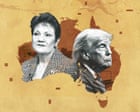
Australia is experiencing a historic fracturing of its foundational consensus on migration and diversity. According to the 2026 Lowy Institute poll, the share of Australians who believe cultural diversity is good for the nation has plunged from 90 percent in 2024 to a historic low of 73 percent. This 17 percentage point drop represents the sharpest shift in public opinion on any societal question in the survey's 22-year history. This collapse in consensus is not an organic surge in racial animus. It is the direct consequence of a multi-year failure in domestic infrastructure planning, worsening economic desperation, and a severe housing shortage that has transformed a once-celebrated immigration program into an active flashpoint for domestic anxiety.
For decades, political leaders in Canberra operated under the comfortable assumption that public support for a high-migration economy was permanent. The latest data shatters that illusion. A clear majority of 55 percent of Australians now state that immigration numbers are too high, up from 48 percent just two years ago. The issue is no longer confined to the fringe margins of populist politics. It has entered the suburban living rooms of working-class and middle-class citizens who are watching their standard of living decay in real time.
The Architecture of Suburban Despair
To understand why the numbers dropped so far, so fast, one must look at the rental markets of Sydney, Melbourne, and Brisbane. It is a matter of basic mathematics. When net overseas migration peaked at over 550,000 people in 2023, the federal government failed to ensure that housing construction kept pace with the incoming population. The result was a brutal, predictable squeeze on the lowest rungs of the economic ladder.
A hypothetical young family trying to secure a three-bedroom rental in western Sydney provides a clear model of this failure. If five separate groups are competing for the same property, and prices rise by 20 percent in a single calendar year, the losers of that auction do not blame abstract macroeconomic trends. They look at the immediate environment. They see new apartment blocks filling up while their own adult children are forced to live in suburban garages. According to data from the Scanlon Foundation, roughly 60 percent of Australians explicitly tie the surge in housing costs to current immigration volumes.
This is where the political class miscalculated. They treated immigration purely as an economic lubricant to avoid technical recessions. For years, headline gross domestic product grew, allowing Treasurers from both major parties to beat their chests. But gross domestic product per capita, a far more accurate metric of individual prosperity, has been sliding backward. Australians are working longer hours for smaller rewards, all while spending a larger percentage of their take-home pay on housing. The historic tolerance for diversity was an unwritten contract. The terms were simple: the public would welcome the world as long as the state guaranteed a functional path to homeownership, stable public health systems, and clear transport corridors. The state defaulted on that contract.
The Mirage of Economic Optimism
The data shows that public anxiety about migration is intimately bound to a wider economic panic. Nearly six in ten Australians, roughly 59 percent, express deep pessimism about the nation's economic trajectory over the next five years. This level of economic despair is 11 percentage points higher than what was recorded during the initial outbreak of the pandemic in 2020.
When people fear for their own financial survival, their circle of empathy naturally shrinks. It is a well-established law of social psychology. In periods of resource scarcity, populations inevitably turn inward. The 2026 data shows that 31 percent of respondents now believe that immigrants take jobs away from local workers, a sentiment that has climbed steadily as corporate insolvencies rise and casual retail and construction sectors soften.
The mechanism at play here is simple. The federal government used high migration numbers to fill labor shortages without investing in the long-term training of its domestic workforce. When the economy slows, those same imported workers compete with precariously employed locals for entry-level positions. The friction generated by that competition occurs at the factory gate and the supermarket checkout line. It cannot be smoothed over by official anti-racism campaigns or speeches about the beauty of a multicultural society.
The Geopolitical Shadow and Inward Retreat
The domestic breakdown is compounded by a profound sense of global insecurity. For the first time in modern polling history, a majority of Australians, 53 percent, state that they feel unsafe or very unsafe in the world. The ongoing slaughters in the Middle East, the grinding war of attrition in eastern Europe, and the looming specter of a regional conflict in the Indo-Pacific have cracked the old Australian sense of geographic isolation.
This international chaos has washed ashore. The domestic political response to global events has been deeply polarizing, with community groups fragmenting along religious and ethnic lines over foreign conflicts. Public space has become hyper-politicized. Rallies and counter-protests on metropolitan streets have left many unaligned citizens feeling that foreign disputes are being imported into their neighborhoods, disrupting the civic calm that Australians traditionally view as a birthright.
Furthermore, faith in traditional global guardians has evaporated. Only 31 percent of Australians now trust the United States to act responsibly on the world stage. Trust in the current American leadership matches the abysmal scores recorded for authoritarian states. This lack of external certainty causes an intense, defensive reaction. When the world outside looks volatile, chaotic, and dangerous, the instinct to secure the borders and slow down internal social change becomes overwhelming.
The Political Consequences of the Vacuum
Populist political figures have moved swiftly to exploit this policy void. One Nation leader Pauline Hanson recently used a National Press Club address to call for a return to a monocultural Australia. In the past, such rhetoric would be dismissed by mainstream analysts as standard right-wing agitation. Today, those comments land in an environment where 73 percent of the population still values diversity, but that value is under active siege from material reality.
The failure of the major political parties lies in their inability to separate immigration volume from immigration value. By treating any criticism of immigration numbers as a moral failing or an outbreak of xenophobia, mainstream politicians left the door wide open for populist rhetoric. The public does not necessarily want a monoculture. The data indicates that nearly three-quarters of the country still believes diversity can be a national strength. What the public wants is a pause. They want the infrastructure to catch up to the population density.
The current trend lines suggest that if the federal government does not enforce a sharp, sustained reduction in net overseas migration numbers, the decline in social cohesion will accelerate. The target should not be determined by corporate lobbying groups seeking low-wage labor, but by the physical capacity of Australian cities to build houses, lay water pipes, and expand public transport networks.
The era of effortless social cohesion in Australia has ended. The nation is discovering that multiculturalism was never a self-sustaining moral achievement. It was a luxury product funded by an abundance of affordable land, high wages, and global stability. Now that those conditions have vanished, the country faces the difficult work of rebuilding a social contract that prioritizes domestic stability over reckless population growth. Mainstream political leaders must realize that slowing immigration is no longer a fringe policy position. It is the only remaining mechanism to preserve the baseline social harmony that remains.