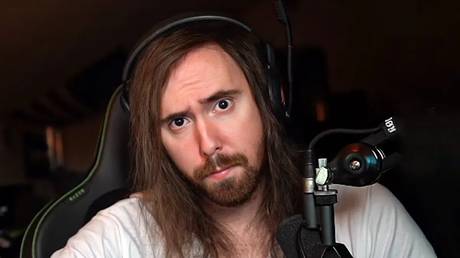
The suspension of Zachariah Hoyt, better known to millions as the top-tier internet personality Asmongold, following an August 2026 broadcast where he asserted that border enforcement should employ lethal force against anyone—including children—crosses a line that exposes the rotten financial architecture of modern live streaming. Twitch acted against his secondary channel, Zackrawrr, after a clip-driven firestorm erupted over his reaction to migration footage from Ceuta, Spain. Yet, viewing this incident as a simple malfunction of an individual creator's filter misses the structural reality. The entire live streaming ecosystem incentivizes radicalization, treating human tragedy as content and inflammatory rhetoric as currency.
For years, the industry watched Hoyt transition from an ordinary World of Warcraft specialist into a sprawling digital media institution. His primary appeal rested on a facade of unfiltered authenticity. In an online environment choked by corporate PR teams and focus-grouped personalities, Hoyt played the character of the cynical, basement-dwelling truth-teller who supposedly said what everyone else was merely thinking. This persona built immense financial power. It also created a dangerous trap. When an internet celebrity relies on being the most abrasive voice in the room, maintaining audience attention requires continuous escalation. Nuance dies. Extreme declarations replace analysis because moderation generates zero engagement. Expanding on this idea, you can also read: The Spanish Ghost That Still Haunts Every Chess Board.
The Algorithmic Incentive to Offend
Modern digital platforms run on metrics of arousal. Anger, outrage, and moral disgust drive sharing loops faster than any positive emotion. When Hoyt watched a video detailing border crossings and declared that border guards should shoot men, women, and children alike to deter others, he was not operating outside the system. He was feeding it.
Consider the mechanics of reaction content. Streamers sit before thousands of live viewers for hours on end, reacting to news clips, political segments, and social media rabbit holes with minimal preparation. This format converts complex geopolitical realities into spectator sports. Observers at Bloomberg have shared their thoughts on this trend.
- The streamer reacts impulsively to raw footage.
- The chat room floods with polarized, radicalized instant feedback.
- The creator doubles down to maintain dominance over the digital mob.
- Micro-clips are extracted and weaponized across X, TikTok, and YouTube Shorts.
This loop creates a perverse economic return on shock value. When Hoyt stated that using children as human shields at borders justifies total lethal force, and doubled down when challenged by his audience, he understood precisely how the content machine functions. Controversy secures visibility. Visibility secures retention. Retention secures advertising revenue, sponsorships, and long-term brand equity, even if the brand in question is built on constant friction.
Platform Complicity and Selective Enforcement
Twitch has long struggled with its role as a global broadcaster masquerading as a community hub. The platform enforces its Community Guidelines reactively, moving only when external pressure reaches a boiling point or mainstream press coverage threatens corporate bottom lines. Hoyt's suspension came swiftly after his comments were amplified across wider news networks and social media syndicates, yet the platform's leadership has consistently failed to articulate clear, consistent boundaries regarding violent rhetoric disguised as political commentary.
When multi-million-dollar creators violate terms of service regarding hateful conduct or the promotion of violence, platforms face a commercial dilemma. Banning a top creator drains active viewership and hurts short-term metrics. Permitting open calls for violence against vulnerable populations destroys institutional credibility. Twitch chose a temporary or secondary channel restriction, hedging its bets while the broader internet ecosystem debated whether the comments represented genuine malice or merely extreme hyperbole.
This hesitation exposes the deep vulnerability of the live streaming economy. Platforms are structurally dependent on a handful of mega-streamers who wield more audience leverage than the corporations hosting them. These creators know they are indispensable. Consequently, accountability is rarely absolute. A temporary exile often serves as a brief marketing campaign, resetting the narrative before the creator returns to an even larger, more polarized audience eager for the next controversy.
The Broader Cultural Toll of Reaction Culture
The fallout from the Asmongold broadcast extends far beyond a single channel suspension. It highlights a systemic degradation of public discourse where real-world suffering is flattened into disposable entertainment. Millions of young viewers absorb extremist framing daily, presented under the guise of casual gaming commentary or reaction streams.
When a prominent voice normalizes the slaughter of children at a border checkpoint as a rational administrative policy, the Overton window shifts violently. Defenses from fellow internet figures arguing that the comments were merely descriptive of desperate geopolitical realities ignore the foundational harm of such rhetoric. Words build the environment in which physical violence becomes thinkable.
The digital media landscape will continue to shield these creators as long as outrage remains profitable. Until platforms implement structural penalties that make shock-value rhetoric financially unviable, high-profile suspensions will remain performative speedbumps on a highway heading straight toward deeper degradation.


