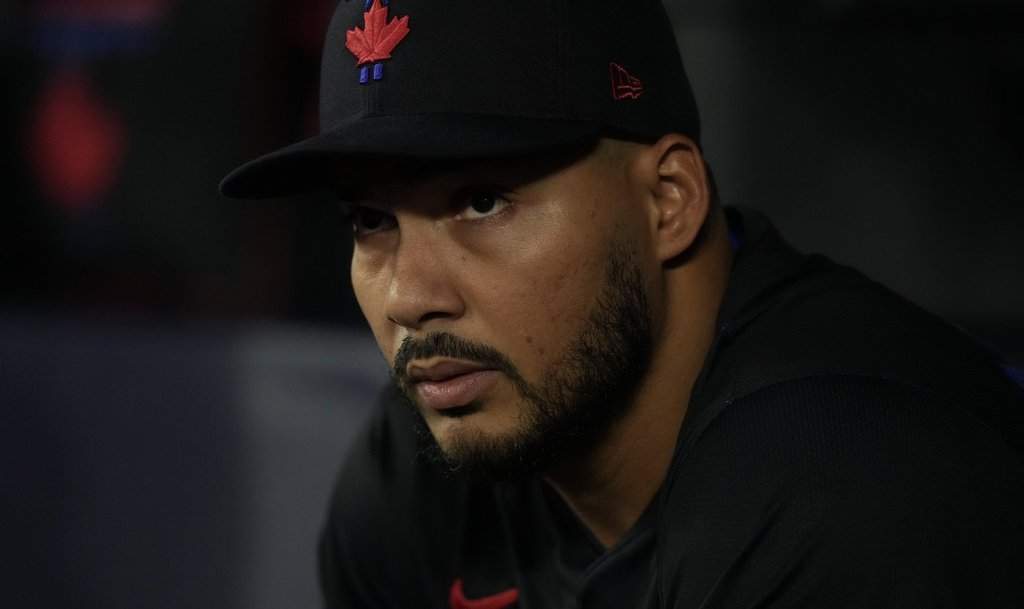
The Toronto Blue Jays issued a formal apology to the Muslim community and their fanbase after outfielder Anthony Santander shared—and quickly deleted—anti-Muslim videos on his Instagram account following the November 2026 U.S. midterm elections. While team president and CEO Mark Shapiro publicly condemned the content and met with local community leaders, the front office has remained silent on whether the $92.5 million slugger will face formal disciplinary action.
Standard wire reports treat this episode as a routine public relations cleanup. They miss the deeper structural collision happening behind closed doors at Rogers Centre. An injury-plagued megacontract, a uniquely diverse Canadian media market, and an impending Major League Baseball labor freeze have converged into a crisis that corporate boilerplate cannot easily erase. Discover more on a related subject: this related article.
The Anatomy of a Nine-Day Corporate Scramble
On November 4, 2026, Anthony Santander used his Instagram account to share videos containing anti-Muslim rhetoric. One clip featured a Christian preacher disparaging Muslims. Another pushed the baseless conspiracy theory that Sharia law would be imposed on the United States following Abdul El-Sayed's election to the U.S. Senate in Michigan.
Santander deleted the posts the following morning. In the hyper-accelerated economy of sports media, deleting a post rarely erases the damage. Screenshots circulated immediately across Toronto, sparking outrage among fans and civic organizations. Additional analysis by Bleacher Report highlights similar views on the subject.
For nearly a week, the player and his representation went completely silent. Multiple media inquiries to Santander and his sports management agency went unanswered. That vacuum forced the front office into public damage control during Major League Baseball's general managers meetings in Las Vegas.
General manager Ross Atkins broke the silence on Tuesday, November 10, telling reporters he had spoken directly with Santander and urged him to address the matter publicly. Atkins did not mince words about the conversation, stating there were no words to express his level of disappointment and noting he had confronted the outfielder about his lack of awareness.
Two days later, on November 12, Mark Shapiro stepped in. Following private meetings with leaders of Toronto's Muslim communities, Shapiro released an organizational apology. The statement acknowledged the pain and harm caused by the posts, condemned Islamophobia, and pledged that the organization would work alongside community leaders to reflect the inclusive city it calls home.
Only after the team president absorbed the public heat did Santander finally speak. On Friday, November 13—nine days after hitting share—the 32-year-old Venezuelan posted an apology to his Instagram story. He attributed the shift to reflection and conversations with trusted advisors, stating he had learned the responsibility that comes with a public platform and affirming his respect for the Muslim community.
Why Toronto Cannot Treat This Like Any Other MLB Market
To understand why the Blue Jays executive suite reacted with such visible urgency, you have to look at the demographics of the franchise's footprint. Major League Baseball operates across thirty cities, but twenty-nine of them share a single national market. The Blue Jays stand alone as Canada's only MLB franchise.
According to Statistics Canada census data, more than 1.78 million Muslims live in Canada. Within Toronto itself, roughly 10 percent of the city's 2.8 million residents identify as Muslim.
Market sensitivity in Toronto operates differently than in mid-sized American baseball towns. Rogers Communications Inc., the telecommunications giant that owns the franchise, relies heavily on nationwide brand loyalty. Alienating a tenth of the local metropolis—and nearly two million citizens across the broadcast territory—represents a direct commercial threat to ticket sales, merchandise revenue, and television ratings.
When a player in Baltimore or Kansas City sparks a political firestorm, the fallout often splits along familiar American partisan lines. In Toronto, pushing anti-Muslim conspiracy theories tied to a Michigan Senate race reads differently. It lands as an imported ideological attack aimed directly at the neighbors, coworkers, and paying customers who fill the lower bowl at Rogers Centre.
The $92.5 Million Albatross Factor
Public forgiveness in professional sports almost always correlates with on-field production. Fans and front offices routinely tolerate off-field headaches from superstars carrying a roster into October. Santander does not currently enjoy that buffer.
In January 2025, Toronto handed Santander a five-year, $92.5 million contract. The front office expected the switch-hitting slugger to replicate his 2024 form with the Baltimore Orioles, where he mashed 44 home runs. Instead, the investment has yielded almost zero return.
During an injury-marred 2025 campaign, Santander appeared in just 54 games, hitting a dismal .175 with six home runs. Shoulder surgery then wiped out his entire 2026 season. Two full years into a massive free-agent commitment, Santander has played fewer than sixty games in a Blue Jays uniform while collecting tens of millions of dollars.
This context transforms a social media blunder into an acute organizational headache. Santander has built zero goodwill with the Toronto fanbase through his bat. When he eventually steps back into the batter's box for the 2027 season, his introduction at Rogers Centre will test whether a delayed Instagram story actually repaired the breach.
Contractual Realities and the Looming Lockout
A persistent question hanging over the front office is why the Blue Jays have not announced a suspension or fine. Neither the club nor Rogers Communications has answered inquiries regarding potential violations of team social media policies or standard player contract morality clauses.
The silence is not accidental. It reflects the rigid legal architecture of Major League Baseball.
Under the league's collective bargaining framework, individual clubs face strict limits when attempting to discipline players for off-field speech. Joint policy jurisdiction dictates that Major League Baseball's central office, rather than an individual franchise, typically handles discipline tied to social media conduct or public discrimination. Historically, MLB suspensions for off-field speech require egregious, explicit slurs or direct harassment before the commissioner's office steps in. Reposting political or religious commentary—even offensive conspiracy theories—sits in a murky legal gray area that triggers immediate grievances from the Major League Baseball Players Association.
Timing complicates the disciplinary picture even further. Major League Baseball's collective bargaining agreement expires on December 1, 2026. Industry observers widely expect owners to impose a lockout the following day, freezing all player transactions, formal club communications, and disciplinary proceedings until a new labor deal is reached.
Media analysts note that the Blue Jays may be banking on the calendar to absorb the shock. With spring training months away and a potential labor stoppage threatening the scheduled March 24, 2027 opening day, the front office faces no immediate pressure to put Santander in front of microphones.
Out of sight is not out of mind. Burying a controversy beneath an offseason labor freeze merely delays the reckoning until the gates open in Toronto. For a player who still owes the city three years of production on a $92.5 million deal, the real test begins the moment he steps onto the grass.
To follow how the club's leadership initially addressed the backlash and outlined their next steps with the local community, review the coverage of the Toronto Blue Jays' official apology.