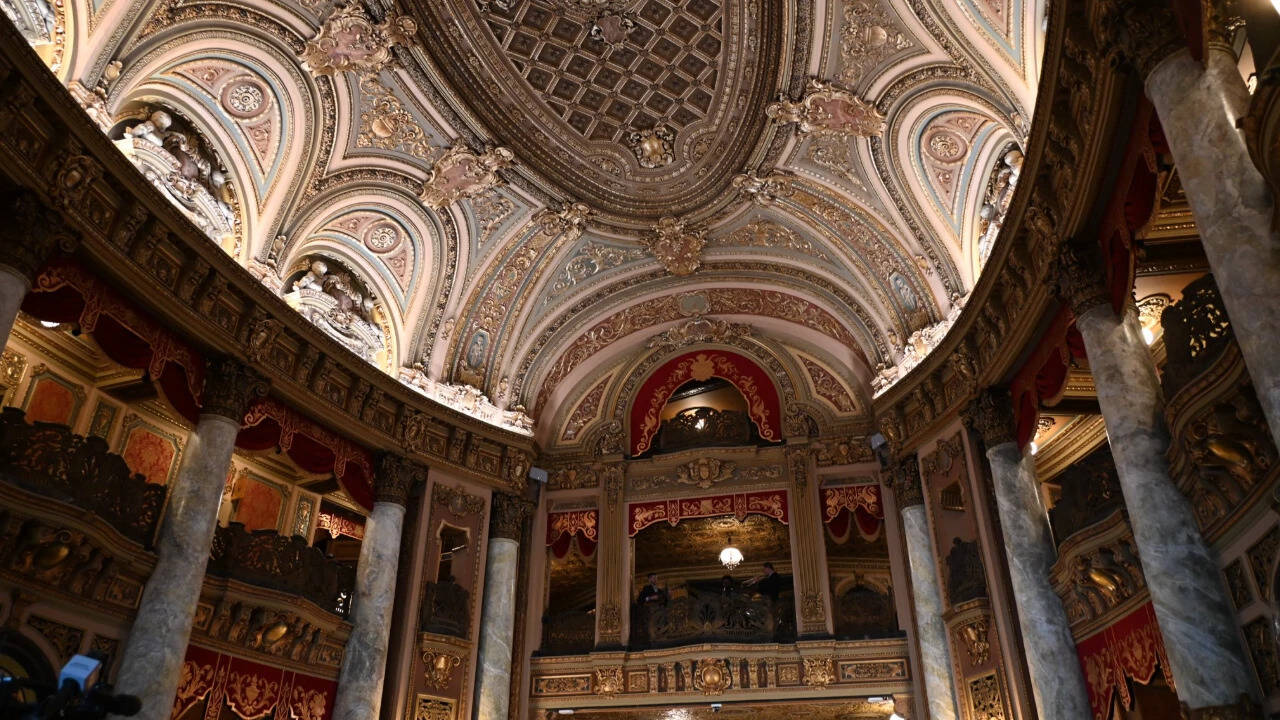
The doors are finally open, the gilded plaster gleams under restored chandeliers, and the press releases are heavy with triumphant adjectives. Following a massive $130 million restoration, a historic New Jersey theatre—exemplified most prominently in recent years by the state's high-profile, nine-figure overhauls of landmark venues like Newark’s Symphony Hall and the St. George Theatre just across the water, alongside New Jersey's own sprawling civic auditoriums—has officially returned to the spotlight. On paper, this is a straightforward civic victory. In reality, pouring $130 million into an aging twentieth-century performance space represents one of the highest-stakes financial bets in modern urban development, testing whether brick-and-mortar nostalgia can actually survive the brutal economics of live entertainment.
Ribbon cuttings are easy. Paying the utility bills in February is hard.
When a municipality, a nonprofit board, and a coalition of state tax-credit brokers come together to drop nine figures on a century-old movie palace or vaudeville house, the public is usually sold a simple narrative of cultural preservation. Yet beneath the velvet curtains and hand-stenciled ceilings lies a complex web of historic tax credits, municipal bonds, and aggressive real estate speculation. The restoration of a major historic New Jersey theatre is rarely just about saving the arts; it is almost always a calculated play to anchor a struggling downtown corridor, drive up surrounding commercial property values, and capture suburban disposable income that would otherwise flow straight across the Hudson River into Manhattan.
The Nine-Figure Math Behind Historic Preservation
To understand how a single building absorbs $130 million, you have to look behind the proscenium arch. Audiences see the plush seating, the restored murals, and the polished terrazzo lobbies. Those cosmetic details account for a fraction of the budget. The true financial black holes of historic theatre restoration are entirely invisible to the ticket buyer.
Twentieth-century theatres were built for an era before modern fire codes, central air conditioning, and massive touring concert rigs. Bringing a 1920s or 1930s structure up to twenty-first-century standards requires gutting the building’s mechanical skeleton while keeping its fragile decorative skin intact.
Consider the structural realities of modern touring productions. A standard contemporary concert tour or Broadway-scale theatrical production arrives in multiple semi-trailers carrying tens of thousands of pounds of lighting trusses, line-array sound systems, and automated stage rigging. Historic roofs were never engineered to bear those dynamic loads. Contractors must routinely thread massive steel support grids through existing masonry walls without cracking century-old plasterwork—a process that requires surgical precision and exorbitant labor costs.
Then there is the subterranean work. Historic venues notoriously lack adequate loading docks, back-of-house dressing rooms, and modern HVAC ductwork. Excavating beneath an existing foundation in a dense New Jersey city means navigating undocumented utility lines, high water tables, and contaminated urban soil. Environmental remediation alone—stripping out decades of asbestos insulation, lead paint, and old boiler systems—frequently consumes tens of millions of dollars before a single paintbrush touches a decorative molding.
Where the Capital Actually Comes From
No private promoter writes a $130 million check out of pocket for a single venue. The return on investment simply does not exist in traditional ticket sales. Instead, these projects rely on a stacked financial model known in development circles as a capital stack, blending public subsidies with philanthropic grants and debt.
- Federal and State Historic Tax Credits: Developers sell tax credits to corporate investors in exchange for upfront equity, effectively allowing the government to subsidize a massive percentage of qualified rehabilitation expenses.
- Municipal and State Economic Development Grants: Agencies like the New Jersey Economic Development Authority (NJEDA) routinely deploy targeted funding mechanisms designed to spur revitalization in designated urban transit hubs.
- Philanthropic Naming Rights: Wealthy donors and regional corporate foundations underwrite specific wings, lobbies, or acoustic upgrades in exchange for permanent visibility.
- New Markets Tax Credits: Additional federal incentives aimed at low-income census tracts help bridge the final financing gaps when traditional bank loans prove too expensive.
This financial engineering makes construction possible, yet it creates an immediate structural vulnerability once construction ends. Tax credits build the building; they do not pay the stagehands.
The Manhattan Shadow and the Booking Trap
Operating a major performance venue in New Jersey comes with a geographic curse that no amount of gold leaf can fix. Every venue in the state operates within the gravitational pull of New York City and, to a lesser extent, Philadelphia.
In the live entertainment industry, radius clauses rule the market. When a major musical artist, comedian, or touring theatrical production books a date at Madison Square Garden, the Beacon Theatre, or a Broadway house, their contract almost always prohibits them from performing within a set geographic radius—often 50 to 75 miles—for months before and after the New York date. Nearly all of northern and central New Jersey falls squarely inside that exclusion zone.
This forces a newly restored $130 million New Jersey theatre into a precarious booking posture. To justify its massive footprint and high fixed overhead, the venue needs high-capacity, high-margin events that sell out thousands of seats at premium ticket prices. Yet the biggest touring draws are frequently locked out by Manhattan contracts.
To survive, venue operators must scramble for an eclectic mix of secondary programming. They rely heavily on legacy rock acts on nostalgia tours, mid-tier stand-up comedians, family entertainment shows, and regional symphony or dance performances. While these events draw steady crowds, they rarely generate the explosive bar revenues and VIP upsells that modern live-entertainment giants depend upon to turn a profit.
The Consolidation Squeeze
The booking challenge is compounded by the consolidation of the live music industry. Live Nation and AEG Presents control the vast majority of major touring talent, and both conglomerates own or operate competing venues across the tri-state area. An independent nonprofit board or regional municipal authority running a historic New Jersey theatre does not have the corporate leverage to demand tour routing favors.
If a national promoter can route an artist into a venue they own outright in Brooklyn or Manhattan, they keep both the promoter margin and the venue margin. Sending that act across the Hudson to an independent historic house means sharing the pie. Consequently, independent historic theatres often find themselves bidding aggressively for talent, driving up artist guarantees and shrinking the house's net take on every ticket sold.
The Myth of the Automatic Downtown Halo Effect
Politicians love to justify nine-figure cultural investments by pointing to the economic multiplier effect. The theory is seductive: bring 150,000 ticket buyers into a downtown district every year, and they will naturally fill local restaurants, book nearby hotel rooms, and shop at local boutiques before and after the show.
Decades of urban economic data tell a far more complicated story.
For a restored theatre to genuinely revitalize a surrounding neighborhood, the district must already possess a baseline ecosystem of hospitality and retail, alongside safe, intuitive pedestrian infrastructure. If a patron drives off the Garden State Parkway or the New Jersey Turnpike, pulls directly into a secure parking deck attached to the theatre, watches a two-hour show, and drives straight back onto the highway, the surrounding neighborhood sees almost zero economic benefit.
Consider a hypothetical example of a mid-sized New Jersey city investing heavily in a downtown arts anchor. If the city fails to simultaneously address street-level blight, unreliable late-night public transit, and restrictive liquor licensing laws that prevent independent restaurants from opening near the venue, the theatre becomes an island. Ticket buyers treat the venue like an airport terminal—a place to pass through quickly rather than a destination to linger.
Furthermore, rising property taxes triggered by the public investment can inadvertently push out the very independent businesses that give a downtown its character. Landlords anticipate a wave of wealthy theatregoers and jack up commercial rents, forcing out longtime local diners and shops long before the theatre’s box office reaches sustainable capacity.
Maintenance Debt and the Second-Decade Cliff
The most dangerous moment in the lifecycle of a $130 million theatre is not opening night. It is year twelve.
During the first five years following a grand reopening, a venue rides a wave of novelty. Curious locals buy tickets just to see the restored interior. Corporate sponsors are eager to be associated with the shiny new civic jewel. The mechanical systems are brand new, carrying manufacturer warranties that keep maintenance costs artificially low.
By the second decade, reality sets in.
The donor fatigue is real; the philanthropic checks that funded the capital campaign do not easily convert into annual operating subsidies. Meanwhile, the complex, custom-engineered HVAC systems, automated stage rigging, and digital sound boards installed during the $130 million overhaul begin requiring major capital replacements. Historic buildings are notoriously unforgiving when routine maintenance is deferred. A minor roof leak left unaddressed for a single winter can destroy hundreds of thousands of dollars of restored plasterwork and acoustic paneling.
Without a dedicated capital reserve endowment—an untouchable pool of invested cash specifically earmarked for future physical repairs—historic theatres inevitably slip back into the exact cycle of decay that necessitated the $130 million rescue in the first place. Many capital campaigns make the fatal mistake of pouring 100 percent of their raised funds into bricks and mortar, leaving the operating entity cash-poor on day one.
What Actually Separates Survivors From White Elephants
Across the country, for every historic theatre that thrives as a self-sustaining cultural engine, another quietly bleeds taxpayer money while sitting dark four nights a week. The difference between success and failure rarely comes down to the beauty of the architecture. It comes down to ruthless operational pragmatism.
Multi-Use Revenue Diversification
A historic theatre can no longer survive on ticket sales alone. The venues that stay in the black treat their main auditorium as just one revenue stream among many. During a $130 million restoration, smart developers reconfigure underutilized upper lobbies, basements, and adjacent storefronts into high-margin private event spaces.
Corporate conferences, pharmaceutical symposiums—a massive industry driver in New Jersey—galas, and high-end weddings often generate higher net profit margins per square foot than a sold-out concert. When a venue can host a corporate daytime summit in its grand lobby while simultaneously loading in a rock concert on the main stage, the building finally begins to justify its massive fixed overhead.
Strategic Co-Promoter Partnerships
Recognizing their disadvantage against national touring monopolies, savvy independent historic theatres stop trying to act as sole financial risk-takers. Instead of paying massive upfront guarantees to book risky acts, they enter into co-promotion agreements or pure four-wall rental deals with major national promoters.
In a four-wall deal, the promoter pays a flat rental fee for the building, covers all staffing and marketing expenses, and assumes the financial risk of ticket sales, while the venue collects rent plus a guaranteed cut of food, beverage, and merchandise sales. It caps the theatre’s upside on a smash hit, yet it insulates the nonprofit or municipal operator from catastrophic financial losses when a tour underperforms.
Frictionless Hospitality and Dynamic Pricing
Historic theatres were originally built for an era when intermission meant stepping outside for a cigarette and buying a cheap paper cup of soda. Modern live-entertainment economics demand aggressive per-cap spending—the average dollar amount each patron spends on food, drink, and merchandise once inside the doors.
Restorations that fail to expand restroom capacity and install high-speed, cashless point-of-sale bars lose millions of dollars in abandoned purchases during tight twenty-minute intermissions. Likewise, operators must abandon static, old-school ticket pricing in favor of dynamic pricing algorithms that capture maximum market value for prime orchestra seats while discounting upper-balcony seats late in the sales cycle to ensure the room looks full—and generates bar revenue—on show night.
The applause on opening night is intoxicating, and the architectural achievement of saving a century-old New Jersey landmark deserves genuine respect. Yet architecture does not balance a ledger. Once the ceremonial scissors are put away and the local dignitaries go home, the real work begins in the dark, quiet hours between shows—counting bar receipts, negotiating brutal radius clauses, and proving that a $130 million monument to the past can actually pay for its own future.