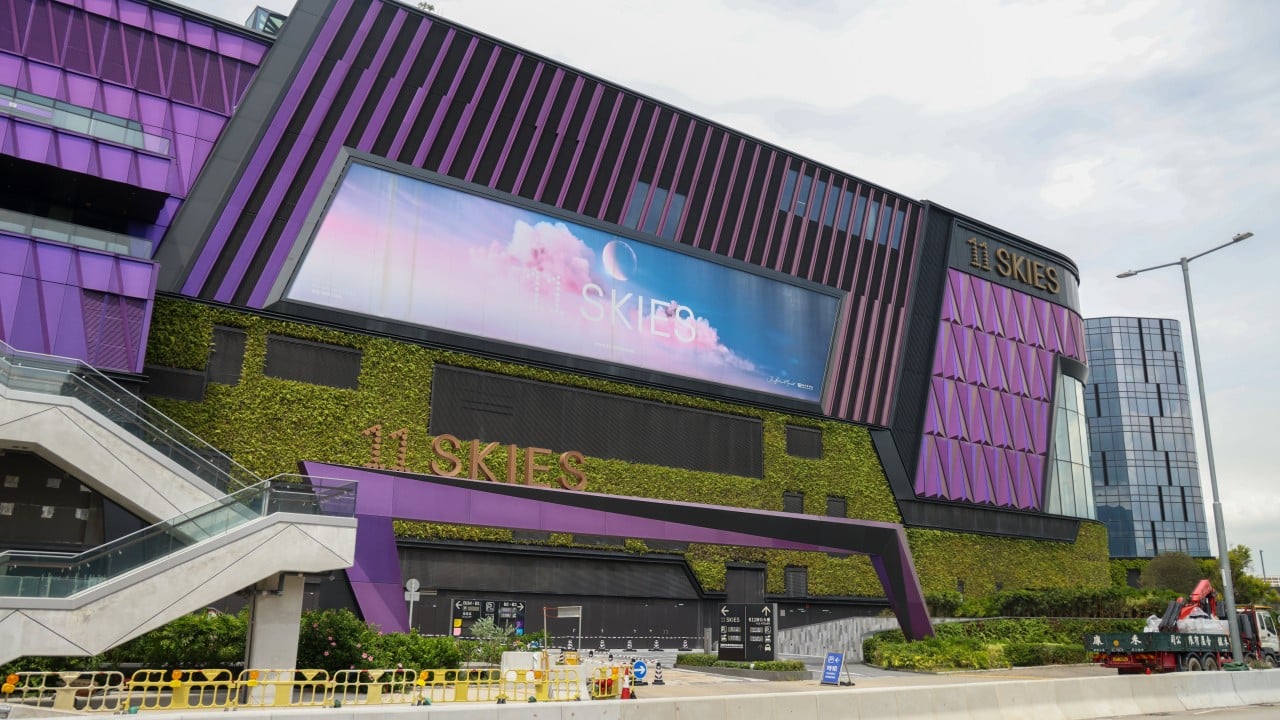
Yes, the Airport Authority Hong Kong faces a severe commercial and operational headache at its flagship 11 Skies retailtainment hub, though the immediate financial damage stems less from New World Development’s discounted equity issuance and more from the parent developer's acute liquidity crunch. When a master concessionaire struggles to service debt and offloads shares at steep discounts to shore up its balance sheet, capital expenditure for tenant fit-outs, marketing, and experiential anchors inevitably stalls. For an aviation authority counting on non-aeronautical revenue to offset massive infrastructure debt, a cash-strapped anchor partner transforms a flagship retail bet into a prolonged leasing liability.
The headline question misses the structural mechanics of how Hong Kong mega-developments actually fail. Share price dilution does not directly drain a project’s escrow account. What drains a project is the corporate distress that forced the discounted share sale in the first place.
The Anatomy of a Balance Sheet Squeeze
To understand the vulnerability of 11 Skies, you have to look past the glossy architectural renderings on Lantau Island and examine the corporate debt markets in Central. New World Development built an empire on high-leverage expansion, betting heavily that post-pandemic cross-border footfall from the Greater Bay Area would instantly validate massive retail and commercial footprints. That bet collided head-on with higher-for-longer interest rates and a structural shift in mainland Chinese consumer spending.
When a conglomerate issues discounted shares—whether through a rights issue, a placement, or a distressed equity swap—it is signaling to institutional credit markets that traditional debt refinancing has become prohibitively expensive. Equity is the most expensive capital a developer can raise. You only sell stock at a steep markdown when bond yields are blowing out and bank syndicates are demanding tighter covenants.
For the Airport Authority Hong Kong (AAHK), this creates a classic counterparty risk problem. Under the development agreement for the SKYCITY complex, New World secured the right to design, build, finance, and operate the 3.8 million-square-foot facility until 2066. In exchange, the AAHK expects guaranteed minimum rents alongside a percentage of gross turnover.
A developer fighting to deleverage treats every unspent dollar as survival capital.
- Capital expenditure freezes hit non-core finishing works first, delaying the handover of complex experiential zones.
- Tenant incentive packages shrink, making it harder to lure flagship luxury brands away from established urban hubs like Tsim Sha Tsui or Causeway Bay.
- Marketing budgets get slashed to the bone, leaving a massive destination asset without the promotional firepower required to pull transit passengers out of the terminal.
If New World has to choose between paying down a maturing syndicated loan and subsidizing the build-out of a themed entertainment attraction at Chek Lap Kok, the bondholders will win every single time.
Why Non-Aeronautical Revenue Is the Airport Authority's Achilles Heel
The Airport Authority is not a passive landlord clipping coupons on surplus land. Its entire financial architecture depends on the success of SKYCITY and 11 Skies.
Over the past decade, the AAHK committed over HK$140 billion to the Three-Runway System. Funding a mega-project of that scale without draining public coffers required aggressive borrowing in the international debt markets, backed by projected future cash flows. In modern aviation economics, landing fees and terminal charges are tightly regulated and sensitive to airline pushback. The real profit margin—the cash engine that services infrastructure bonds—comes from non-aeronautical revenue.
Retail, dining, commercial office space, and entertainment complexes are supposed to subsidize the tarmac.
Historically, Hong Kong International Airport extracted extraordinary yields per square foot from captive duty-free shoppers. High-net-worth mainland travelers bought luxury watches and cosmetics while waiting for flights, generating effortless cash flow. That model relied on two assumptions that no longer hold true: effortless luxury spending and frictionless transit volume.
11 Skies was conceived during an era when doubling down on physical retail seemed like a guaranteed win. By combining 800 shops, 120 dining concepts, and indoor entertainment zones—including KidZania and massive immersive media attractions—the project aimed to turn the airport from a transit point into a regional destination.
Now look at the timing. Phased openings have dragged into a brutal retail downturn. Hong Kong retail sales have suffered prolonged contractions as local residents flock north to Shenzhen for cheaper dining and entertainment, while mainland tourists increasingly favor experiential travel over luxury goods shopping. If 11 Skies opens into a tepid leasing market with an anchor operator distracted by balance sheet restructuring, the AAHK faces a double whammy: depressed revenue-sharing income and diminished valuation for its surrounding commercial land bank.
The Structural Flaw in Concession Models
Industry veterans have seen this movie before across Asian infrastructure hubs. When public authorities hand a single private conglomerate sweeping master-concession rights over a mega-project, they concentrate operational risk in one corporate balance sheet.
In a healthy bull market, a single master developer brings speed, unified branding, and deep-pocketed tenant relationships. In a credit contraction, that single point of failure becomes an existential bottleneck.
Consider a hypothetical example of how this friction plays out on the leasing floor. Imagine a global luxury fashion house negotiating a ten-year lease for a 10,000-square-foot flagship store at 11 Skies. Normally, the developer offers a massive fit-out subsidy—sometimes covering half the construction cost—plus a generous rent-free period to ensure the brand opens on day one and anchors the surrounding wing. When the developer is preserving cash after a discounted equity raise, those subsidies evaporate. The luxury brand walks away or demands purely turnover-based rent with zero guaranteed minimum. Multiply that standoff across two hundred prime retail units, and the projected yield of the entire complex collapses before the doors even fully open.
Furthermore, sub-leasing friction intensifies. International retailers are acutely aware of their landlords' credit ratings. Nobody wants to sink tens of millions of dollars into bespoke store interiors if they fear the master operator might eventually offload the management contract to a distressed-asset fund or restructure the holding entity.
The Office Tower Oversupply Trap
Retail gets the headlines, but the commercial office component of 11 Skies carries an even heavier anchor weight. The project includes three Grade-A office towers totaling roughly 570,000 square feet, pitched heavily toward wealth management, medical services, and cross-border Greater Bay Area enterprises.
Hong Kong’s Grade-A office market is currently drowning in historic vacancy rates. Core districts like Central and Admiralty have seen rents plummet as multinational banks downsize footprints and mainland firms pause regional expansion. Convincing corporate tenants to relocate to the western edge of Lantau Island requires steep rental discounts and flawless connectivity.
Even with the Hong Kong-Zhuhai-Macao Bridge sitting right next door, Lantau remains geographically isolated from the city’s financial core. Wealth managers rely on face-to-face proximity to institutional counterparties, private bankers, and legal advisors in Central. Without aggressive, subsidized leasing incentives from New World, those office towers risk sitting half-empty, dragging down the foot traffic needed to sustain the 120 restaurants and 800 shops below them.
Can the Airport Authority Isolate Itself From Developer Distress
Technically, the Airport Authority Hong Kong enjoys strong insulation through the legal structure of its land leases and statutory backing. As a statutory body wholly owned by the Hong Kong SAR Government, the AAHK commands a credit rating tethered to the sovereign, allowing it to refinance its own debt at rates private developers can only dream of.
Legal insulation, however, does not pay for empty corridors.
If New World’s financial maneuvering—whether through discounted shares, asset disposals, or debt extensions—results in a prolonged sluggish rollout at 11 Skies, the AAHK has limited contractual levers to pull without triggering a massive legal dispute.
- Enforcing strict milestone penalties risks pushing a vital partner deeper into distress, potentially stalling construction or tenant onboarding altogether.
- Terminating or restructuring the concession would require buying out sunk capital expenditure, forcing the AAHK to absorb billions in immediate outlays onto its own already-leveraged balance sheet.
- Granting rent holidays or revenue-share adjustments quietly transfers the financial pain from the private developer directly onto the public authority's income statement.
None of these options are clean. In Hong Kong’s tightly interconnected corporate ecosystem, public authorities rarely nuke major local developers over delayed commercial milestones. Instead, they negotiate quiet extensions, recalibrate phased opening targets, and absorb the opportunity cost in silence.
The Deeper Threat of Shifting Cross-Border Flows
Focusing solely on New World’s stock price or share placements obscures a much larger reality: the entire economic thesis behind 11 Skies is undergoing a stress test that no amount of corporate restructuring can fix.
The project was designed around the "Bridge Economy"—the assumption that millions of affluent residents from Zhuhai, Zhongshan, and Macau would drive across the Hong Kong-Zhuhai-Macao Bridge, park at the automated car parks, spend a weekend shopping and entertaining their children at 11 Skies, and drive home without ever bothering to cross the harbor into Kowloon or Hong Kong Island.
Reality has proven far messier.
While cross-border vehicle traffic via the Northbound Travel for Hong Kong Vehicles scheme has surged, the flow of spending has moved predominantly in reverse. Hong Kong residents are driving north to Zhuhai and Shenzhen in record numbers because mainland retail malls offer newer facilities, vastly superior service standards, and prices that are thirty to fifty percent lower.
Simultaneously, the mainland Chinese consumer has grown sophisticated. Domestic mega-malls in Shenzhen, Guangzhou, and Shanghai already feature world-class indoor theme parks, flagship luxury boutiques, and Michelin-starred dining. A shopper living in the Pearl River Delta no longer needs to cross a border checkpoint and pay bridge tolls just to visit a KidZania or buy a designer handbag.
For 11 Skies to succeed, it cannot simply replicate what already exists in Shenzhen’s MixC or Futian districts. It has to offer something uniquely tied to Hong Kong’s international gateway status—frictionless duty-free privileges, international entertainment intellectual property unavailable on the mainland, or seamless air-to-land transit perks that turn layovers into effortless spending sprees.
Executing that level of curated differentiation requires visionary management, relentless capital investment, and bold risk-taking on tenant curation. Those are precisely the qualities that vanish when a developer is fighting a rear-guard action to pacify equity investors and credit rating agencies.
What Institutional Investors and Bondholders Are Watching
Smart money in Hong Kong is no longer looking at press releases announcing grand opening dates or percentage-leased figures that rely heavily on temporary pop-up tenants. Institutional analysts tracking both New World Development and the Airport Authority are watching three hard metrics that will determine whether 11 Skies becomes a cash cow or a stranded asset.
First is the conversion of signed letters of intent into actual fit-out commencements. In distressed retail environments, developers routinely trumpet high pre-leasing numbers based on non-binding agreements or conditional leases that only activate once overall mall occupancy hits a specific threshold, typically seventy or eighty percent. Until cranes, hoardings, and interior contractors are physically working inside the retail units, pre-leasing numbers are just paper.
Second is the net effective rent versus headline rent. If New World is forced to grant twelve-month rent-free periods and pure turnover-rent structures just to populate the mall, the guaranteed minimum income flowing to the Airport Authority will sit at the absolute floor of the concession agreement. That leaves the AAHK exposed to flat cash flows while inflation pushes up its own terminal maintenance and debt service costs.
Third is asset-level ring-fencing and potential stake sales. When conglomerates issue discounted shares to raise equity, they frequently pair those moves with joint-venture sales of prized commercial assets to sovereign wealth funds or regional private equity players. If New World attempts to monetize a partial stake in the 11 Skies operating entity to raise cash, the Airport Authority holds strict approval rights over any change in control or concession transfer. A protracted negotiation over bringing in a co-investor could freeze strategic decision-making for months.
The discounted shares hitting the market are merely the smoke. The fire is a structural mismatch between twentieth-century real estate leverage and twenty-first-century consumer reality, leaving the Airport Authority holding the bag on a multi-billion-dollar bet that cannot afford a hesitant partner.