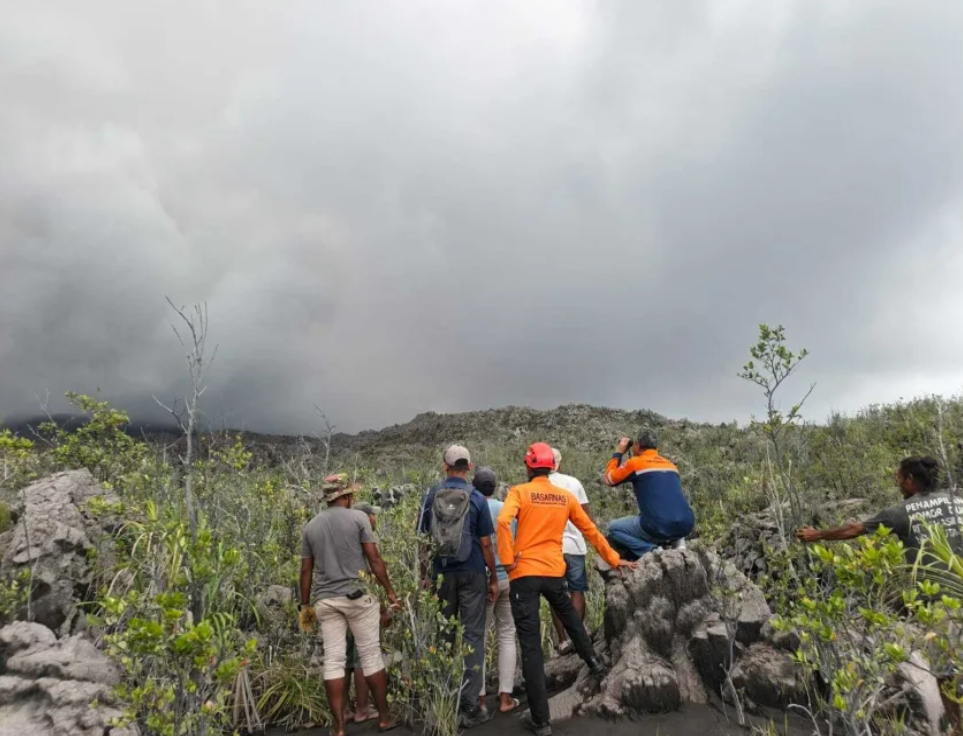
Mount Marapi has claimed at least three lives following a sudden, violent eruption that caught hikers and local villagers off guard. Emergency crews are currently struggling against thick blankets of volcanic ash and unpredictable tectonic shifts to reach those still missing on the slopes. While initial reports focused on the immediate tragedy, the situation on the ground reveals a systemic failure in early warning infrastructure and a dangerous reliance on outdated monitoring equipment in one of the world's most active volcanic regions.
Indonesia sits atop the Pacific Ring of Fire. This means the country manages more than 130 active volcanoes, a geological burden that few other nations can fathom. When Marapi erupted, it didn't just spew rock; it exposed the thin margin between life and death for those living in its shadow. Discover more on a connected topic: this related article.
The Failure of the Quiet Giant
Mount Marapi is notorious for its "phreatic" eruptions. These occur when groundwater is heated by magma, creating a steam-driven explosion that happens with almost no seismic warning. Unlike traditional magmatic eruptions where molten rock moving toward the surface provides days or weeks of measurable data, phreatic events are the ghosts of the geological world. They are sudden. They are lethal.
The three confirmed fatalities were found near the crater rim. They had no time to run. When the mountain exhaled a column of ash reaching 3,000 meters into the sky, the surrounding air became a toxic slurry of fine glass shards and sulfurous gas. For those trapped in the "Red Zone"—a three-kilometer radius from the peak—the environment shifted from a scenic hike to a suffocating tomb in less than sixty seconds. Further journalism by The Washington Post delves into similar perspectives on the subject.
Surveillance Gaps in the Archipelago
Government officials often point to the Center for Volcanology and Geological Hazard Mitigation (PVMBG) as a shield against disaster. However, the reality is that Indonesia’s monitoring network is stretched to its breaking point.
Maintaining high-frequency sensors on dozens of peaks simultaneously requires a level of funding and logistical support that is rarely met. Many sensors on Marapi were reportedly aging or damaged by previous minor tremors. This isn't just a technical glitch. It is a fundamental infrastructure deficit.
The local government has been criticized for allowing hiking permits to be issued despite the mountain being at "Level II" alert status for months. This status indicates "caution," yet the allure of tourism revenue often outweighs the stern warnings of geologists. When the economy of a region depends on the very mountain that threatens to bury it, the result is a compromised safety protocol that prioritizes foot traffic over human lives.
The Mechanics of a Rescue Under Fire
Rescue operations in Sumatra are never straightforward. The terrain is a vertical maze of dense jungle and loose volcanic scree. Search and rescue teams (BASARNAS) are currently operating in a high-risk environment where secondary eruptions could occur at any moment.
Thermal imaging drones have been deployed to scan the slopes, but the heat from the cooling ash often creates "false positives," masking the body heat of survivors. Rescuers are forced to move on foot, wearing heavy respirators and carrying oxygen tanks that slow their progress through the steep, slippery ash.
The "trapped" status of the remaining hikers isn't just about physical blockage. Many are immobilized by "ash lung"—a condition where inhaled volcanic particles mix with moisture in the lungs to create a cement-like paste. Every hour spent on the mountain reduces the chance of recovery.
A Culture of Risk and Resilience
In West Sumatra, the relationship with Marapi is complex. The Minangkabau people have lived at the base of this volcano for centuries. They see the mountain as a provider; the volcanic soil is incredibly fertile, supporting the lush rice paddies and cinnamon groves that drive the local economy.
This deep-rooted connection breeds a dangerous level of complacency. Villagers often ignore evacuation orders, believing they can read the mountain's moods better than any machine. During this latest event, several families refused to leave their livestock until the ash was already falling on their roofs.
This cultural friction complicates the state's ability to manage crises. When the government issues a warning, it is often viewed as a suggestion rather than a mandate. This disconnect is where the body count climbs.
The Economic Shadow of the Ash Cloud
The impact of this eruption extends far beyond the slopes. Regional aviation has been paralyzed. Ash is not like dust; it is abrasive, acidic, and can easily melt inside a jet engine, causing total power failure.
- Airport Closures: Thousands of travelers are stranded as local hubs shutter to prevent engine damage.
- Agriculture Loss: The current ash fall has coated thousands of hectares of crops. While ash is a long-term fertilizer, in the short term, it smothers plants and poisons water sources for cattle.
- Tourism Collapse: The hiking industry in Bukittinggi will likely remain frozen for the remainder of the year, stripping millions of rupiah from a fragile local economy.
The Predictable Unpredictable
Geologists argue that the technology exists to better predict even the most sudden phreatic events. Gas-sensing arrays that detect subtle changes in CO2 and SO2 ratios can provide a few extra minutes of warning. However, these arrays are expensive and require constant calibration.
The tragic irony of Marapi is that it is one of the most studied volcanoes in the world, yet it remains one of the most lethal. We are witnessing a clash between 21st-century science and a prehistoric force of nature that doesn't follow a script.
The search for the missing continues under a gray, suffocating sky. As the wind shifts, the threat moves toward the more populated valleys, turning a mountain tragedy into a regional emergency.
Investors and travelers should look closely at the "Safety Management Plans" of these regions. If a mountain has been at Level II alert for months and is still open for business, the risk isn't just geological. It’s institutional. The ash will eventually settle, but the questions regarding why these hikers were on the summit in the first place will remain.
Stop treating the Ring of Fire as a backdrop for adventure and start respecting it as a high-velocity demolition zone.