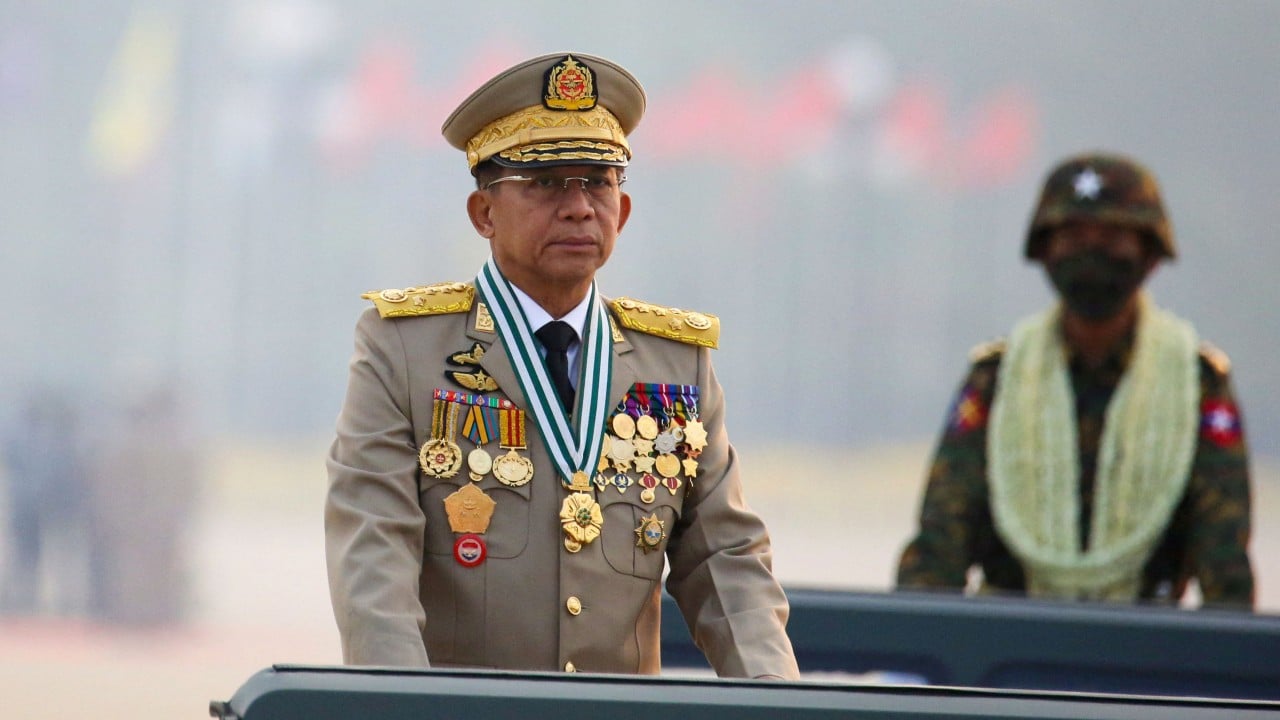
Min Aung Hlaing just traded his military fatigues for a presidential suit, but he can't outrun his past. While he sits in Naypyidaw trying to legitimize his rule through a sham election, a group of activists in Jakarta just threw a massive legal wrench into his plans. On April 6, 2026, a criminal complaint was filed with the Indonesian Attorney General’s Office, accusing the newly "elected" Myanmar president of genocide.
This isn't just another symbolic protest. It’s a calculated strike using a brand-new legal weapon: Indonesia’s updated penal code. For the first time, activists are testing the country's "universal jurisdiction" provisions to hold a foreign head of state accountable for atrocities committed outside Indonesian borders. If you think international law is just a toothless tiger, this case might prove you wrong.
Breaking the Wall of Impunity
The complaint focuses on the 2017 "clearance operations" that forced over 730,000 Rohingya Muslims to flee into Bangladesh. We’re talking about documented mass killings, rape as a weapon of war, and the burning of entire villages. Min Aung Hlaing was the military chief who orchestrated it all. Now that he’s declared himself president after the 2026 elections—elections the West has largely dismissed as a fraud—the stakes have changed.
The group behind the filing includes heavy hitters. Yasmin Ullah, a Rohingya activist who lived through the horror, joined forces with Indonesian figures like former Attorney General Marzuki Darusman and leadership from Muhammadiyah. Marzuki isn't just a local name; he led the UN Fact-Finding Mission that concluded the military acted with "genocidal intent."
Why do this in Jakarta? Because Indonesia is the heavyweight of ASEAN. For years, the regional bloc has hidden behind a policy of "non-interference," letting the junta burn Myanmar to the ground while everyone else watched. By filing this in an Indonesian court, activists are forcing the biggest player in the region to decide: do we stick to diplomatic niceties, or do we follow our own laws?
The Universal Jurisdiction Gamble
Most people don't realize how significant Indonesia's new penal code is for human rights. In the past, Indonesian courts were notoriously gun-shy about international crimes. That changed with the legal reforms that recently went into effect.
Universal jurisdiction is the idea that some crimes—genocide, torture, war crimes—are so heinous that any state can prosecute them, regardless of where they happened or the nationality of the victims.
- It’s the same principle that allowed Spanish courts to go after Chile’s Augusto Pinochet.
- It’s why German courts are currently convicting Syrian officials for torture.
- Now, Indonesia is being asked to use that same power against its neighbor.
Feri Amsari, the lead lawyer on the case, is blunt about it. He argues the law "unambiguously asserts" Indonesia's right to try these crimes. The Attorney General’s Office has officially received the complaint, which is a massive first step. It doesn't mean a trial starts tomorrow, but it means the door is open.
Real Evidence vs. Diplomatic Shields
The junta always denies everything. They'll say the 2017 operations were about "counter-terrorism." They'll say the 2026 election was "the will of the people." But the evidence compiled for this case is hard to ignore. We have satellite imagery of charred neighborhoods. We have thousands of testimonies from survivors in Cox’s Bazar.
Even more damning is the timing. This lawsuit arrives just months after the International Court of Justice (ICJ) held fresh hearings in the case brought by The Gambia. In November 2024, the International Criminal Court (ICC) prosecutor Karim Khan already sought an arrest warrant for Min Aung Hlaing.
Indonesia has traditionally been a destination for Rohingya refugees fleeing by boat. We see the crisis firsthand on the shores of Aceh. By bringing the case to Jakarta, the activists are connecting the human tragedy on Indonesian beaches to the man in the presidential palace in Myanmar. It makes the conflict local.
What Happens Next?
Don't expect the Indonesian police to fly to Naypyidaw and handcuff the president next week. That’s not how this works. However, the legal pressure creates a "shrinking world" for the junta.
If the Indonesian Attorney General moves forward with an investigation, it makes it nearly impossible for Min Aung Hlaing to visit Jakarta for ASEAN summits. It signals to other regional powers—like Malaysia and the Philippines—that the era of looking the other way is over. It puts the Indonesian government in a spot where they have to choose between their legal obligations and their diplomatic comfort.
If you're following this, watch the Indonesian Attorney General’s response over the next 30 days. That’s the real tell. If they open a formal investigation, the "president" of Myanmar just became a fugitive in the eyes of his largest neighbor.
Pressure works. Keep an eye on the legal filings in Jakarta and support organizations like the Myanmar Accountability Project that are providing the groundwork for these cases. Accountability isn't a gift; it's something you have to take.