You have heard the hype about Indonesia becoming a global electric vehicle hub for years. For a long time, it felt like just talk—lots of meetings in Davos, flashy promises, and very little metal on the road. But walk into a showroom in Jakarta today, and the mood has shifted. The numbers don't lie. One in every four new passenger cars sold in Indonesia this year is an electrified vehicle.
Five years ago, that number was effectively zero.
The strategy isn't just about importing cars anymore. Indonesia is playing a much longer, more aggressive game. By sitting on the world’s largest nickel reserves, the country has forced a trade-off that global automakers can't ignore: if you want our minerals to build your batteries, you better build your factories here.
The Reality Behind the Production Hopes
Is Indonesia actually becoming a production powerhouse? The short answer is yes, but it's messy. You can’t just flip a switch and become the next Detroit or Shanghai. The government is pushing hard to manufacture homegrown electric cars by 2028. President Prabowo Subianto recently confirmed that a massive factory complex is under construction to make this happen.
But here is where the "expert" analysis often falls flat. Many outsiders think this is just about mining raw materials. It isn't. The real challenge is the supply chain. You need local talent, specialized tech, and a grid that can handle the load. Right now, the country is heavily reliant on Chinese manufacturing expertise to get those assembly lines moving. That’s a smart move in the short term, but it leaves a massive question mark over long-term autonomy.
Why the Numbers Look Different Now
Let’s look at the growth. In the first half of 2026, sales of electrified vehicles hit 117,000 units. That’s a nearly 70% jump compared to last year. If you are an investor, you aren't looking at the total volume yet—you're looking at the velocity of change.
Some people make the mistake of thinking this is only about pure battery electric vehicles. They are wrong. Indonesia is taking a pragmatic, "multi-technology" approach. The government isn't banning internal combustion engines today. They are pushing hybrids, biodiesel, and bioethanol right alongside pure electric cars. They want to lower emissions, sure, but they also want to keep the economy moving without breaking the energy grid. This flexibility is why you’re seeing such a massive surge in sales—consumers have options that actually fit their daily needs.
The Charging Infrastructure Myth
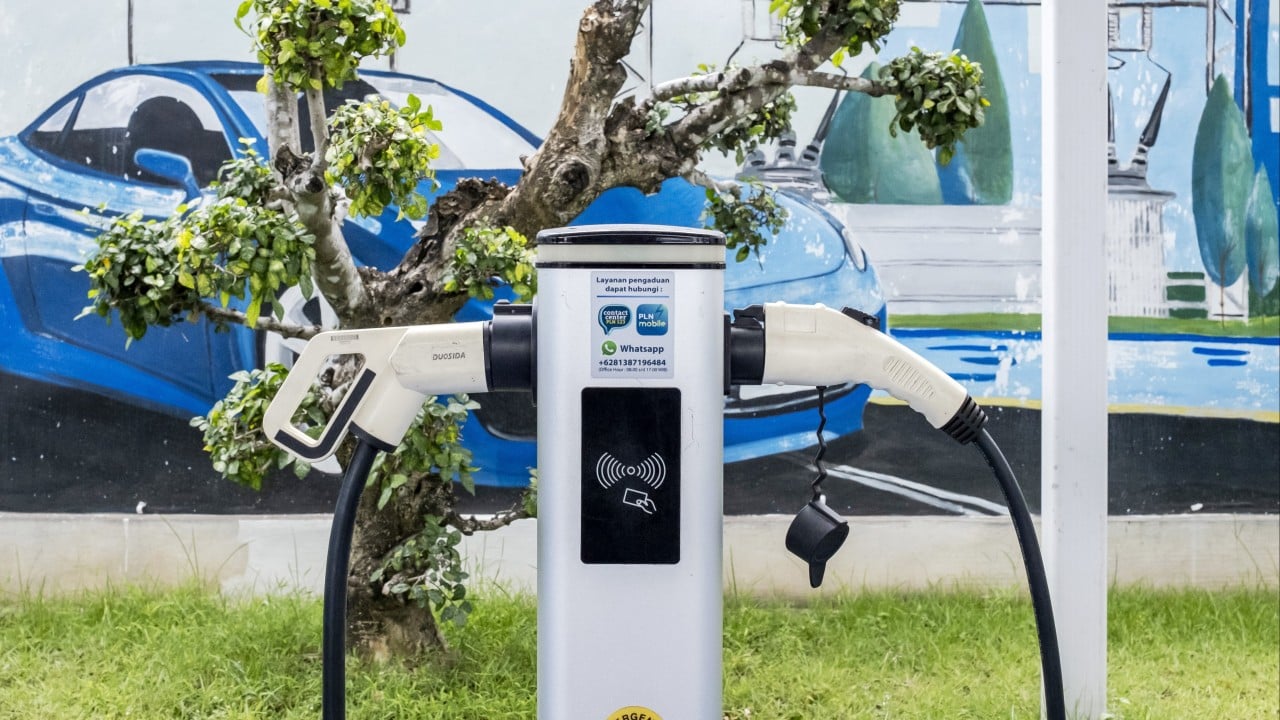
You have probably read articles claiming the charging network is "non-existent" outside of Jakarta. That’s outdated. While it’s true that you won't find a high-speed charger in every village, the infrastructure is expanding. There are over 5,000 public charging stations operating nationwide today, with the goal of hitting 25,000 by 2028.
Honestly, the biggest barrier for most buyers isn't the charger—it's the price. For a while, EVs were status symbols for the ultra-wealthy. That is changing fast. As more brands enter the market, competition is pushing prices down. You can now find models in the mid-range price segment that actually make sense for middle-income households. When a car starts to cost the same as a traditional gasoline equivalent, the math for the consumer changes instantly.
What Most Investors Miss
If you're trying to figure out where this is going, stop looking at the top-line car sales and start looking at the two-wheeler market. Indonesia is a country of motorcycles. With roughly 115 million two-wheelers on the road compared to only 16 million four-wheel vehicles, the real transition will happen on two wheels.
The government knows this. They are prioritizing the electrification of motorcycles and public transport buses. It’s a lower barrier to entry, the batteries are cheaper, and the impact on urban air quality is immediate. If you want to know which companies will actually win in Indonesia, don't just watch the big car brands. Watch the battery-swapping startups and the electric motorcycle manufacturers.
Strategic Realities for 2026 and Beyond
We are at a transition point. The era of easy subsidies for imported EVs is fading. Starting in 2026, the market is being forced to stand on its own two feet. This will create some short-term price shocks, but it’s exactly what the industry needs to mature.
If you're involved in this space, here is what you need to focus on:
- Local Content Requirements: Don't bet on companies that only import finished goods. The government is tightening the screws on local production quotas. If they aren't manufacturing or assembling parts in Indonesia, they won't get the best tax breaks.
- Hybrid Flexibility: Don't underestimate the role of hybrids. For the next five years, they will be the bridge for consumers who are worried about charging gaps.
- Battery Supply Chains: The money is upstream. Companies that can process nickel and other battery components locally are the ones with the real leverage.
Indonesia isn't just trying to be a market; it's trying to be a critical link in the global automotive chain. The transition is happening, it’s happening faster than most anticipated, and it’s no longer just a hypothetical scenario. It’s a messy, aggressive, and entirely necessary industrial pivot. Pay attention to how the local content rules evolve over the next twelve months. That’s where the real winners will be decided.