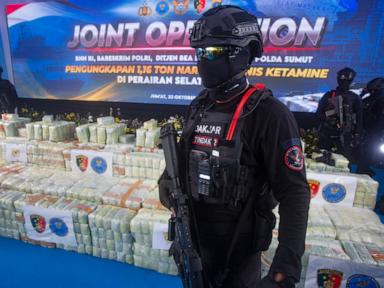
When Indonesian authorities announced that two major operations netted more than two tons of narcotics across Aceh and Sumatra, the headline numbers told only half the story. A secret lab in Pidie Regency turned out about 1.2 tons of liquid and crystal methamphetamine, while a separate sea interception off North Sumatra pulled 1.16 tons of ketamine from a tanker. Together, those two strikes pushed the haul past two tons and put 19 suspects in handcuffs.
Look closer at how those drugs moved, though, and the old picture of Southeast Asian smuggling falls apart. For years, analysts and casual observers treated Indonesia mostly as an end-market destination where traffickers pushed pills, crystal meth, and weed into an archipelago of roughly 280 million people. That assumption is outdated, and honestly, it misses why syndicates are shifting tactics right now. Building on this idea, you can also read: The Arab Kingmaker Myth That Distracts From Israel Real Power Shift.
Why the Indonesia Drug Bust Changes the Smuggling Map
The Indonesian National Police didn't just find finished drugs sitting in a warehouse waiting for street dealers. At a shophouse in East Mutiara district, Pidie Regency, investigators uncovered an active lab converting liquid meth oil into crystal methamphetamine, seizing 20 drums of meth oil alongside 500 kilograms of crystal meth and specialized processing gear. National Police Chief General Suyudi Ario Seto put the shift plainly after visiting the site: Indonesia is no longer just a market for distribution, it has become a production target for international syndicates. Observers at Reuters have also weighed in on this situation.
Shipping liquid methamphetamine rather than finished crystals solves a classic smuggler headache. Liquid forms can be packed differently, disguised inside broader chemical or cargo flows, and converted closer to local distribution hubs. According to the Indonesian National Police, investigators already named 10 suspects in the Pidie lab network—including eight Indonesian citizens and two Chinese chemists identified as LJ and XM—and teamed up with China's National Narcotic Control Commission to trace who shipped the liquid precursor across Southeast Asia.
That matters because synthetic drug markets in East and Southeast Asia have kept climbing even as police boast about record seizures. Reporting from the United Nations Office on Drugs and Crime shows regional synthetic drug seizures expanding through 2025, with methamphetamine and ketamine both prominent. Big busts prove enforcement can hit hard when intelligence lines up. They also show syndicates are adapting fast enough to stay in business.
How Ships Hide Tonnage in Crowded Waters
Out at sea, the second half of the two-ton haul played out on a tanker named MT Global 168, intercepted in waters off North Sumatra. Officers pulled 1.16 metric tons of ketamine—packaged in 58 sacks—from the vessel and arrested eight crew members.
Anyone who has tracked maritime security knows why the Malacca Strait and surrounding sea lanes are a nightmare to police. Tens of thousands of commercial ships pass through these narrow waters every year, carrying legitimate fuel, palm oil, electronics, and containers. A single tanker or cargo boat can blend into ordinary traffic until something looks off.
In this case, investigators didn't stumble onto the ship by pure luck. Police had been tracking movements tied to the vessel since August, and intelligence pointed to a ship-to-ship transfer, slowed speeds in the Andaman Sea, prolonged Automatic Identification System shutdowns, and conflicting identity records. Even better, police linked the vessel using documents recovered earlier from another ship, Fushan Sing 1, which had previously been caught with about 800 kilograms of ketamine.
Dark Ships and Paper Trails
Turning off a ship's transponder—known as going dark on AIS—isn't illegal in every situation, since crews sometimes cite safety or technical issues. Still, when a vessel cuts its signal, lingers near busy shipping lanes, and shows mismatched paperwork, naval and customs analysts treat it as a red flag.
Paper trails often outlast the drugs themselves. Traffickers switch flags of convenience, register shell companies across borders, and move crews between boats. Reports from the South China Morning Post noted links between MT Global 168 and a company based in Johor Bahru, Malaysia, while the ship sailed under a Mongolian flag after an earlier Malaysian flag application. That kind of cross-border tangling is exactly why single-country patrols rarely finish the job alone.
Ketamine and Meth Aren't Just Side Notes
Ketamine used to be talked about mostly as an anesthetic in veterinary clinics and operating rooms, plus a niche club drug. Over the past few years, traffickers across Asia have treated it as a major commercial line alongside methamphetamine.
In Indonesia, officials have also warned about a newer twist: illicit substances turning up in vaping liquids and e-cigarettes, which makes concealment easier in urban nightlife and youth spaces. Combine high-potency stimulants like meth with dissociatives like ketamine, and public health systems face a messy mix of acute poisonings, addiction, and mental health strain.
One detail that gets messy in news coverage is street value. Depending on who does the math—and whether officials estimate wholesale bulk value or hypothetical retail street prices—dollar figures on major busts can swing wildly. For instance, reporting on the MT Global 168 ketamine seizure cited widely different valuation estimates across outlets, ranging from around $14 million in some reports to higher figures cited by Indonesian police. When you read seizure headlines, treat any single dollar figure with a grain of salt and focus on actual weight, purity, and whether the supply chain was broken.
Why Tough Laws Alone Haven't Ended the Trade
Indonesia has some of the harshest anti-narcotics penalties on earth, including the death penalty for drug traffickers, even as the country has kept an informal moratorium on executions for several years. If harsh punishment alone scared syndicates away, multi-ton shipments wouldn't keep showing up off Sumatra and the Riau Islands.
I've watched drug policy debates play out across plenty of countries, and the pattern is pretty consistent. Tough sentencing grabs headlines and satisfies public anger after a big bust. Yet street-level crackdowns and heavy prison terms rarely stop transnational syndicates unless authorities also go after three things: precursor chemicals, money laundering, and cross-border logistics.
Consider the numbers shared by the Indonesian National Police in early November 2026: roughly 10.5 tons of narcotics seized across operations over General Suyudi's first three months in office. That's an enormous amount of contraband kept off the streets. At the same time, syndicates treat seized loads as a cost of doing business when profit margins are huge and coastlines stretch for thousands of miles.
Practical Steps for Readers, Property Owners, and Watchers
If you're following this story because you care about regional security, run property in high-risk areas, or just want to read drug enforcement news without getting fooled by spin, a few concrete habits go a long way.
- Check official releases alongside wire reports: Start with primary updates from agencies like the Indonesian National Police and regional UN briefs from UNODC to separate confirmed weights and arrest counts from rough value estimates.
- Verify tenants and unusual industrial setups: Following the Pidie shophouse lab raid, police specifically urged landlords and property owners to check tenant backgrounds and watch for unusual chemical deliveries, heavy ventilation, or round-the-clock secrecy in ordinary residential or commercial units.
- Track follow-on financial and extradition news: A seizure is only step one; the real test of whether the Indonesia drug bust crippled a network shows up weeks later in asset freezes, money-laundering charges, and foreign arrests of suppliers.
- Support harm reduction and treatment capacity: Enforcement can slow supply, but hospitals, counselors, and families deal with the human fallout every day, so funding treatment and youth prevention remains essential alongside border and maritime patrols.



