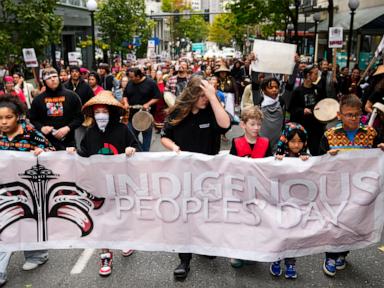
You’ve probably seen the calendar flip in October. For decades, the second Monday of the month meant one thing: Columbus Day. Banks closed, mail stopped, and classrooms taught a sanitized story about a brave Italian explorer sailing the ocean blue in fourteen hundred and ninety-two.
That story is falling apart. And good riddance. You might also find this connected story useful: The Walk That Shook the Marble Pillars.
Across the United States, Indigenous Peoples Day has stepped into the spotlight. Critics love to frame it as a culture-war stunt or a simple renaming exercise. They're missing the point entirely. This day isn't about erasing history. It's about telling the actual truth of what happened when European empires collided with the sovereign nations already thriving across the Americas.
If you still think this is just about swapping out a statue, you haven't been paying attention. As extensively documented in latest reports by TIME, the effects are widespread.
The Real Origin Story
Let's clear up a massive misconception right out of the gate. Indigenous Peoples Day didn't just pop up on social media a few years ago. The roots go back to 1977, when a delegation of Native nations proposed the idea at an international United Nations conference in Geneva, Switzerland. They wanted a dedicated space to address the ongoing colonization and human rights abuses faced by Indigenous populations worldwide.
South Dakota took the boldest early leap in 1989, officially replacing Columbus Day with Native Americans' Day starting in 1990. Berkeley, California followed suit in 1992, marking the 500th anniversary of Columbus's arrival by declaring an Indigenous Peoples Day.
Activists didn't wake up one morning and decide to cause trouble. They spent decades organizing, lobbying, and demanding that local governments stop celebrating a man whose arrival initiated a centuries-long campaign of forced displacement, cultural erasure, and biological devastation.
Beyond the Myth of Discovery
Think about the phrase "discovered America." It’s an absurd concept when you pause to unpack it. How do you discover a continent where millions of people are already living, trading, governing, and farming?
When Columbus made landfall in the Bahamas in 1492, he didn't step onto an empty wilderness. He entered a complex geopolitical landscape populated by hundreds of distinct cultures, sophisticated agricultural societies, and vast trade networks stretching from the Arctic to the tip of South America.
Centuries of textbooks flattened these diverse nations into a monolith, or worse, erased them entirely after initial contact. Indigenous Peoples Day acts as a corrective lens. It shifts the narrative away from European conquest and places the focus squarely on survival, resilience, and continuity.
When you look at modern tribal nations, you aren't looking at relics of the past. You're looking at contemporary sovereign governments that manage lands, operate businesses, run healthcare systems, and fight to protect sacred sites. They are still here. That reality messes with the old narrative that Native Americans simply vanished into history.
Celebration Meets Protest
You can't separate the joy of Indigenous Peoples Day from the fight for justice. That’s why the day carries a dual identity.
On one hand, it's a massive cultural revival. Communities gather for traditional dances, songs, foodways, language-revitalization workshops, and art markets. It's a joyful reclamation of identities that schools and governments tried to beat out of boarding-school children for generations. If you’ve ever attended a modern powwow or community feast, you know the electric energy of cultural pride passing from elders to toddlers.
On the other hand, the day remains deeply political. Activists use the platform to demand action on pressing contemporary crises.
- The crisis of Missing and Murdered Indigenous Relatives (MMIR) continues to tear families apart, often ignored by mainstream law enforcement.
- Water rights and sacred land protection battles—like the ongoing struggles over pipelines and mining near reservations—remain front and center.
- Federal recognition battles for tribes seeking basic government-to-government status drag on for decades.
Celebration without protest is just a PR campaign. Communities know this. They use the momentum of October to demand systemic change, not just symbolic nods.
What You Can Actually Do
Observing Indigenous Peoples Day shouldn't stop at reading an article or posting a graphic on social media. If you want to move past performative allyship, you need to take concrete steps that support Indigenous communities directly.
Start by figuring out whose ancestral land you live on. Tools like Native Land Digital can help you identify the original stewards of your specific geographic coordinates. Don't stop at knowing the names. Learn about their current struggles and policy priorities.
Support Indigenous creators, authors, chefs, and businesses year-round. Buy your books from Indigenous-owned shops. Read works by contemporary writers like Louise Erdrich, Joy Harjo, or David Treuer. Support artists and craftspeople directly instead of buying cheap, mass-produced knockoffs from souvenir shops.
Listen to tribal leaders when local and national policy decisions arise. When tribes advocate for environmental protections, voting rights, or child welfare legislation, show up. Amplify their voices in your own networks.
The shift from Columbus Day to Indigenous Peoples Day isn't about rewriting the past to make people feel guilty. It's about telling the whole truth so we can build a better future together.


