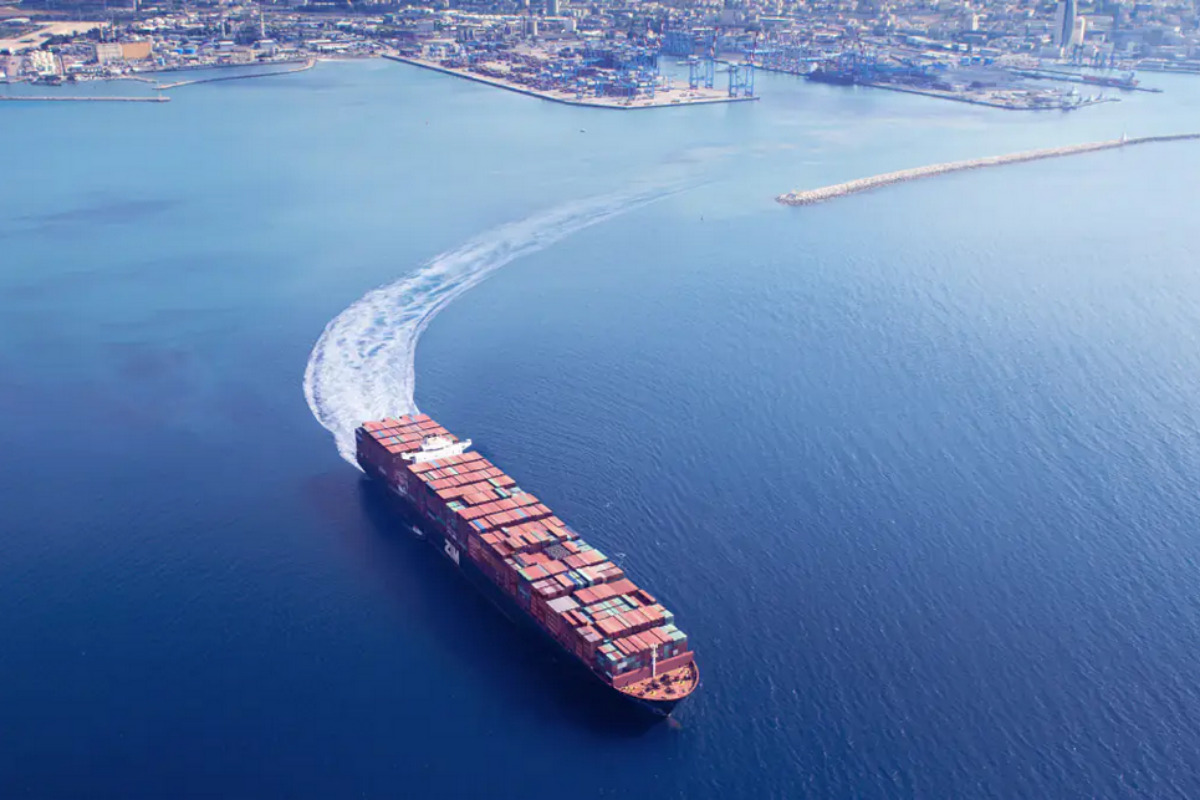
Geopolitical commentators are currently celebrating a collective delusion. The narrative goes like this: India is building an International Transshipment Port at Galathea Bay in the Great Nicobar Island, right at the mouth of the Malacca Strait. This project will instantly choke China’s energy supply lines, neutralize the People's Liberation Army Navy, and transform India into the undisputed gatekeeper of the Indian Ocean.
It is a beautiful, nationalistic fantasy. It is also completely wrong. Meanwhile, you can explore other events here: The Sound That Changed an Afternoon in Manama.
The lazy consensus dominating the defense and trade discourse treats geography as destiny. It assumes that placing a massive concrete structure near a choke point automatically grants strategic leverage. Having analyzed maritime trade infrastructure and supply chain vulnerabilities for over a decade, I can tell you that the reality is far more sobering. China isn't panicking about Galathea Bay. If anything, they are watching India pour billions into a project that misunderstands the mechanics of modern maritime warfare and commercial shipping economics.
The Myth of the Malacca Chokehold
The core argument for the Great Nicobar port relies on the "Malacca Dilemma"—a term coined by former Chinese President Hu Jintao in 2003 regarding China’s vulnerability to a naval blockade. Mainstream analysts believe that a port at Galathea Bay allows India to easily cut off the 80% of Chinese oil imports that pass through the strait. To understand the full picture, we recommend the detailed analysis by The Washington Post.
This argument collapses under basic operational scrutiny.
In a conflict scenario, you do not need a $9 billion commercial transshipment port to enforce a naval blockade. You need warships, submarines, maritime patrol aircraft, and anti-ship cruise missiles. India already possesses the Andaman and Nicobar Command (ANC), a unified theater command established in 2001. The military infrastructure to monitor and strike vessels in the Malacca Strait already exists across the archipelago, from INS Baaz in Campbell Bay to the airfields in Port Blair.
Building a massive, vulnerable commercial harbor directly under the nose of potential adversaries does not increase kinetic capability. It creates a high-value, static target that requires precious naval assets to defend.
Imagine a scenario where hostilities break out. A sprawling commercial port filled with civilian ships, fuel storage tanks, and gantry cranes is a liability, not an asset. It hampers naval maneuvering and absorbs defense resources that should be hunting enemy submarines.
Commercial Reality Chases Away Geopolitical Fantasies
Let's strip away the military romanticism and look at the economics. The Great Nicobar project is billed as an international transshipment terminal meant to compete with Singapore, Colombo, and Port Klang. The goal is to capture cargo destined for India that currently gets transshipped at foreign ports, saving India billions in freight inefficiencies.
But transshipment is a brutal, low-margin business driven by relationships, efficiency, and feeder network density. It is not built on proximity alone.
- The Singapore Dominance: Singapore is not successful just because it sits on the strait. It succeeds because it offers unmatched turnaround times, hyper-efficient customs clearing, vast bunkering facilities, and a financial ecosystem that cannot be replicated overnight.
- The Feeder Problem: A transshipment hub requires a network of smaller feeder ships to distribute cargo to regional ports. Great Nicobar is an isolated island with zero domestic industrial base. Every single piece of cargo landed there must be reloaded onto another vessel. Unlike Colombo, which directly feeds the massive Indian subcontinent market right next door, Galathea Bay sits hundreds of miles away from India's primary domestic consumption centers on the mainland.
The shipping lines that control global trade—MSC, Maersk, CMA CGM—are notoriously conservative. They will not reroute their ultra-large container vessels to a remote island outpost just because New Delhi built a deep-water berth. They will stick to established ecosystems where they can guarantee immediate container turnaround.
The Blind Spot: China Has Already Bypassed the Strait
While Indian analysts celebrate a theoretical checkmate at Malacca, Beijing has spent the last twenty years actively diversifying its supply lines. The "Malacca Dilemma" is a 2003 problem. We are living in 2026.
China’s Gwadar Port in Pakistan, the China-Myanmar Economic Corridor (CMEC), and the Northern Sea Route through the melting Arctic are not side projects. They are deliberate, structural hedges designed precisely to make an Indian Ocean blockade irrelevant.
[Persian Gulf Oil] ───► [Gwadar Port, Pakistan] ───► [Pipeline to Western China]
                                                    (Bypasses Malacca Entirely)

[African Resources] ──► [Kyaukpyu Port, Myanmar] ──► [Rail/Pipeline to Yunnan]
                                                    (Bypasses Malacca Entirely)
Through the CMEC, oil and natural gas are already pumped directly from the Bay of Bengal through Myanmar into Yunnan province. Gwadar provides a direct overland link to western China via the Karakoram Highway. If India blocks the Malacca Strait, it hurts global trade and antagonizes neutral nations like Japan and South Korea far more than it stops the flow of essential commodities to Beijing.
The Real Danger: Ignoring the Subsurface Reality
The focus on a surface port distracts from the true vulnerability in the region: the undersea domain. The waters surrounding the Andaman and Nicobar Islands, particularly the Ninety East Ridge and the deep trenches of the Malacca Strait, are the real battlegrounds.
China’s strategy in the Indian Ocean does not rely on merchant vessels that can be intercepted. It relies on a growing fleet of nuclear-powered attack submarines (SSNs) and unmanned underwater vehicles (UUVs) mapping the ocean floor. A multi-billion dollar surface port does absolutely nothing to counter a Chinese submarine slipstream moving through the Sunda or Lombok straits to bypass Malacca entirely.
If New Delhi wants to project real power, the capital allocated for dredging berths and building container yards should be diverted into expanding India’s nuclear submarine fleet, deploying massive underwater sensor arrays (Project Integrated Underwater Harbour Defence and Security System), and strengthening anti-submarine warfare capabilities.
We are building a 20th-century monument to trade in an era of 21st-century asymmetric warfare.
Stop Building Ports for Geopolitical Ego
The Great Nicobar port project is a classic case of strategic misdirection. It satisfies a political desire to look strong on a map while ignoring the operational realities of global shipping and modern naval doctrine.
We must stop treating infrastructure spending as an automatic win in the great power game. If the goal is economic sovereignty, invest heavily in mainland Indian ports like Vizhinjam and Nhava Sheva to handle direct mainline calls. If the goal is security, turn the Andaman and Nicobar Islands into an impenetrable, heavily fortified military bastion without the distraction of a commercial white elephant.
Trying to do both in a single eco-sensitive, remote location guarantees that India will excel at neither. The shipping giants will ignore the port, and the Chinese military will simply sail around it.


