Diplomatic coverage has become a exercise in collective self-delusion. Every time two foreign ministers sit in front of a pair of flags, exchange a practiced grin, and utter prefabricated notes about "strategic alignment," the press corps acts as if world history just shifted on its axis.
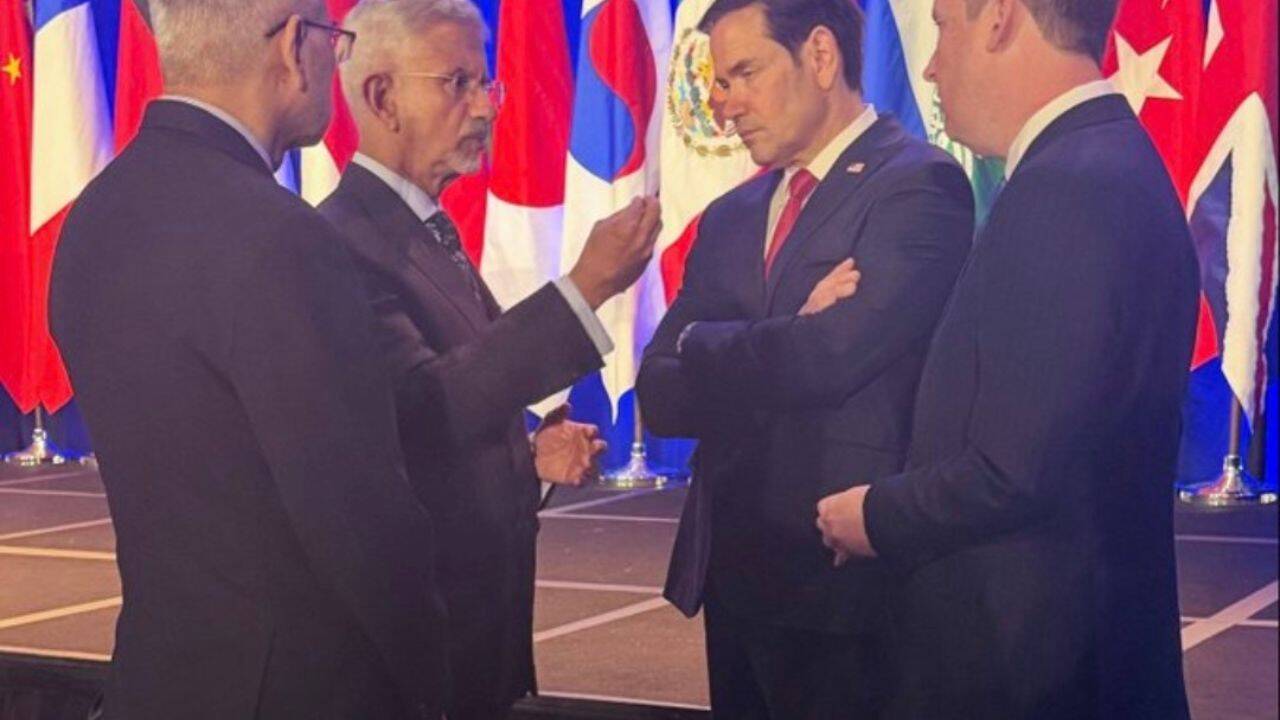
The recent sit-down in Atlanta between S. Jaishankar and Marco Rubio on the sidelines of the G20 Foreign Ministers’ Meeting is the latest entry in this theater of manufactured significance. Turn on any major news channel or read the mainstream wire reports, and you will hear the same tired script: a pivotal moment for Washington-New Delhi relations, a critical alignment of supply chains, and a unified front against regional adversaries.
It is absolute fantasy.
If you treat these side-table meetings as real geopolitical movement, you are reading the scoreboard upside down. What happened in Atlanta was not a strategic breakthrough; it was a distraction.
The Bilateral Mirage on the G20 Sidelines
Let’s dismantle the baseline assumption first. Modern diplomacy loves the multilateral "sidelines meeting" because it allows state departments and ministries to claim productivity without delivering actual concessions.
When ministers meet on the margins of a sprawling multilateral forum, they operate under severe constraints: restricted time, pre-packaged agendas, and domestic audiences demanding instant soundbites. These encounters are designed for photo-ops, not binding commitments.
Calling a 30-minute side conversation a "deepening of strategic ties" misreads how real international statecraft functions. Deep ties are forged through grueling, multi-year treaty negotiations, legislative buy-in, hard trade trade-offs, and shared industrial investment. They are not built over coffee in an Atlanta hotel holding room while delegates rush to their next plenary session.
The press loves these meetings because they provide easy copy. Officials love them because they generate high-impact visuals with zero policy accountability. But for anyone tracking hard power, trade mechanics, and defense integration, these handshakes are smoke screens.
The Structural Friction India and the US Refuse to Own
Mainstream reporting insists that Washington and New Delhi are bound together by an inevitable, natural alliance. The narrative claims that shared democratic values and common strategic concerns will automatically push both nations into an unbreakable economic and military embrace.
That narrative ignores fundamental economic and strategic realities.
1. Tariff Pragmatism Beats Strategic Rhetoric
Washington talks endlessly about "friendshoring" supply chains to India, yet American trade policy remains distinctly transactional. Tariff disputes, agricultural subsidies, and access to India's domestic markets remain massive points of friction. You cannot build a seamless economic axis when one side guards its domestic manufacturing with fierce protectionism and the other routinely threatens retaliatory trade measures.
2. Strategic Autonomy Is Not a Phase
India does not want to be a junior partner in a Western-led alliance system. New Delhi’s defense and energy policies are explicitly designed around national interest and multi-alignment. India purchases Russian crude when it suits its energy security, maintains deep legacy ties with Moscow's defense sector, and engages actively in non-Western blocs like BRICS. Washington frequently misinterprets India’s cooperation as alignment, expecting New Delhi to fall in line on global sanctions regimes or regional security doctrines. It will not happen.
3. The Tech Transfer Illusion
Defense cooperation sounds formidable on paper, but real technology transfer requires overcoming massive regulatory hurdles inside the US bureaucracy—namely International Traffic in Arms Regulations (ITAR). While press releases highlight joint defense initiatives, actual co-development and deep technical sharing move at a glacial pace. Washington wants a customer; New Delhi wants total technology transfer and domestic production. That fundamental mismatch is not solved by friendly statements at a G20 sideshow.
Imagine a scenario where a global logistics crisis hits tomorrow. A warm handshake in Atlanta will not magically compel Indian shipyards to adopt American military specs overnight, nor will it force US lawmakers to waive export controls on critical defense tech. Warm words do not build industrial infrastructure.
The Cost of Mistaking Posturing for Policy
I have watched policy analysts and corporate strategists burn millions of dollars banking on diplomatic press releases. They see a headline about "strengthened bilateral cooperation" and immediately adjust their international supply chain assumptions, expecting trade barriers to melt away within a quarter.
It never happens. Then comes the shock when tariff spikes, regulatory hurdles, or sudden diplomatic disagreements stall their investments.
The downside to acknowledging this reality is uncomfortable: it forces us to admit that global stability is far more fragile and fragmented than official press releases claim. It means accepting that India and the United States will remain transactional partners—aligning where interests happen to overlap, and competing fiercely where they do not.
Expecting India to act like a NATO ally, or expecting the US to grant India unchecked trade access without demanding major structural market reforms, is a recipe for strategic disappointment.
Stop Reading Press Releases; Watch the Supply Chains
The next time a bilateral meeting dominates the news cycle, ignore the headlines about mutual understanding and strategic harmony. Ask three concrete questions instead:
- Did anyone sign a legally binding trade agreement with specific tariff reductions?
- Is there an enacted legislative change altering technology transfer restrictions?
- Did either nation reallocate actual defense budgets or move physical assets as a result of the conversation?
If the answer to all three is no, then you are watching political performance art.
The India-US relationship will be defined by cold, hard arithmetic: raw material access, semiconductor manufacturing capacity, defense industrial output, and maritime security realities. It will not be defined by brief side-room chats in Atlanta or orchestrated statements designed to satisfy a 24-hour news cycle.
Stop treating diplomatic courtesies like structural shifts. If you want to know where the relationship is actually going, stop looking at the flags and start tracking the cargo ships.