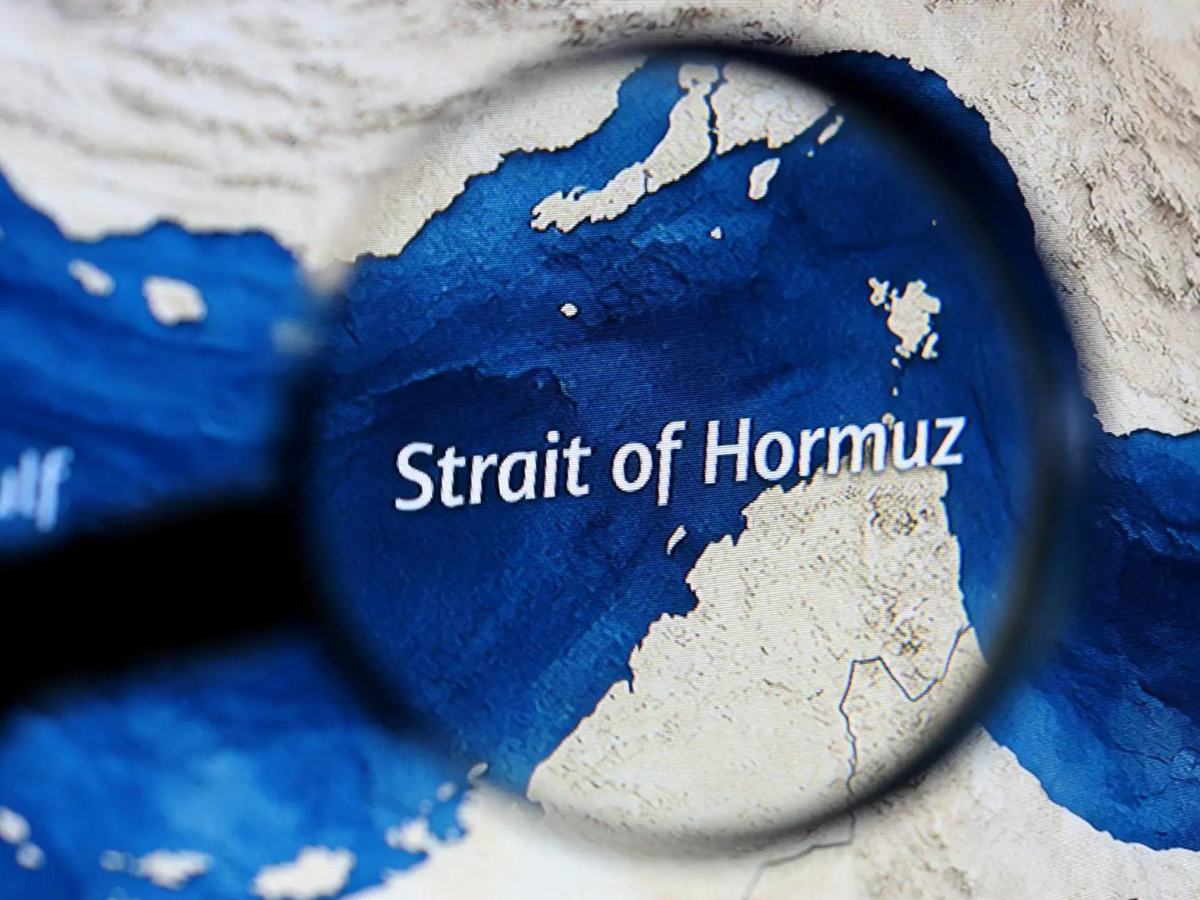
Imagine standing in a narrow hallway where someone else holds the light switch. That’s essentially India’s energy situation in the Strait of Hormuz. We’re talking about a 33-kilometer wide strip of water that dictates whether the lights stay on in Mumbai or if a farmer in Punjab can afford fertilizer for the next harvest. If you think this is just some distant foreign policy debate, you’re missing the point. The recent February 2026 crisis and the subsequent naval blockade have proven that what happens in those Omani and Iranian waters is as domestic an issue as the price of onions in a local mandi.
For years, New Delhi has tried to walk a diplomatic tightrope. We’ve stayed friendly with Iran while deepening ties with the Gulf monarchies and maintaining a "strategic partnership" with the US. But the 2026 Iran war has shattered the illusion that we can just be everyone's friend and hope for the best. When the strait closed on March 4, Brent crude didn't just climb—it exploded past $120 a barrel. It's time to admit that "strategic autonomy" doesn't mean much if our economy is one bad afternoon in Tehran away from a heart attack.
The 33-Kilometer Chokepoint Holding Our Economy Hostage
The numbers are terrifying when you actually look at them. Before the recent escalations, nearly 41% of India's crude oil and a staggering 90% of our LPG imports came through this single waterway. Think about that. Almost every second car on an Indian road and nine out of ten cooking gas cylinders in our kitchens are tied to a passage that Iran can threaten at will.
While the government has done a decent job diversifying—bringing crude imports from 40 different countries and routing 70% of it outside the Strait recently—the LPG situation is still a mess. We import 60% of what we consume. When the blockade hit, the government had to invoke the Essential Commodities Act just to keep the kitchens running. You can't run a superpower-in-waiting on "emergency orders" and hope.
Why the Chabahar Port Dream is Faltering
We bet big on Chabahar. The idea was simple: bypass Pakistan, link up with Central Asia, and create a strategic footprint in Iran that would give us leverage. It was a brilliant plan on paper. But as of April 2026, that dream is looking a bit thin. With the US sanctions waiver expiring and Washington showing zero interest in renewing it, our "gateway to the north" is becoming a diplomatic dead end.
I've seen many argue that we should just push through with Chabahar anyway. Honestly? That's easier said than done. The moment we bypass sanctions, we risk our massive trade and tech relationship with the US. But if we abandon it, we lose our only real alternative to the Hormuz bottleneck. It's a classic catch-22, but the reality is that Iran sees Chabahar as a bargaining chip, not a friendship token. We need to stop treating it like a passion project and start treating it like the high-stakes leverage it is.
Operation Sankalp and the Limit of Naval Escorts
The Indian Navy has been doing the heavy lifting. Under Operation Sankalp, we’ve deployed over half a dozen warships to the Gulf of Oman to escort our tankers. It’s impressive to see a Shivalik-class frigate guiding an LPG carrier like the MV Shivalik into Mundra port. But let’s be real: naval escorts are a band-aid, not a cure.
Our ships are staying east of the Strait. They aren't entering the waterway because we don't want to provoke anyone. While that’s "non-escalatory" and "mature," it also means our tankers are sitting ducks the moment they cross into the Persian Gulf. We have 22 Indian-flagged vessels still effectively trapped or under extreme risk. Providing "guidance" from a distance is great, but it doesn't stop a rogue drone or a sea mine.
The Fertilizer Crisis Nobody is Talking About
Most people focus on petrol prices, but the real silent killer is fertilizer. About 40% of India’s fertilizer imports come from the Middle East. Right now, farmers in the heartland are stockpiling because they’re scared. If the Kharif season doesn't get its supply, we aren't just looking at expensive fuel; we’re looking at a food security crisis.
When you have 70% supply cuts to fertilizer plants to protect "priority sectors," you’re just shifting the pain from the city to the village. The "3F shock"—food, fuel, and fertilizers—is a direct result of our geographical over-dependence. We’ve spent decades worrying about the land border with Pakistan and China, but our most vulnerable border is actually a maritime one thousands of miles away.
Moving Past Tactical Diplomacy
So, what’s the move? We can’t move the country, and we can’t move the Strait. But we can stop pretending that "neutrality" is a shield.
- Hard-code the Strategic Reserves: Our current 9.5-day crude reserve is a joke. We need at least 90 days of cover, specifically for LPG and fertilizer feedstock, not just crude.
- Weaponize our Market Size: India is the world’s third-largest oil importer. We need to tell our Gulf partners that security of supply isn't a "best effort" deal. If they want our billions, they need to help secure the transit or provide alternative pipeline routes to the Red Sea or the Gulf of Oman.
- Quit the Chabahar Hesitation: If we’re going to do it, we do it. Either find a way to make it sanctions-proof through a dedicated rupee-rial mechanism that actually works, or pivot entirely to the International North-South Transport Corridor (INSTC) via Russia.
- Naval Assertiveness: The Navy needs to do more than just "escort." We need permanent docking rights in places like Duqm in Oman to ensure we aren't just visiting the neighborhood, but living in it.
The era of "quietly guiding" ships is over. If we want to be a global player, we have to protect our interests with more than just polite press releases and "non-escalatory" naval patrols. The Strait of Hormuz isn't just a shipping lane; it's the jugular vein of the Indian economy. It’s time we started acting like it.