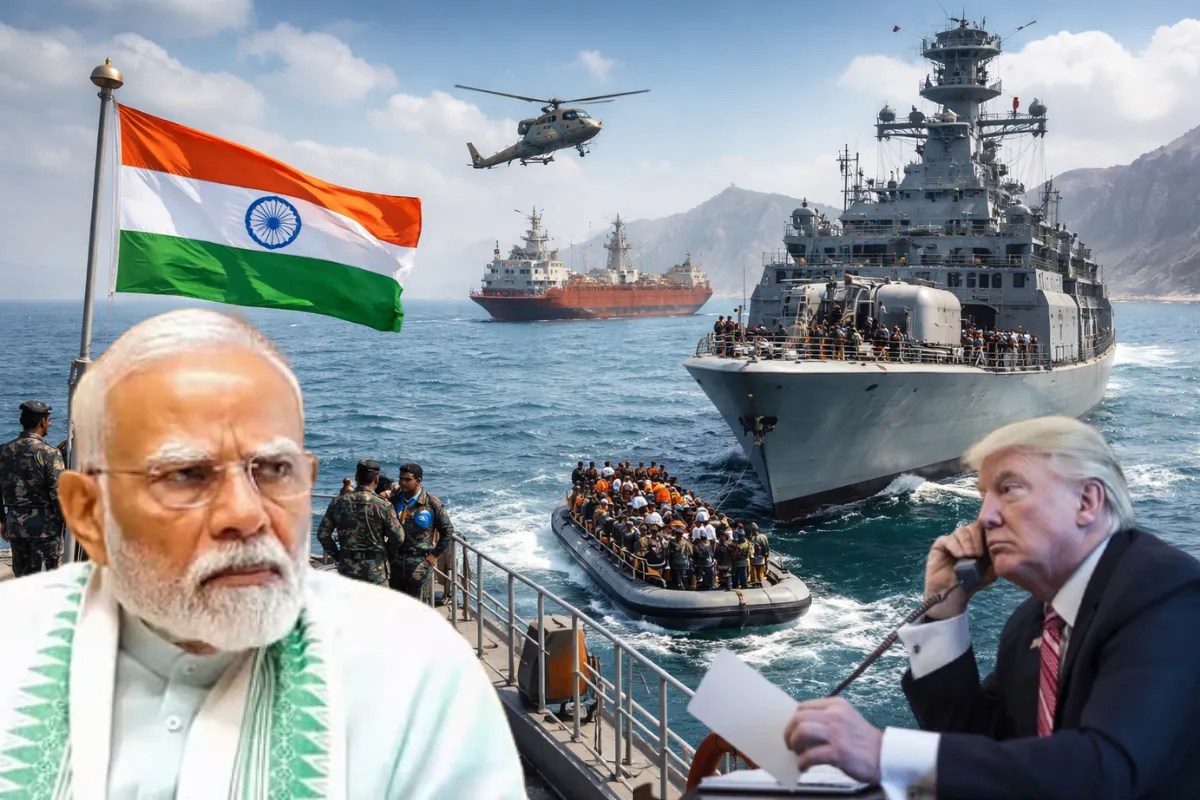
New Delhi isn't waiting for permission to protect its people. As the shadow of conflict between the US and Iran looms over the Middle East, India has activated a massive security net for nearly 20,000 Indian seafarers currently navigating the volatile waters of the Strait of Hormuz. It's a high-stakes chess move. While global markets fret over oil prices, the Indian government’s primary focus is the safety of the men and women who keep those global supply chains moving.
The Strait of Hormuz is the world's most sensitive chokepoint. About a fifth of the world's oil passes through this narrow strip of water. If it closes, the global economy doesn't just stumble—it breaks. For India, this isn't just about energy security. It's about the sheer volume of Indian nationals working on merchant vessels in this specific corridor. We’re talking about thousands of sailors who find themselves caught in the literal crossfire of geopolitical posturing.
Why the Strait of Hormuz is a Powderkeg Right Now
You can't understand the scale of India's "Special Operation" without looking at the map. The Strait is a tiny passage between Oman and Iran. It connects the Persian Gulf with the Gulf of Oman and the Arabian Sea. At its narrowest point, the shipping lanes are only two miles wide. If Iran decides to harass shipping or if the US ramps up its naval presence, these merchant ships have nowhere to go.
Tensions aren't new, but the current temperature is different. We've seen drone strikes, tanker seizures, and provocative maneuvers from both sides. When the US and Iran trade threats, the merchant navy becomes the easiest target. India knows this. They've seen it before during the "Tanker War" of the 1980s. This time, the Indian Navy is taking a proactive stance rather than a reactive one.
Operation Sankalp and the Indian Navy's Shield
The Indian Navy has deployed its most sophisticated destroyers and frigates to the region. This isn't just a show of force. It’s a logistical masterclass. The mission, often referred to as Operation Sankalp, involves continuous maritime security operations to ensure Indian-flagged vessels can pass without interference.
I’ve looked at how this works on the ground. It’s not just about sailing a warship near a tanker. It’s about communication. The Indian Navy’s Information Fusion Centre – Indian Ocean Region (IFC-IOR) tracks every ship with Indian crew members in real-time. They provide constant updates on maritime security, potential threats, and safe corridors. If a ship feels threatened, they have a direct line to an Indian destroyer.
What the Special Operation Actually Looks Like
- Escort Missions: Indian warships provide "over the horizon" protection, meaning they stay close enough to intervene but far enough to avoid escalating tensions.
- Aerial Surveillance: P-8I long-range maritime patrol aircraft are flying sorties to monitor any suspicious boat movements near the shipping lanes.
- Boarding Teams: Specialized MARCOS (Marine Commandos) are stationed on naval ships, ready to deploy if a vessel is boarded by unauthorized forces.
- Direct Communication: The Navy maintains a 24/7 helpline for ship owners and captains to report harassment or technical issues.
The Human Element 20000 Lives on the Line
Numbers like 20,000 are easy to throw around. But think about the families. India provides roughly 10% of the world’s seafaring workforce. These sailors aren't combatants. They're professionals delivering cargo. When a ship gets seized—like we saw with the Stena Impero or more recent incidents involving vessels with Indian crews—it’s not just a political headache. It’s a kidnapping of civilians.
The Indian government's "Special Operation" is designed to prevent these sailors from becoming bargaining chips. By maintaining a constant naval presence, India sends a message to both Tehran and Washington: "Our people are off-limits." It’s a delicate balancing act. India has strong strategic ties with the US but also maintains a deep, historical relationship with Iran, especially regarding the Chabahar Port.
Balancing the US and Iran Without Picking Sides
This is where the diplomacy gets messy. India can't afford to alienate Iran because of the energy ties and the North-South Transport Corridor. At the same time, the partnership with the US is vital for counter-balancing other powers in the Indo-Pacific.
Most analysts get this wrong. They think India has to pick a side. They don't. India’s "Action" in the Strait is purely about self-interest and the protection of its citizens. By framing this as a maritime security mission rather than a military alliance, India avoids getting sucked into the US-Iran proxy war. It’s a "Safety First" policy that uses naval muscle to back up diplomatic words.
Economic Stakes for the Indian Home Front
If 20,000 sailors are at risk, so is your wallet. India imports over 80% of its crude oil. A significant portion of that comes through the Strait of Hormuz from countries like Iraq, Saudi Arabia, and the UAE.
If shipping stops, or if insurance premiums for these vessels skyrocket due to the risk of war, petrol prices in Delhi or Mumbai go through the roof. The "Special Operation" helps keep these insurance rates stable. When the Indian Navy is patrolling, the "war risk" surcharges imposed by global insurers stay manageable. Without this naval presence, many shipping companies might simply refuse to send Indian-crewed ships into the Gulf, leading to a massive employment crisis for our seafarers.
The Shift in India's Maritime Doctrine
We are seeing a fundamental shift in how India views its "Area of Responsibility." Ten years ago, the Indian Navy was largely focused on its own coastline. Today, it’s acting as a net security provider for the entire Indian Ocean Region.
This operation in the Strait of Hormuz proves that India is now willing to put its boots (and ships) on the ground—or water—to protect its economic interests far from home. It's a confident, "India-First" approach that doesn't wait for global bodies like the UN to act.
Realities on the Deck
Talk to any sailor who has crossed the Strait in the last month. They'll tell you the tension is palpable. You see the fast-attack craft of the Iranian Revolutionary Guard Corps (IRGC) buzzing around. You see the massive US carrier strike groups on the horizon. It’s a pressure cooker.
Knowing an Indian warship is within radio range changes the psychology of the crew. It prevents panic. It ensures that the ship's master can focus on navigation rather than wondering if they're about to be the next headline.
The Logistics of a Long Term Presence
You can't just send a ship and hope for the best. The Indian Navy has been rotating assets for years under Operation Sankalp. They’ve built a rotation system that ensures at least one major surface combatant is always in the area.
This requires massive logistical support from bases in India and friendly ports in the region. It’s an expensive operation. Fuel, rations, and maintenance for a destroyer thousands of miles from home aren't cheap. But compared to the cost of a hijacked ship or a total shutdown of the Strait, it's a bargain.
What This Means for Global Maritime Law
India’s move also reinforces the "Freedom of Navigation." By protecting its ships, India is upholding the right of any nation to use international waters without fear of state-sponsored harassment. This aligns India with international law while keeping its actions strictly focused on its own national interest. It's smart, it's effective, and honestly, it’s about time.
The situation is fluid. One wrong move by a drone or a misidentified signal could spark a larger conflict. But for now, the Indian Navy's "Shield" is holding.
If you're a shipping company or a family member of a sailor, keep a close eye on the Indian Navy's official maritime advisories. Ensure your vessel is registered with the Indian authorities before entering the Gulf. Most importantly, make sure your communication equipment is double-checked. The Navy can only help you if they know exactly where you are.
Stay informed through the Directorate General of Shipping and the Indian Navy’s official portals. They provide the most accurate, non-sensationalized data on safe corridors. Avoid following rumors on social media about "blocked" routes unless they come from these verified channels. Security in the Strait is a moving target, and being proactive is the only way to stay safe.