Read any mainstream financial press release about India extending a $500 million line of credit to Guyana, and you will get the exact same warm, fuzzy bedtime story. Two developing nations holding hands. South-South cooperation. A generous diplomatic gift designed to help Georgetown build roads, upgrade power grids, and manage its sudden, blinding oil wealth.
It is a lovely narrative. It is also completely detached from how sovereign finance actually works.
When a rising superpower extends half a billion dollars in credit to the fastest-growing petro-state on the planet, charity is not on the balance sheet. Mainstream analysts treat sovereign credit lines like wire transfers of free cash. They celebrate the headline number, praise the diplomatic goodwill, and move on to the next press briefing. They miss the structural mechanics underneath—mechanics that turn a "generous loan" into an aggressive, locked-in market capture strategy.
If you want to understand what is actually happening between New Delhi and Georgetown, stop reading diplomatic cables and start reading procurement contracts.
The Lie of "Free Money" in Sovereign Lending
Let us dismantle the biggest misconception first. A Line of Credit (LoC) from the Export-Import Bank of India (Exim Bank) is not a suitcase of cash dropped onto the tarmac at Cheddi Jagan International Airport. Guyana cannot take that $500 million, walk over to a German engineering firm or an American tech giant, and buy whatever it wants.
Under standard Indian Exim Bank LoC rules, a strict percentage—typically 75%—of the value of the contract must be sourced from Indian companies. Goods, services, engineering, consultancy, materials. All stamped Made in India.
Think about what that actually means.
India is not giving $500 million to Guyana. India is lending $500 million to Guyana so that Guyana can pay Indian corporations to build infrastructure in Guyana, while Guyana pays back the principal plus interest to India.
I have watched emerging market finance ministries celebrate these deals like lottery wins, only to realize three years later they have mortgaged their future tax revenues to subsidize a foreign country's industrial export sector. That is not a criticism of New Delhi. It is a brilliant, textbook execution of statecraft. Every major economy from Washington to Beijing plays this exact game. The problem is that financial commentators report it like a humanitarian mission instead of a commercial customer-acquisition cost.
Why Guyana Does Not Even Need the Cash
Here is the irony that makes this deal fascinating. Guyana is currently drowning in money.
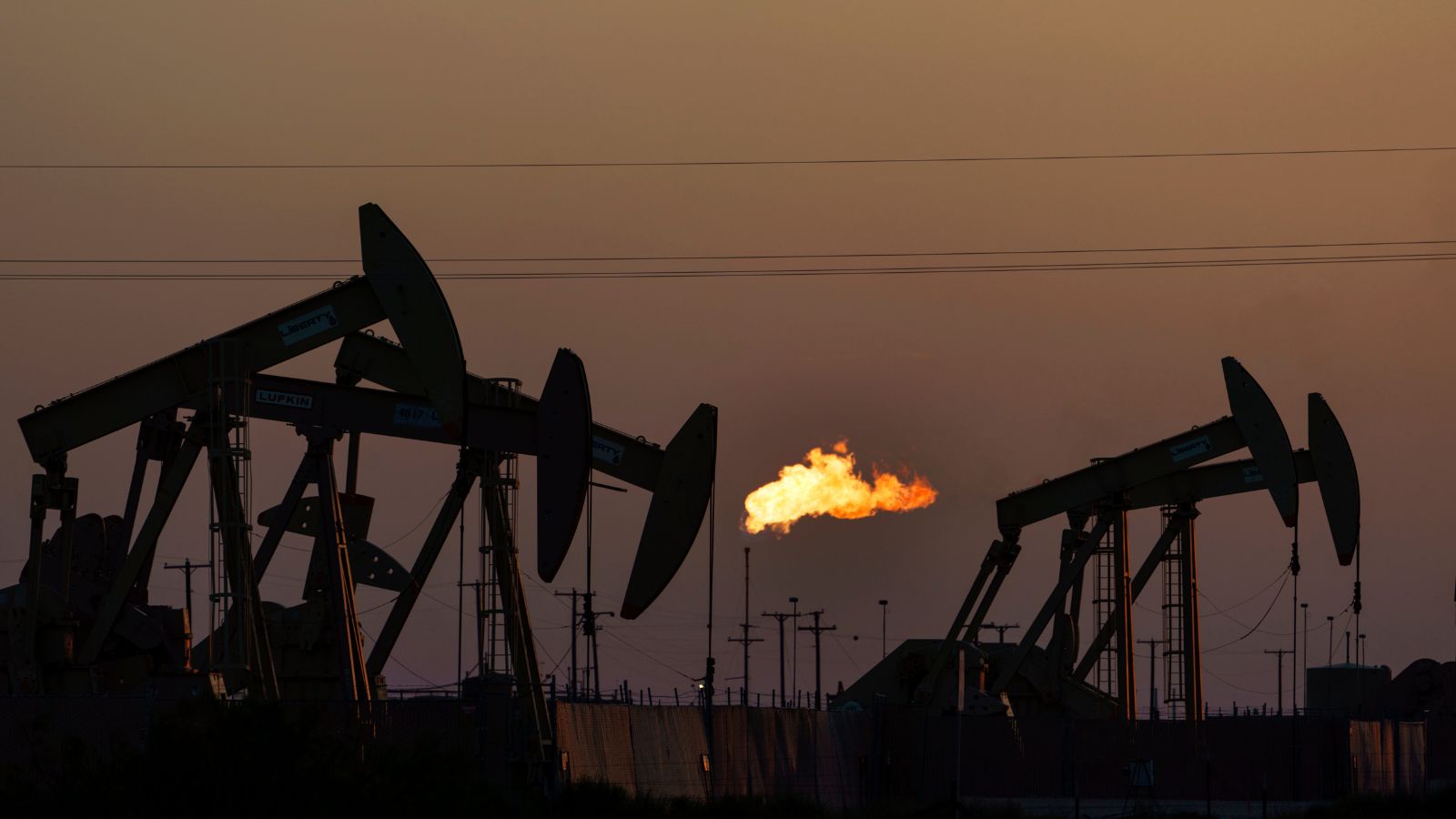
Following ExxonMobil’s massive offshore discoveries in the Stabroek Block, Guyana has posted some of the highest GDP growth rates in human history. With a population of roughly 800,000 people sitting on over 11 billion barrels of recoverable oil equivalent, Georgetown is projected to pull in tens of billions of dollars in oil royalties and profit-sharing over the next decade.
So why is a country swimming in petrodollars taking out a $500 million credit line?
Because cash flow and execution capacity are two entirely different animals.
Having billions in a Natural Resource Fund sitting in New York does not magically pave a four-lane highway through the Amazonian interior. It does not build a deep-water port, erect a gas-to-energy power plant, or modernize a dilapidated agricultural sector overnight. Georgetown has capital, yes. What it lacks is an army of engineers, project managers, supply chain networks, and heavy machinery capable of absorbing that capital without triggering catastrophic hyperinflation.
If the Guyanese government dumps billions of raw oil dollars directly into its tiny domestic economy, the local currency spikes, the price of basic goods explodes, and every other industry dies. Economists call this Dutch Disease. It is the silent killer of resource-rich nations.
By using a tied Line of Credit, Guyana bypasses its own domestic bottlenecks. It imports turnkey execution—Indian engineers, Indian steel, Indian project management—paid for over a long amortization schedule, keeping local inflationary pressure contained while infrastructure actually gets built.
The Geopolitical Chessboard Nobody Mentions
Mainstream coverage loves to frame this through the lens of shared cultural heritage. Roughly 40% of Guyana’s population is of Indian descent—descendants of indentured laborers brought to the British colony in the 19th century. Politicians love this talking point. It makes for great speeches at diaspora conferences.
Sentiment does not move half a billion dollars across oceans. Hydrocarbons do.
India is the world’s third-largest oil consumer and importer. Its domestic energy demand is exploding, and its vulnerability to Middle Eastern supply shocks and Russian sanctions keeps policymakers in New Delhi awake at night. Meanwhile, China has spent the last fifteen years aggressively buying up infrastructure, ports, and resource rights across Latin America and the Caribbean through its Belt and Road Initiative.
Look at a map of South America. Guyana sits right on the northern shoulder, directly adjacent to Venezuela—a country heavily backed by Beijing and Moscow, and one that actively claims two-thirds of Guyana's territory (the oil-rich Essequibo region).
By locking in a $500 million credit line, New Delhi is doing three things simultaneously:
- Securing Long-Term Crude Supply: Infrastructure financing buys diplomatic seat-time. Seat-time buys long-term oil purchase agreements and exploration blocks for state-owned giants like ONGC Videsh.
- Blocking Chinese Monopoly: Beijing already has deep footprints in Guyanese infrastructure, from airport expansions to bridges. India’s credit line offers Georgetown an alternative vendor pool, preventing total dependence on Chinese state-owned enterprises.
- Exporting Industrial Capacity: India’s domestic construction, solar, and agri-tech sectors need new overseas markets to scale. Guyana is a low-competition sandbox where Indian firms can build massive track records in the Western Hemisphere.
What Everyone Gets Wrong About "Debt-Trap" Narratives
Whenever a developing nation takes on hundreds of millions in bilateral infrastructure debt, the armchair pundits immediately scream "debt trap." They point to Sri Lanka’s Hambantota Port or struggling African rail projects and assume Guyana is walking off the same cliff.
That analysis is lazy. It ignores the math of denominator growth.
A $500 million loan to a stagnant economy with zero foreign currency reserves is a death sentence. A $500 million loan to an economy expanding at double-digit rates with guaranteed, dollar-denominated offshore oil revenues is a rounding error.
Let us run a quick thought experiment. Imagine a scenario where oil prices crash to $40 a barrel tomorrow and stay there for five years. Even under that brutal stress test, Guyana’s breakeven lifting costs in the Stabroek Block—estimated by industry analysts like Rystad Energy to be among the lowest in the world, hovering around $25 to $35 per barrel—mean the oil keeps pumping and the royalties keep flowing.
The real risk for Guyana is not insolvency. The real risk is gold-plating and execution bloat.
When you remove open competitive bidding from the equation—which happens automatically when 75% of a project must be sourced from a single lending nation—prices rise. Without fierce global price discovery, Indian contractors face less pressure to keep bids razor-thin. Georgetown gets its roads and solar grids faster, yes, but it almost certainly pays a premium over what an untied, open-market tender would cost.
The Questions Investors and Analysts Should Actually Be Asking
If you are watching South American emerging markets, looking at the headline loan amount is a waste of time. Here is what actually matters beneath the surface of this deal.
Is Guyana sacrificing quality for speed?
Tied credit lines force the borrowing nation to choose from a restricted catalog of vendors. While India possesses world-class engineering firms like Larsen & Toubro, tied Exim deals often attract mid-tier contractors looking for high-margin overseas work. If Georgetown fails to enforce brutal, independent quality-control audits on these projects, it will end up paying interest for twenty years on infrastructure that crumbles in five.
How does this impact Western contractors?
American and European companies assumed Guyana’s oil boom was their exclusive playground because ExxonMobil led the offshore discovery. They were wrong. While Western firms dominate the deep-water oil rigs, Asian state-backed financing is quietly capturing the onshore economy. If you are a Western infrastructure or tech vendor waiting for Georgetown to pay cash out of pocket, you are going to lose to competitors who bring their own sovereign financing to the table.
Will this actually diversify Guyana's economy?
Throwing credit at agriculture, health, and renewable energy sounds great on paper. In reality, massive oil booms almost always hollow out non-oil sectors regardless of how many roads you build. Unless those Indian credit lines are tied strictly to export-generating assets—like deep-water port logistics or agro-processing plants capable of feeding the entire Caribbean—they will simply subsidize consumption rather than create self-sustaining wealth.
The Brutal Reality of Modern Statecraft
There is a hard truth that diplomatic press releases never admit: bilateral aid does not exist. Every dollar moved between nations carries a commercial or strategic hook.
India’s $500 million play in Guyana is smart, calculated, and entirely self-interested. New Delhi gets a foothold in the Western Hemisphere’s hottest energy market, guaranteed contracts for its domestic engineering giants, and a counterweight against Beijing’s regional dominance. Guyana gets immediate infrastructure execution without overheating its local currency or waiting years for bureaucratic oil-fund disbursements.
It is a transaction, pure and simple.
Stop measuring sovereign deals by the warmth of the handshakes at the signing ceremony. Follow the procurement rules, track which companies win the subcontracts, and watch where the crude tankers sail when the pipelines finally open.