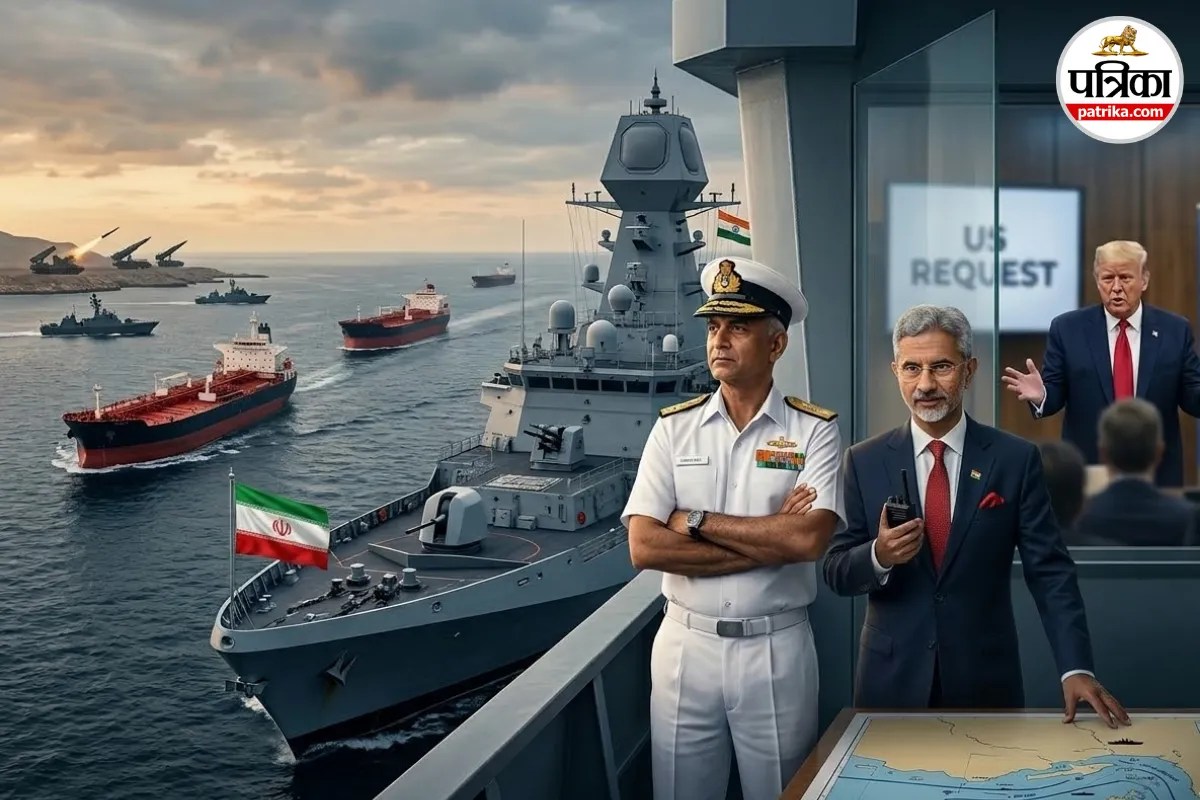
New Delhi has signaled a firm refusal to join any US-led maritime coalition in the Strait of Hormuz, opting instead for a policy of strategic autonomy that prioritizes independent naval patrols over Western military alignment. While Washington seeks a unified front to squeeze Tehran's maritime influence, India’s Ministry of External Affairs has confirmed that no talks regarding the deployment of Indian warships under an American command structure are currently on the table. This is not a snub born of indecision. It is a calculated move to protect a $100 billion energy lifeline without inheriting the baggage of a conflict that India did not start and has no interest in finishing.
The decision stems from a cold assessment of national interest. India depends on the Persian Gulf for nearly two-thirds of its hydrocarbon imports. Any perception that the Indian Navy is acting as an auxiliary to the US Fifth Fleet would immediately paint a target on Indian-flagged tankers. By maintaining a solo presence—codenamed Operation Sankalp—India ensures its ships are protected while keeping its diplomatic channels to Tehran wide open.
The Illusion of Collective Security
The US Navy has spent decades as the primary guarantor of freedom of navigation in the Middle East. However, the current tension between Washington and Tehran has transformed "collective security" into a partisan enterprise. When the US invites allies to patrol the Strait of Hormuz, it isn't just asking for ships; it is asking for a public endorsement of its "Maximum Pressure" campaign.
For India, the risks of joining such a coalition far outweigh the benefits. The Strait of Hormuz is a narrow chokepoint where the deep-water shipping channels sit almost entirely within Iranian territorial waters. If India were to integrate its sensors and weapons systems with a US-led task force, it would lose the "honest broker" status it has spent seventy years cultivating.
The Indian Navy’s current strategy is one of visible but non-threatening presence. They are there to deter piracy and accidental kinetic engagement, not to blockade Iranian exports. This distinction is vital. It allows Indian destroyers to operate in the same waters as the Islamic Revolutionary Guard Corps (IRGC) Navy without triggering the hair-trigger alerts that characterize US-Iranian encounters.
The Chanakya Doctrine in the 21st Century
Indian foreign policy has long been criticized by Western analysts as "fence-sitting." This is a fundamental misunderstanding of the Chanakya tradition of pragmatism. In the context of the Hormuz crisis, India is practicing multi-alignment.
- Energy Security: India needs cheap oil. Sanctions have already forced New Delhi to slash Iranian imports to near zero, a painful concession to Washington. Reaching further by joining a military coalition would be a self-inflicted wound to its remaining energy stability.
- The Diaspora Factor: Over 8 million Indians live and work in the Gulf region. Their safety and the steady flow of remittances—totaling billions of dollars annually—depend on regional stability. A localized war sparked by a maritime miscalculation would trigger a humanitarian and economic crisis that the Indian government is not prepared to bankroll.
- Infrastructure Stakes: India’s investment in the Chabahar Port in Iran is its gateway to Central Asia, bypassing a hostile Pakistan. Aligning militarily against Iran would effectively scuttle this multi-billion dollar strategic asset.
Operation Sankalp and the Power of Going Alone
Since 2019, the Indian Navy has maintained a persistent presence in the Gulf of Oman and the Persian Gulf. This is Operation Sankalp. It is a masterclass in independent power projection. By deploying stealth frigates and destroyers like the INS Chennai or INS Talwar, India provides "escort-on-demand" for its merchant fleet.
This independent operation sends a dual message. To the US, it says: "We are capable of securing our own interests without your command." To Iran, it says: "Our guns are not pointed at you, but our trade is off-limits."
The logistics of these patrols are grueling. Crews remain at sea for extended periods, often in extreme heat, monitoring radio frequencies for any sign of distress or harassment. Unlike coalition ships that share a common "Standard Operating Procedure," Indian captains have the autonomy to de-escalate situations based on New Delhi's specific diplomatic temperature with Tehran at that moment.
The Myth of Naval Interoperability
Washington often touts "interoperability" as the ultimate goal of naval cooperation. They want Indian ships to plug into their Aegis Combat Systems and share real-time data. While this sounds efficient, it creates a digital leash.
Once a navy is fully interoperable with the US, it becomes difficult to act independently during a crisis. If the US decides to engage a target, every ship in the network is technically part of that engagement. India's refusal to join the coalition is a refusal to surrender its "kill switch" to a foreign power. It is a technical manifestation of sovereignty.
Why Washington’s Pitch Failed
The US State Department has been aggressive in its outreach, framed around the "Rules-Based International Order." However, New Delhi has grown cynical of this phrase. From an Indian perspective, the rules seem to change depending on who is holding the gavel.
The US withdrawal from the JCPOA (the Iran Nuclear Deal) was a unilateral move that threw Indian energy markets into chaos. Asking India to then provide the naval muscle to enforce the consequences of that withdrawal is a bridge too far.
Furthermore, the Pentagon’s focus has shifted toward the Indo-Pacific and the containment of China. India argues that if the US wants it to be a "net security provider" in the Indian Ocean, it must allow India the space to manage its own neighborhood. Constantly pulling Indian assets into Middle Eastern quagmires distracts from the primary threat looming in the South China Sea and the Himalayan borders.
The China Factor in the Persian Gulf
One cannot analyze the Hormuz situation without looking at Beijing. China is the largest buyer of Iranian oil, much of it moved via "dark fleets" and ship-to-ship transfers that bypass sanctions. China has also conducted joint naval drills with Iran and Russia.
If India joins a US-led coalition, it effectively pushes Iran deeper into China's embrace. A Sino-Iranian military alliance would be a nightmare for Indian strategic planners. It would give the People's Liberation Army Navy (PLAN) a permanent foothold at the mouth of the Gulf, potentially at the port of Jask or even Chabahar if India were evicted.
By staying out of the American coalition, India keeps a foot in the door in Tehran. It prevents the total "Sinification" of Iranian maritime infrastructure. This is high-stakes geopolitics where the most powerful move is often the refusal to move at all.
The Fragile Reality of the Strait
The Strait of Hormuz is only 21 miles wide at its narrowest point. On a clear day, you can see from one side to the other. It is an arena where a $2,000 suicide drone can theoretically disable a $2 billion destroyer.
India’s naval analysts are well aware of the "Asymmetric Threat." The IRGC doesn't fight a conventional naval war. They use swarms of fast attack craft, bottom-moored mines, and shore-based anti-ship missiles. In this environment, a massive coalition fleet is often more of a liability than an asset. It creates a "target-rich environment."
A lone Indian frigate, clearly identified and communicating its neutral intent, is far safer than a ship embedded in a carrier strike group. The "Brutal Truth" of maritime security in 2026 is that visibility is a double-edged sword. Sometimes, being part of the biggest gang in the neighborhood just makes you the biggest target.
Internal Pressures and the Domestic Narrative
Inside India, the government faces a delicate balancing act. The opposition often critiques the administration for being too subservient to American interests. Simultaneously, the business elite demands a firm hand in securing trade routes.
By opting for independent patrols, the current leadership satisfies both. It projects strength and "Atmanirbharta" (Self-reliance) to the domestic audience while fulfilling the practical requirement of protecting the merchant marine. It is a rare moment of alignment between nationalist rhetoric and pragmatic military doctrine.
The Strategic Path Forward
The Indian Navy is currently undergoing a massive modernization drive. With the commissioning of a second indigenous aircraft carrier and a growing fleet of Project 15B destroyers, India is no longer a "brown water" force hugging its coastline. It is a "blue water" navy with global ambitions.
However, great power status does not require joining every "coalition of the willing" that is formed. True power is the ability to define one's own security architecture.
India's stand on the Hormuz issue is a blueprint for its future behavior. Expect to see more of this:
- Refusal of Integration: India will cooperate on intelligence and anti-piracy but will reject joint command structures.
- Bilateral De-escalation: New Delhi will continue to talk directly to Tehran, bypassng Western intermediaries.
- Increased Tonnage: More Indian ships will be stationed in the Arabian Sea, but they will fly the Tricolour alone.
The world is moving toward a multipolar maritime order. The era of a single naval hegemon patrolling the world's chokepoints is ending, replaced by a complex web of regional powers guarding their own interests. India isn't just watching this transition; it is leading it by refusing to play a supporting role in someone else’s script.
The next time a crisis flares in the Strait, look for the ship with the "Sankalp" designation. It will be the one talking to everyone and taking orders from no one.
Audit your own supply chain's resilience against a total Hormuz shutdown by reviewing the latest Ministry of Shipping contingency guidelines for the 2026 fiscal year.