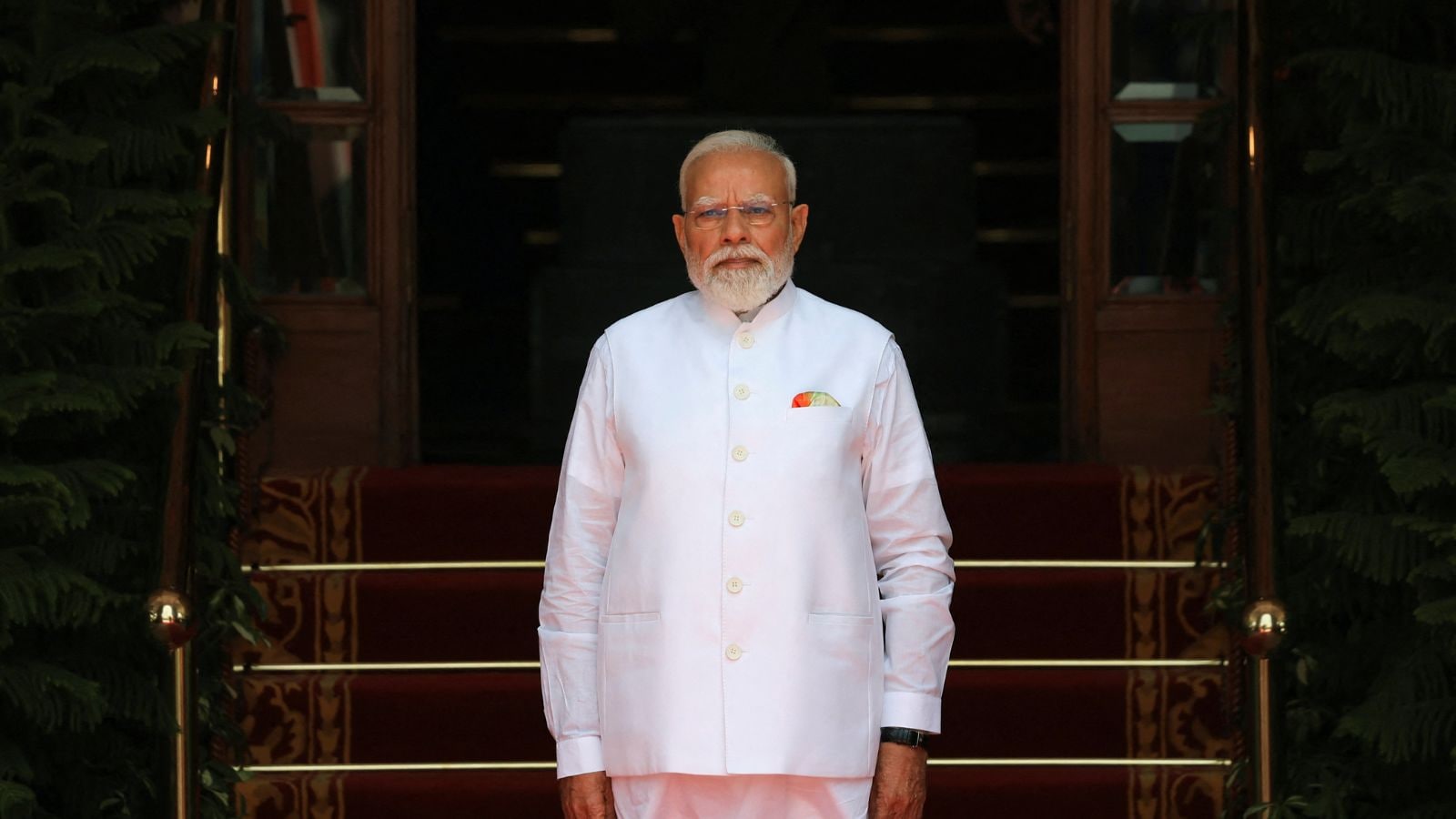
Every mainstream foreign policy column published this week sings the exact same lazy tune. Prime Minister Narendra Modi boards an aircraft, visits a few Central Asian capitals, shakes hands with autocrats, signs a handful of polite memoranda of understanding, and the commentariat erupts into synchronized applause. We are told this is a masterclass in strategic outreach. We are told India is finally carving out its rightful space in a vital neighborhood.
It is absolute nonsense.
I have spent the better part of a decade watching New Delhi play catch-up in a region where diplomatic photo-ops substitute for hard economic gravity. While commentators obsess over state visits and cultural exchanges, India is being systematically out-engineered, out-financed, and out-maneuvered by actors who treat Central Asia not as a spiritual backyard, but as an operational logistics hub.
Stop looking at the red carpets. Look at the balance sheets, the trade deficits, and the geography. When you strip away the diplomatic theater, a starkly different reality emerges: India’s Central Asia strategy is built on romantic nostalgia, and it is failing.
The Geography Trap That No One Wants to Discuss
The lazy consensus rests on a fundamental geographic delusion: the belief that India and Central Asia are natural neighbors separated only by a minor historical inconvenience.
They are separated by Pakistan and the Hindu Kush.
If you want to move cargo from Mumbai to Tashkent today, you cannot drive it north. You cannot reliably train it through a hostile neighbor. You are forced into a costly maritime detour around the Arabian Peninsula, up through Iran via the Chabahar Port, and across hundreds of miles of poorly maintained transit corridors.
Compare this to China. Beijing shares a direct, contiguous border with Central Asia. Pipelines, highways, and high-speed rail lines do not have to negotiate transit rights through a geopolitical rival or rely on a perpetually sanctions-threatened Iranian port. China’s Belt and Road Initiative did not just enter Central Asia; it swallowed it whole over a decade ago while Indian strategists were still drafting white papers on the historical silk route.
When Modi visits these countries, local leaders smile for the cameras, accept the lines of credit, and then quietly award the actual infrastructure and energy contracts to Beijing. Why? Because geography dictates economics. China delivers steel, concrete, and finished goods on schedule. India offers warm regards and endless bureaucratic delays.
The Trade Illusion Exposed by Hard Data
Let us look at the numbers that the mainstream analysis conveniently ignores. Total trade between India and all five Central Asian republics hovers around two billion dollars annually. For context, China’s trade with the exact same region exceeds seventy billion dollars.
That is not a trade deficit. That is total economic irrelevance.
When an Indian delegation arrives in Kazakhstan or Uzbekistan, local ministers look at trade volumes and understand precisely where the power dynamic lies. They appreciate India as a hedge against total Chinese economic dependency, but they treat New Delhi like an awkward third wheel at a dinner party. They want Indian pharmaceutical imports and IT services, but they do not view India as a primary engine for their national modernization.
The International North-South Transport Corridor is constantly cited as the grand solution to this connectivity crisis. I have attended closed-door security briefings where diplomats talk about the INSTC as if it were the Panama Canal. Yet, year after year, the corridor remains plagued by bureaucratic friction, customs delays, and fragile insurance frameworks. It functions more as a PowerPoint presentation than a functioning trade artery.
The Security Vacuum and the Taliban Reality
Then there is the security dimension. The conventional narrative suggests India is building a counterweight to regional instability through intelligence sharing and defense diplomacy.
Let us be brutally honest about security in Central Asia: the region looks north to Moscow for military hardware and east to Beijing for internal security surveillance architecture. When the security architecture of the region was severely tested during the January 2022 protests in Kazakhstan, it was the Russian-led Collective Security Treaty Organization that stepped in. It was not a battalion of Indian peacekeepers.
Furthermore, the American withdrawal from Afghanistan fundamentally altered the security calculus for Central Asian states. They share a porous, dangerous border with a Taliban-controlled Afghanistan. They need immediate, hard-nosed border management solutions. India’s diplomatic posture toward the Taliban has been cautious, pragmatic, but ultimately peripheral. Central Asian capitals know that New Delhi cannot project hard power across the Hindu Kush to bail them out of a localized Islamist insurgency.
Russia provides the umbrella. China provides the cash and the surveillance tech. India offers counter-terrorism symposiums. You cannot defend a border with a workshop on cyber-security.
The Soft Power Fallacy
Ask any policy analyst what India’s greatest asset in Central Asia is, and they will immediately repeat the magic words: soft power. Bollywood, yoga, Raj Kapoor films, and historical ties.
This is where the delusion reaches its peak.
It is true that older generations in Almaty or Bishkek remember Indian cinema with fond nostalgia. But nostalgia does not build petrochemical plants. It does not secure uranium supplies. It does not lay fiber-optic cables.
A twenty-five-year-old software engineer in Tashkent is not watching 1970s Bollywood films; they are consuming Western media, learning Mandarin or English, and looking toward Europe, Dubai, or East Asia for their economic future. Soft power is a force multiplier only when it is backed by hard economic dominance. Without that foundation, soft power is just cultural tourism. It does not translate into geopolitical leverage when a crucial vote happens at the United Nations General Assembly.
What Real Strategic Competence Looks Like
If India wants to stop playing a symbolic game and actually matter in Central Asia, it needs to abandon the sentimental rhetoric of civilizational ties and adopt a ruthless, transactional approach.
First, New Delhi must stop viewing Chabahar as a miraculous panacea and start treating it as a high-risk venture capital play. That means cutting through domestic bureaucratic paralysis, putting real skin in the game, and insulating operators from secondary sanctions pressures.
Second, India must pivot away from trying to match China dollar-for-dollar in massive infrastructure projects—a game India will always lose—and instead hyper-specialize in high-margin niches where China struggles: digital public infrastructure, specialized agricultural tech, pharmaceutical manufacturing joint ventures, and targeted resource extraction.
Third, stop sending politicians to sign non-binding declarations. Send private sector capital, sovereign wealth fund managers, and logistics titans who care about return on investment rather than optical wins for domestic evening television broadcasts.
Central Asia does not care about your history. It cares about your supply chains. Until Indian foreign policy wakes up to that brutal economic reality, every high-profile tour of the region will remain what it has always been: expensive theater signifying nothing.
The red carpet gets rolled up the moment the delegation's aircraft lifts off the tarmac. The Chinese cargo trains keep rolling twenty-four hours a day, seven days a week.
Adapt or become a footnote.