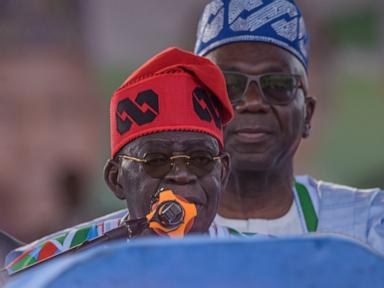
Launching an incumbent reelection campaign in the middle of an acute cost-of-living crisis appears politically suicidal under standard democratic accountability models, yet in Nigeria, severe economic distress actively reinforces the structural advantages of the executive branch. Standard political commentary treats inflation, currency devaluation, and opposition fragmentation as separate variables occurring simultaneously. In reality, these forces operate as an integrated system: macroeconomic shock strips opposition networks of liquid capital while concentrating patronage distribution inside the federal executive. Understanding how President Bola Tinubu’s reelection bid functions requires mapping the exact mechanics of fiscal centralization, the collective action failures paralyzing rival parties, and the institutional rules governing Nigerian presidential elections.
The Fiscal Asymmetry of Macroeconomic Shock
In mature democracies, an economic downturn acts as a direct tax on the incumbent’s approval rating, translating into predictable vote loss. In rentier or state-dominated economies, the transmission mechanism operates differently. When an administration removes long-standing fuel subsidies and floats a previously pegged currency, the immediate result is a sharp contraction in household purchasing power and an inflationary spike across food, transport, and energy. While this erodes broad public sentiment, it simultaneously alters the balance of financial power between the ruling party and its challengers.
The elimination of the fuel subsidy and the unification of foreign exchange windows shift vast sums of naira from opaque, off-budget arbitrage channels directly into the Federation Account Allocation Committee (FAAC) pool. This creates a specific operational dynamic:
- Subnational Liquidity Expansion: State governors receive substantially higher nominal monthly allocations from the central pool. Because state executives control local political machinery, delegate selection, and grassroots mobilization networks, increased federal transfers give the presidency an immediate financial lever to secure subnational loyalty or enforce neutrality among opposition governors.
- Private Sector Capital Exhaustion: Opposition campaigns in Nigeria rely heavily on private-sector financiers, commercial contractors, and mid-tier oligarchs hedging their political bets. High interest rates, exchange rate volatility, and contracting consumer demand force private capital into defensive preservation mode. Financiers lack the surplus liquidity required to bankroll a multi-year national opposition campaign against a sitting president.
- The Patronage Multiplier: As real wages fall, the marginal utility of state-distributed palliatives, conditional cash transfers, and civil service appointments rises. Economic desperation lowers the cost of political mobilization for the entity that controls the treasury, turning state welfare mechanisms into high-yield political instruments.
This creates a structural bottleneck for challengers. The very economic pain that generates voter anger against the administration simultaneously starves the opposition of the private capital needed to organize, fund logistics, and protect votes across 176,846 polling units.
The Architecture of Opposition Fragmentation
A fractured opposition is rarely an accident of personality clashes; it is the predictable outcome of institutional design and prisoner’s dilemma dynamics. To unseat an incumbent in Nigeria, a challenger must clear two distinct constitutional hurdles: securing a simple plurality of total votes cast nationwide, and winning at least 25 percent of the vote in two-thirds of the 36 states and the Federal Capital Territory (effectively 25 jurisdictions).
This constitutional threshold penalizes regional candidates and rewards national coalitions. Yet, building a pre-election coalition in Nigeria fails repeatedly due to three structural friction points.
First, the Zero-Sum Ticket Problem prevents natural alliances from forming. Because Nigerian politics relies on an informal zoning convention—alternating power between the predominantly Muslim North and the predominantly Christian South—any viable coalition must balance regional and religious identities on a two-person presidential ticket. When major opposition figures hail from the same geopolitical zone, or when both demand the top slot to satisfy their respective regional bases, negotiations collapse before policy alignment is ever discussed. Neither principal can accept the vice-presidential slot without alienating their core demographic, resulting in parallel, mutually destructive candidacies.
Second, Asymmetric Defection Incentives allow the incumbent to disrupt coalition talks at minimal cost. In a multi-party environment where opposition parties lack ideological cohesion, party structures function primarily as vehicles for ballot access rather than programmatic platforms. The ruling party can exploit internal factionalism within major opposition parties—such as the Peoples Democratic Party (PDP) or the Labour Party (LP)—by offering cabinet appointments, regulatory forbearance, or judicial leverage to aggrieved factions. Instead of fighting a unified challenger, the incumbent forces opposition leaders to spend their capital litigating internal party leadership disputes and defending against defections in the National Assembly.
Third, The Spoiler Equilibrium traps smaller parties. Without a ranked-choice voting system or a guaranteed runoff mechanism triggered by a failure to reach 50 percent, third- and fourth-party candidates remain in the race hoping to play kingmaker or extract post-election concessions. Each candidate calculates that withdrawing early guarantees zero return, whereas staying in the race preserves bargaining power—even though their collective participation guarantees the incumbent wins with a fragmented plurality.
The Incumbency Mechanics of Institutional Control
Launching a reelection bid early is a deliberate signaling strategy designed to freeze the political market. By declaring intent well ahead of the statutory campaign window, the presidency shifts the political calculus from policy evaluation to succession management.
In Nigeria’s political economy, early declaration serves as an immediate loyalty test for political appointees, state governors, and legislative leaders. Once the incumbent is formally in the race, hedging becomes dangerous. State governors facing their own second-term elections or seeking federal backing for infrastructure loans must align publicly with the president’s platform to avoid fiscal or political isolation.
This institutional advantage extends into the regulatory and judicial arenas that adjudicate electoral outcomes:
- Pre-Election Litigation Filtering: Nigerian elections are frequently decided in courtrooms before a single ballot is cast, via disputes over party primaries, delegate lists, and candidate eligibility. A fractured opposition generates exponential pre-election lawsuits, allowing rival factions to disqualify one another on technicalities under the Electoral Act.
- Logistical Deployment Capacity: Running a nationwide election requires deploying hundreds of thousands of party agents, securing communications infrastructure, and managing last-mile logistics in high-risk security zones. The ruling party, backed by state governors across multiple geopolitical zones, possesses an existing administrative footprint that opposition parties must build from scratch every four years.
- Narrative Framing Control: By initiating the campaign cycle during an economic trough, the administration frames current hardship as a temporary, unavoidable correction—a "pain before gain" structural adjustment—while positioning itself as the only entity capable of seeing the macroeconomic reforms through to completion. Any opposition critique is dismissed as a threat to return the country to unsustainable subsidy regimes and sovereign default.
Analytical Distinction: Known Variables vs. Strategic Hypotheses
To evaluate the viability of this reelection strategy without relying on partisan speculation, analysts must separate established structural facts from unproven political hypotheses.
Established Facts:
- Nigeria’s macroeconomic restructuring—specifically subsidy removal and exchange rate liberalization—has produced severe short-term inflation and a measurable decline in real household income, creating widespread public discontent.
- The major opposition blocs remain divided along regional, personal, and factional lines, with unresolved leadership crises impairing their ability to field a single consensus candidate.
- Constitutional victory requirements (nationwide plurality plus 25 percent spread across 25 jurisdictions) mathematically favor the candidate with the broadest subnational governor network, regardless of national approval ratings.
Strategic Hypotheses:
- The Macro-Stabilization Bet: The administration’s core hypothesis is that inflation will decelerate and currency stability will take hold before ballots are cast, allowing the incumbent to campaign on macroeconomic recovery rather than austerity. If inflation remains entrenched or external oil revenue shocks occur, this hypothesis fails, testing whether patronage networks can overcome sheer voter backlash.
- The Turnout Suppression Effect: Historical data suggests that economic disillusionment and cynicism toward the political class often depress voter turnout rather than fueling mass mobilization for the opposition. The incumbent’s strategy assumes that low turnout disproportionately harms opposition strongholds, where voters lack state-backed mobilization incentives, while the ruling party’s disciplined base turns out reliably.
- The Permanent Fragmentation Assumption: The campaign operates on the assumption that opposition principals will remain incapable of subordinating personal ambition to form a unified front. However, extreme economic pain acts as an exogenous shock; if living standards deteriorate past a critical threshold, elite financiers and regional powerbrokers may force a shotgun merger among opposition leaders to protect their own long-term stability.
Limitations of the Incumbency Playbook
While the structural advantages of incumbency during an economic crisis are substantial, the strategy carries acute failure modes. Relying on fiscal centralization and opposition division is not a risk-free equilibrium; it introduces specific vulnerabilities that can destabilize the campaign.
The primary limitation is The Threshold of Economic Tolerance. Patronage networks and state-backed mobilization work effectively within normal bands of economic distress. However, when food inflation compromises basic subsistence across both urban centers and rural agrarian belts, traditional political brokers lose control over their constituencies. Local ward leaders cannot deliver votes if voters view the ballot as an existential referendum on survival. In such scenarios, anti-incumbent sentiment overrides ethnic, religious, and patronage loyalties, producing sudden, wave-like voter realignments that overwhelm logistical advantages.
A second vulnerability is Subnational Defection Under Pressure. While higher FAAC allocations bind state governors to the federal center in the short term, governors remain acutely sensitive to local street-level unrest. If aligning with an unpopular president threatens a governor’s control over their own state assembly or exposes them to severe domestic instability, state executives may engage in "quiet sabotage"—publicly endorsing the president while withholding local financial and logistical support on election day to preserve their own regional standing.
Finally, Over-Reliance on Institutional Friction risks delegitimizing the electoral process itself. When incumbents win through low turnout, opposition disqualifications, and razor-thin pluralities amid widespread economic misery, the resulting mandate suffers from a severe legitimacy deficit. Governing a fractured, economically stressed federation with a weak popular mandate increases the cost of implementing future policy reforms and heightens the risk of extra-parliamentary unrest.
Strategic Imperatives for Political Actors
Based on the structural mechanics of Nigeria’s political economy, the trajectory of the upcoming electoral cycle will be determined by how quickly the opposing sides resolve their respective bottlenecks.
For the Incumbent Administration, the strategic imperative is Transmission Speed and Subnational Lock-In. The presidency cannot win on macroeconomic theory; it must convert increased federal revenue into visible, localized price relief—specifically targeting transport costs and staple food supply chains—within the next four quarters. Simultaneously, the campaign must lock in the allegiance of at least 22 to 25 state governors through targeted federal infrastructure co-financing, ensuring the constitutional 25 percent spread requirement is mathematically secured before the opposition resolves its internal disputes.
For the Opposition Bloc, the only viable path to competitiveness is Enforced Consolidation via Sequenced Primaries. Opposition leaders must abandon top-down elite negotiations, which inevitably stall over zoning and ego, and instead submit to a unified, transparent convention mechanism backed by a binding pre-election power-sharing agreement. Without a single consensus ticket capable of pooling regional bases in the North and South, any opposition campaign is merely subsidizing the incumbent’s reelection through vote splitting.