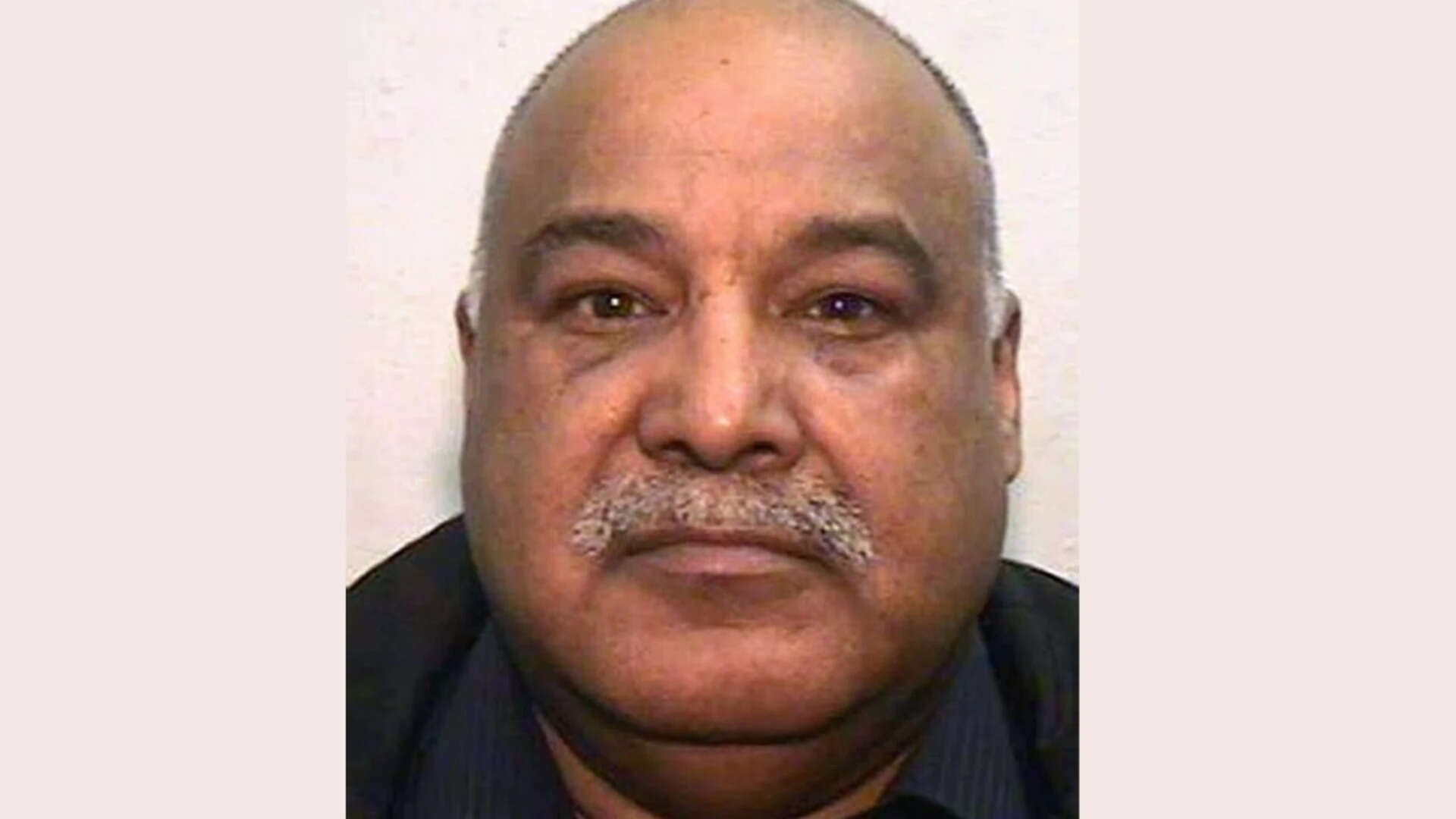
The British government's scramble to pass emergency laws to deport Shabir Ahmed, the notorious ringleader of the Rochdale grooming gang, reveals a deeper institutional paralysis rather than a sudden burst of political will. Armed with the promise of swift deportations, ministers are discovering that a web of historical exemptions and international pushback has effectively rendered the state powerless. Ahmed, a convicted child rapist who served 14 years of a 22-year sentence for 30 child rape offenses, was released on license into a 24-hour staffed facility, equipped with a GPS tag. The public is furious. His victims are terrified.
The state stripped Ahmed of his British citizenship in 2016, assuming this would automatically lead to his expulsion upon release. It did not. The assumption ignored a powerful statutory barrier buried deep within British immigration history.
The Windrush Shield Used by a Predator
The immediate mechanism blocking Ahmed’s deportation is Section 7 of the Immigration Act 1971. This specific provision was originally designed to protect Commonwealth citizens who arrived in the United Kingdom before January 1, 1973. It was created to ensure that the Windrush generation and other early post-war migrants who had lived, worked, and built lives in Britain for at least five years before deportation was considered could not be arbitrarily uprooted.
Ahmed arrived in the UK from the Pakistani Punjab in 1967 at the age of 14. Because his arrival predates the 1971 Act's implementation, he falls squarely under this statutory shield. The law makes no distinction between an upstanding Commonwealth citizen and a convicted head of a child exploitation ring.
"The idea that he might be allowed to stay in this country because of a clause in a decades-old law designed for a completely different time and context is not just absurd, but sickening," noted MP Katie Lam during a tense House of Commons debate.
The Home Office had over a decade to identify this conflict. For 14 years, while Ahmed sat in a prison cell, officials failed to reconcile the removal order with the explicit text of the 1971 Act. Passing an emergency amendment to rewrite or excise sections of the Immigration Act 1971 might solve the domestic statutory dilemma, but it exposes an even more complex international reality.
The Passport Dilemma and Islamabad's Refusal
Even if Parliament overwrites the 1971 Act through an amendment to the current Immigration and Asylum Bill, the British state cannot simply force an individual onto an aircraft without the receiving country's permission. Pakistan has made its position clear. They do not want him.
Pakistani ministers and diplomats have informed the UK that they do not recognize Ahmed as a citizen. Ahmed claims he renounced his Pakistani nationality decades ago, going so far as to tear up his passport. While British authorities argue over whether this renunciation was formally completed under Pakistani law, official records in Islamabad do not show him as a current national.
A Pakistani government official summarized the standoff plainly, stating that Ahmed left Pakistan as a young teenager and has spent his entire adult life in Britain. The criminality occurred on British soil, against British citizens, under the watch of British institutions. From Islamabad's perspective, the UK is attempting to offload a crisis of its own making.
This leaves the British government in a diplomatic gridlock. Without a valid Pakistani passport or emergency travel documents issued by the Pakistani High Commission, no commercial airline or charter flight can legally transport Ahmed to Islamabad. Threatening diplomatic sanctions or tying foreign aid to the acceptance of deportees is an option often discussed by backbench MPs, but the Foreign Office knows such heavy-handed tactics rarely yield fast results in complex diplomatic negotiations.
The High Risk of Remaining
The reality on the ground is a patchwork of intense monitoring that satisfies no one. Ahmed is under a lifetime sex offender registration, strict curfews, and geographical exclusion zones designed to keep him away from Rochdale and his victims. Yet, a 2023 parole assessment concluded that he still poses a very high risk of serious harm.
The state is currently paying for 24-hour surveillance and specialized housing to protect the public from a man they promised to deport years ago. This costly, fragile arrangement highlights the gap between tough political rhetoric and the mechanics of international law.
Amendments to historical immigration acts can be drafted over a weekend, but resolving a citizenship dispute with a foreign state that refuses to cooperate is a much slower process. Until the passport issue is resolved, the emergency legislation remains a domestic fix for a global problem. Ahmed remains in Britain, an unresolved failure of state bureaucracy.