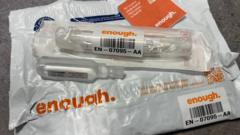
The concept is seductive to anyone frustrated by the abysmal conviction rates for sexual assault. A survivor collects their own forensic evidence immediately after an assault, bypassing a cold and intimidating institutional process. This premise propelled Enough, a high-profile start-up, into the headlines when it began distributing self-swab DNA kits to university students.
The strategy collapsed when the UK Advertising Standards Authority issued a comprehensive ban on the company's marketing. The regulatory body ruled that the organization misled vulnerable consumers by claiming its kits provided legally admissible evidence capable of securing criminal convictions.
This regulatory intervention exposes a deeper, more troubling reality. The commercialization of forensic collection exploits deep-seated public distrust in systemic justice while offering a deeply flawed alternative.
By treating sexual assault investigation as a simple matter of genetic harvesting, these ventures jeopardize criminal prosecutions and isolate victims from critical medical and psychological support during moments of acute trauma.
The Mirage of Legal Admissibility
The marketing material distributed across university campuses and digital platforms carried an assertive message. It claimed that if a survivor testified they followed the kit instructions, the retrieved DNA sample could be deployed by prosecutors and deemed relevant by a court. To reinforce this claim, the organization cited a legal opinion from a prominent King's Counsel.
The legal reality is vastly different. The English criminal justice system demands a meticulous, unbroken chain of custody for any physical evidence entering a courtroom.
When an authorized forensic medical examiner collects a sample, they document every hand that touches the vial, the precise temperature at which it is stored, and the security seals applied to the packaging. This rigorous process is designed to eliminate allegations of tampering or contamination.
[Standard Legal Chain of Custody]
Forensic Medical Examiner ➔ Sealed/Logged Container ➔ Secure Police Transport ➔ Accredited Lab Analysis

[Self-Swab Kit Chain of Custody]
Unregulated Environment ➔ Unsecured Storage by Victim ➔ Postal System ➔ Private Lab Analysis (Highly Vulnerable to Defense Challenges)
A self-swab kit collected in a student bedroom completely breaks this protocol. Defense barristers will easily dismantle evidence from a self-collected kit. They can argue the sample was cross-contaminated by domestic surfaces, improperly stored, or deliberately altered.
Even the commercial laboratory partnering with the start-up acknowledges on its own corporate website that "peace of mind" tests do not meet the criteria for legal admissibility because an independent third party did not collect the sample. Presenting these kits as tools for justice misrepresents the realities of modern courtrooms.
The Consent Loophole
The focus on DNA collection reveals a fundamental misunderstanding of how sexual assault cases are defended in modern courts.
In the vast majority of acquaintance rape trials on university campuses, the identity of the perpetrator is not the point of contention. The accused rarely denies that physical contact occurred. Instead, the defense strategy almost invariably hinges on the issue of consent.
A cotton swab cannot prove a lack of consent. It cannot document intoxication, indicate psychological coercion, or establish whether a victim was unconscious. By overstating the value of genetic material, these kits focus heavily on an issue that is often irrelevant to the legal outcome.
Furthermore, the absence of a perpetrator's DNA on a self-swab does not mean an assault did not happen. A victim who receives a negative lab result from a self-test may falsely conclude their case is hopeless, leading them to abandon formal reporting altogether.
The Serious Risks of Bypassing Medical Care
The threat extends far beyond compromised courtroom evidence. When a tech-driven venture positions a mail-in kit as the primary response to an assault, it creates a dangerous buffer between a victim and emergency healthcare.
A comprehensive forensic examination at a Sexual Assault Referral Centre is not just about gathering evidence for a police file. It is an urgent medical intervention.
Medical examiners evaluate victims for internal physical trauma, administer emergency contraception, and provide prophylactic treatment for sexually transmitted infections, including HIV exposure. They also coordinate immediate psychiatric care.
Encouraging survivors to manage evidence collection alone in their rooms delays access to time-sensitive medical care. A DIY kit does not offer preventative medicine. It cannot treat physical injuries. By substituting a holistic medical and psychological response with a plastic tube and a mailing envelope, these initiatives place an unfair, stressful burden on individuals experiencing acute trauma.
Exploiting Institutional Failure for Profit
The rise of the self-swabbing industry is a predictable response to institutional failure. With police forces and courts taking months or years to process sexual offense cases, public confidence in the state's ability to protect survivors has eroded. Start-ups step into this void, using the language of empowerment to market their products.
Yet, this commercial model shifts the responsibility of forensic collection from the state onto the victim. It suggests that if the public system is broken, citizens must purchase or crowdfund their own paths to accountability.
This privatization of justice deepens inequality. True justice should not depend on access to a commercial kit, nor should the collection of vital evidence be outsourced to unregulated environments.
The Advertising Standards Authority's intervention highlights the danger of allowing marketing copy to outpace legal and medical realities. Stripping away the empowering rhetoric reveals these self-swab kits for what they truly are: a well-meaning but dangerous distraction that risks compromising the very justice survivors deserve.