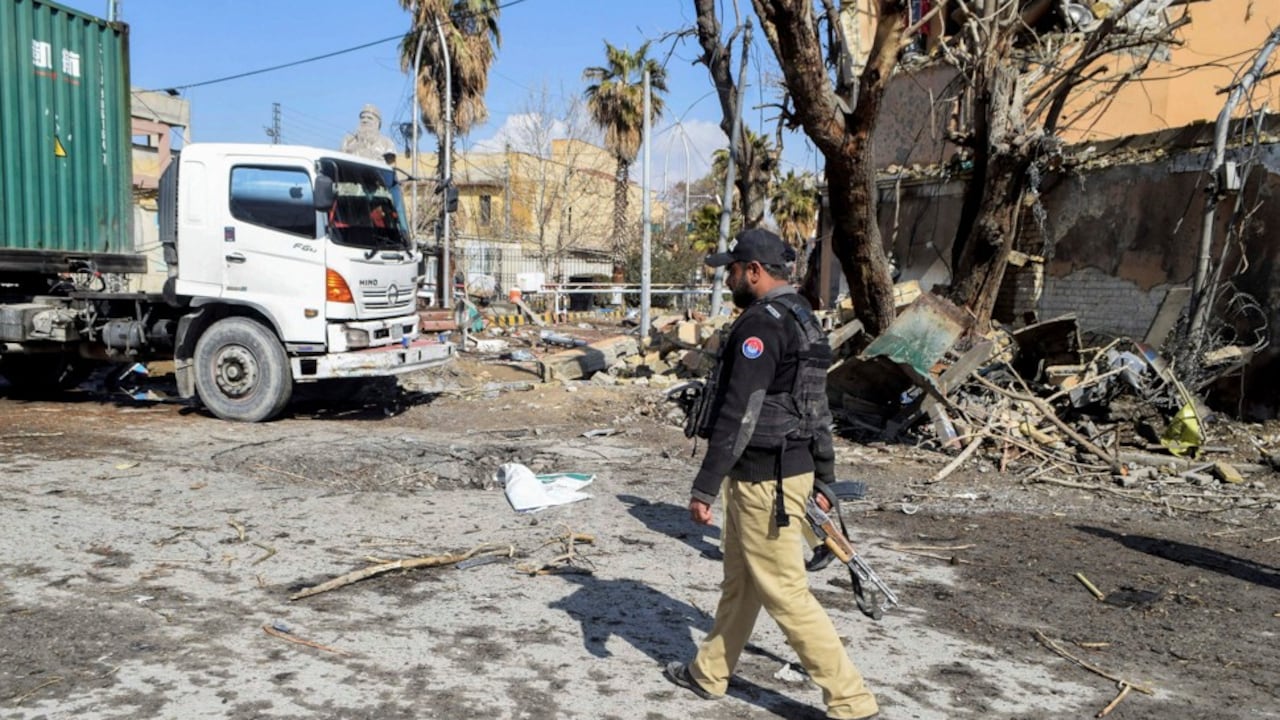
The mainstream media loves a body count. It is clean. It is measurable. It gives the illusion of progress. Following the tragic, cold-blooded execution of 23 civilians forced off buses in Musakhel, the official state narrative deployed its favorite coping mechanism: the immediate announcement that security forces retaliated and eliminated 75 militants.
The press printed the number without blinking. The public nodded, conditioned to believe that a higher stack of enemy bodies equals a safer nation. You might also find this connected story interesting: Why Trump Sinking the Housing Bill Is the Best Thing to Happen to Real Estate This Year.
It is a lie.
I have watched state apparatuses deploy this exact kinetic playbook across global insurgencies for two decades. The math never works. If killing insurgents solved asymmetric warfare, Balochistan would have been a peaceful paradise by 1974. Instead, every surge in kinetic eliminations acts as a recruitment billboard for the next generation of separatists. As discussed in detailed reports by Al Jazeera, the effects are significant.
The lazy consensus insists that a massive military hammer will eventually break the Baloch insurgency. The reality? The hammer is just forging more steel.
The Body Count Fallacy
Mainstream analysts treat counter-insurgency like a corporate quarterly report. They look at the metrics that are easiest to track.
- Militants killed: 75
- Weapons recovered: Dozens
- Areas cleared: Five
These numbers are irrelevant. In an asymmetric conflict, the only metric that matters is the replacement rate. If the state eliminates 75 fighters but its tactics alienate a community to the point that 150 teenagers sign up for the Baloch Liberation Army (BLA) the next morning, the state did not win. It lost ground.
The attack in Musakhel, where citizens from Punjab were systematically targeted, was designed to provoke a brutal, heavy-handed state response. Insurgents understand the psychology of the state better than the state understands them. They know a conventional military cannot resist flexing its muscles after a public humiliation. By responding with a massive, highly publicized kill count, security forces gave the BLA exactly what they wanted: a narrative of existential victimhood to exploit.
Dismantling the Economic Mirage
The secondary myth peddled by Islamabad and international investors is that economic development will cure secessionist tendencies. The argument goes: build the ports, lay the roads, secure the China-Pakistan Economic Corridor (CPEC), and the locals will stop fighting once the wealth trickles down.
This premise is fundamentally flawed. You cannot buy off a population that believes its identity is being erased.
When billions of dollars flow into Gwadar while local fishermen are pushed off their ancestral waters due to security cordons, the infrastructure does not look like progress. It looks like an occupying force building a pipeline to extract wealth. True economic integration requires local ownership, transparent resource-sharing, and provincial autonomy. Right now, Balochistan receives a fraction of the profits generated from its own natural gas and mineral reserves. Throwing a highway through a starved province does not generate loyalty; it accelerates resentment.
Why Conventional Military Doctrine Fails Asymmetric Warfare
A conventional army is built to fight another conventional army. It relies on superior firepower, logistics, and technology. But an insurgency does not defend territory. It dissolves into the population.
When a state uses heavy artillery, helicopter gunships, and sweeping intelligence operations in civilian corridors, collateral damage is not an anomaly—it is a mathematical certainty. The unintended consequences of these sweeps are devastating:
- Intelligence blind spots: Coerced populations stop sharing actionable intel. They protect the insurgent not out of agreement, but out of fear or spite toward the state.
- Radicalization pipelines: Every wrongful detention or collateral casualty creates a blood feud. In tribal societies, a blood feud outlasts any political administration.
- Strategic exhaustion: Maintaining a massive military footprint across a vast, rugged terrain costs billions. It drains the federal treasury while the insurgent operates on a shoestring budget of small arms and improvised explosives.
The state is playing chess. The insurgents are playing virus. You cannot checkmate a virus with a rook.
The Brutal Truth About the Political Vacuum
The ultimate failure in Balochistan is not military; it is political. Decades of engineering local elections to install compliant, puppet provincial governments have stripped the local population of any faith in the democratic process. When peaceful political dissent is suppressed, the only remaining avenue for grievance is violent extremism.
By sidelining legitimate nationalist leaders who are willing to negotiate within the constitutional framework, the state creates a vacuum. The BLA and its affiliates are more than happy to fill it. They tell the youth that talk is cheap, ballots are rigged, and bullets are the only language the capital understands.
The current strategy is an endless loop of failure. A horrific terrorist attack occurs. The state responds with overwhelming kinetic force. The media celebrates the body count. The root causes are ignored. The insurgency mutates, grows younger, and strikes harder six months later.
Stop looking at the body counts as a sign of victory. They are a ledger of an ongoing catastrophe. Until the state shifts from treating Balochistan as a hostile territory to be secured and starts treating it as a political partner to be integrated, the bleeding will not stop. Pack away the victory press releases. The fire is still burning.



