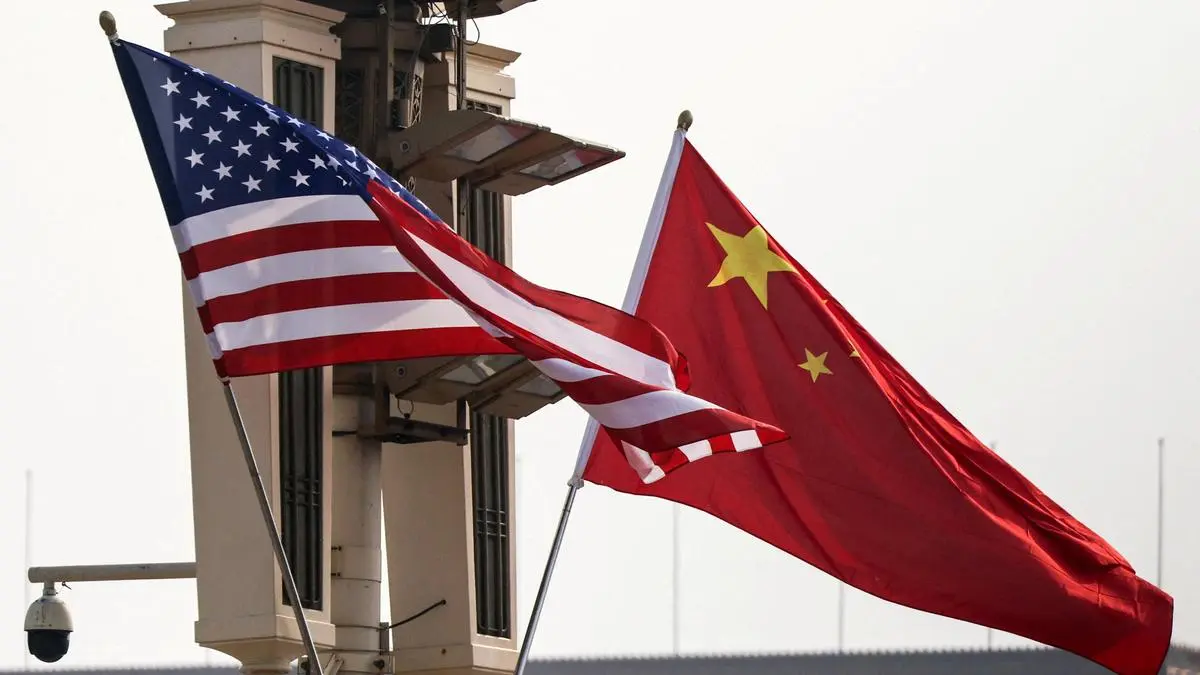
The White House announcement that China will purchase an annualized $17 billion in American beef, poultry, and agricultural goods through 2028 is not the geopolitical masterstroke the administration claims. It is a calculated, short-term truce that leaves the structural vulnerabilities of the American farm economy entirely unaddressed. While the headlines out of the Beijing summit suggest a massive victory for domestic agriculture, a closer look at the data reveals that this agreement merely clawbacks a fraction of what was lost during the recent tariff escalations. American farmers are not entering a new golden age of export dominance; they are being handed a temporary financial lifeline by an adversary that has spent the last four years successfully decoupling from US supply chains.
To understand the superficial nature of the new agreement, one must look at where the trade relationship stood before the recent disruptions. US agricultural exports to China peaked in 2022 at $38 billion. By 2025, after a brutal cycle of retaliatory tariffs and plant license expirations, that number plummeted to just $8 billion. The newly announced $17 billion annualized commitment, even when stacked atop the soybean quotas negotiated last October, fails to return American producers to the baseline of four years ago.
The mechanism behind this deal relies on China "actively working" to restore expired import licenses for hundreds of American beef and poultry facilities. In exchange, Washington has promised to look into Chinese grievances regarding the detention of its dairy and seafood shipments, alongside technical adjustments for niche exports like potted bonsai trees. This is transactional paperwork masquerading as grand strategy. The fundamental reality is that Beijing did not capitulate; it simply turned the import valve back on after proving it could survive with the valve shut.
The Diversification Trap
While Washington politicians celebrate the return of Chinese buyers to Midwestern grain elevators, the structural landscape of global agriculture has permanently shifted. Beijing's primary strategic objective is not cheap food—it is food security, which it views as synonymous with national security. Over the last several years, the Chinese Ministry of Agriculture and Rural Affairs has aggressively diversified its import portfolio, shifting its systemic reliance away from North America toward the Southern Hemisphere.
- Brazil has become the undisputed heavyweight in the global soybean trade, expanding its acreage and infrastructure to satisfy Chinese demand even when US prices are competitive.
- Argentina has solidified long-term supply agreements that insulate Beijing from sudden policy shifts in Washington.
- African and Central Asian agricultural corridors are receiving significant Chinese infrastructure investment to create alternative supply networks.
This diversification means that China no longer requires American agricultural products to feed its population or sustain its domestic livestock industries. When Beijing signs an agreement to buy American beef or poultry now, it does so purely as a diplomatic counterweight, using agricultural purchases as a political currency to defuse Western tariff pressure on its high-value manufacturing sectors, such as electric vehicles and green technology. The moment those manufacturing sectors face renewed restrictions, the agricultural purchases can, and will, be throttled once again.
The Structural Fragility of the Corporate Farm
The celebration surrounding the renewed access for major meatpackers like Tyson and Cargill ignores the deep financial instability at the bottom of the production chain. For the independent grower or livestock producer, a three-year purchase commitment from a volatile state-directed economy is impossible to bank on. Modern farming requires massive capital investments in machinery, land leases, and specialized infrastructure that take decades to amortize.
Consider a hypothetical family-owned cattle operation in Nebraska looking at the current market signals. To scale up production to meet the sudden influx of Chinese demand, the operation must take on significant debt to expand its herd and secure high-priced feed. If Beijing decides in 2027 to discover a technical non-compliance issue or an unverified disease outbreak—a common administrative tactic used by Chinese customs to halt imports without triggering a formal trade dispute—the producer is left holding the debt while the market vanishes overnight.
The price volatility induced by these political cycles does not harm the multi-national agribusiness conglomerates, which can shift their sourcing to South American subsidiaries. It destroys the independent domestic producer who has no geographic hedge.
The New Boards and the Illusion of Stability
A core component of the summit's output is the establishment of separate, state-to-state Boards of Trade and Investment. According to official briefings, these bodies are designed to manage the trade of "non-sensitive goods" and provide an alternative to the erratic tariff actions that characterized the previous twelve months. Proponents argue these boards will insulate commerce from broader national security friction, such as the ongoing tech war over advanced semiconductors and artificial intelligence infrastructure.
This separation is a bureaucratic fiction. In a command economy like China's, all trade is inherently linked to state strategy. The concept of a distinct sandbox where agricultural commodities can be traded freely while Washington restricts the flow of high-end technology to Chinese firms ignores how Beijing operates. The Board of Trade will not be a neutral platform for resolving customs disputes; it will be a theater where agricultural access is explicitly bartered for concessions on technology transfers and export controls.
Furthermore, the domestic legal framework supporting these trade maneuvers is deeply fractured. Recent federal court rulings have limited the executive branch’s ability to unilaterally alter tariff structures, leaving the administration’s trade policy in a state of regulatory limbo. The proposed reciprocal tariff reductions mentioned by summit spokespersons face significant domestic legal challenges and legislative skepticism, making the implementation of any permanent trade framework highly uncertain.
The Geopolitical Cost of Agricultural Appeasement
The focus on securing agricultural purchase quotas has come at a distinct geopolitical cost, revealing a clear hierarchy of priorities within the administration’s foreign policy. To secure the $17 billion headline figure, American negotiators had to compartmentalize much more critical security issues that carry severe long-term global risks.
During the summit, discussions regarding China's covert support for foreign military actions and its provision of commercial satellite access to adversarial regimes in the Middle East yielded no actionable concessions from President Xi Jinping. Similarly, the administration’s stance on defense commitments in the Indo-Pacific, particularly regarding arms packages for Taiwan, appeared conspicuously muted during the immediate aftermath of the talks. By allowing agricultural purchases to dominate the summit’s success metrics, Washington has signaled that its immediate domestic political considerations—specifically, placating the agricultural lobby ahead of mid-term election cycles—take precedence over checking Beijing’s strategic maneuvers in critical maritime corridors like the Strait of Hormuz.
The temporary relief felt by the American farm sector is real, but it is the relief of a patient receiving a localized anesthetic while the underlying disease progresses. By tying the financial health of American rural economies to the political whims of a strategic rival, Washington has reinforced a cycle of dependency. True resilience for American agriculture will not be found in the signed communiqués of a Beijing summit. It requires aggressive domestic market diversification, the development of alternative processing infrastructure, and an explicit recognition that treating food exports as a diplomatic bargaining chip is a losing strategy over the long term. Until those structural shifts occur, the American heartland remains entirely dependent on the strategic calculations of a foreign capital.