The Myth of the Identical Objective
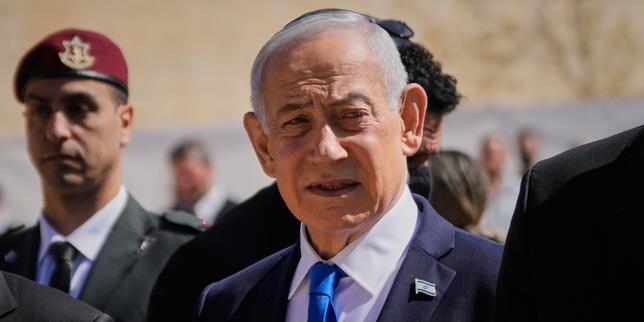
Benjamin Netanyahu stands before the cameras and claims the goals of Israel and the United States regarding Iran are "identical." This is a masterclass in diplomatic theater. It is also fundamentally wrong.
The mainstream press swallows this narrative because it simplifies a messy reality. It creates a comfortable image of two allies marching in lockstep toward a shared horizon. But if you look at the actual strategic architecture of both nations, you see two different blueprints. To claim they are the same is to ignore the gravity of geography and the cold math of domestic politics. Building on this topic, you can find more in: The Geopolitical Veto Mechanism Assessing the Viability of Michelle Bachelet as UN Secretary-General.
Washington views Iran as a regional management problem. Tel Aviv views Iran as an existential ticking clock. You cannot align those two perspectives without one side surrendering its core interests. They aren't. They are merely using the same vocabulary to describe two entirely different dictionaries.
The Washington Calculus Containment Over Conflict
The United States is currently obsessed with "stability," a word that has become a euphemism for avoiding a third major conflict in the Middle East. For the White House, a "successful" Iran policy is one where the oil keeps flowing, the shipping lanes stay open, and the U.S. doesn't have to deploy another hundred thousand troops to the desert. Experts at Al Jazeera have shared their thoughts on this trend.
Washington wants a box. They want to put Iran in that box, tape it shut with sanctions, and walk away to focus on the Pacific. They are willing to tolerate a "threshold" Iran—a nation that has the capability to build a weapon but chooses not to—because the alternative is a regional war that destroys the global economy.
When American officials talk about "denying Iran a nuclear weapon," they are talking about a diplomatic outcome. They are looking for a deal, a pause, a frozen conflict. They are playing a game of grand strategy where Iran is a piece on a board that includes China, Russia, and the domestic cost of gasoline.
The Israeli Calculus Survival is Not Negotiable
Israel does not have the luxury of distance. You can’t "contain" a threat that is fifteen hundred kilometers away when that threat funds proxies sitting on your literal doorstep. For Netanyahu, a threshold Iran is not a managed risk; it is an active death warrant.
Israel’s doctrine, specifically the Begin Doctrine, dictates that no enemy state in the Middle East can be allowed to acquire weapons of mass destruction. Not "eventually." Not "within a decade." Never.
While the U.S. calculates the cost of a war in terms of GDP and poll numbers, Israel calculates it in terms of national survival. This creates a fundamental divergence in the definition of "red lines." For the U.S., the red line is the assembly of a warhead. For Israel, the red line was crossed years ago when Iran mastered the enrichment cycle.
The Proxy Trap
The competitor's narrative suggests that both nations are united in their approach to Iran’s regional "gray zone" warfare. This is another polite fiction.
The U.S. approach to Hezbollah, the Houthis, and various militias in Iraq is a game of whack-a-mole. It is reactive. It is designed to prevent escalation. Every time an American drone strikes a militia commander, it is done with one eye on the "off-ramp."
Israel is no longer looking for off-ramps. The events of the past year have proved to the Israeli defense establishment that the "mowing the grass" strategy—periodic strikes to degrade capability—is a failure. They are moving toward a "head of the snake" strategy. They want to hold Tehran directly responsible for the actions of its satellites.
Washington hates this. Every time Israel moves to decapitate a proxy leadership or strike an Iranian consulate, the State Department breaks out in a cold sweat. Why? Because Israel’s actions force the U.S. into a conflict it has spent twenty years trying to avoid. The objectives aren't identical; they are often in direct competition. Israel wants to provoke a resolution; the U.S. wants to provoke a stalemate.
The Intelligence Gap
I have seen how these rooms operate. Analysts in the U.S. intelligence community are rewarded for caution. They use words like "probably" and "assess with moderate confidence." They operate in a culture where being wrong about a threat is better than being "alarmist" and starting a war.
Israeli intelligence operates under the shadow of the "never again" mandate. Their tolerance for ambiguity is zero. When Netanyahu displays maps or secret archives, he isn't just trying to convince the public; he is trying to shame the U.S. intelligence apparatus into acknowledging a reality they find inconvenient.
This creates a friction that no joint press conference can hide. The U.S. suspects Israel of dragging them into a war through "reckless" escalation. Israel suspects the U.S. of selling them out for a temporary diplomatic win.
Follow the Money and the Munitions
If the goals were truly identical, the friction over weapons shipments and "red lines" in Gaza or Lebanon wouldn't exist. The U.S. uses its military aid as a leash. You don't put a leash on someone who is running in the exact same direction as you. You put a leash on someone you fear is about to jump a fence you’re trying to keep closed.
The U.S. wants to maintain the status quo minus the nuclear threat. Israel wants to shatter the status quo because the status quo is currently killing their citizens.
Imagine the Scenario: The Strike
Imagine a scenario where Israeli satellites detect Iran moving its most advanced centrifuges into deep underground facilities at Fordow, signaling a final dash for 90% enrichment.
The U.S. response would be to call an emergency session of the UN Security Council, propose "crippling" sanctions, and send a high-level envoy to Tehran to offer an "incentive package" for a freeze.
The Israeli response would be to launch the F-35s.
In that moment, the "identical goals" rhetoric vanishes. The U.S. would be scrambling to distance itself to protect its regional bases from retaliation, while Israel would be fighting a war for its life. These aren't just different tactics; they are different worldviews.
The Hard Truth About Diplomacy
Diplomacy is often the art of lying until the lie becomes the reality. Netanyahu’s claim of unity is a tactical necessity. He needs the American umbrella, and he needs the Iranian regime to believe that the U.S. will back an Israeli strike.
But believing the rhetoric is a mistake for any serious observer. We are witnessing a slow-motion collision between two allies who are tethered together but trying to drive toward different destinations. One wants to get home safely; the other is trying to run a hijacker off the road.
Stop looking at the handshakes. Look at the logistics. Look at the maps. Look at the historical mandates. The "identical objectives" narrative is a comfort blanket for a world that isn't ready to admit that the West's primary superpower and its most vital Middle Eastern ally are currently operating on two different timelines.
When the friction finally ignites, don't act surprised. The signs were there the whole time, hidden behind the "en direct" updates and the carefully choreographed statements of solidarity.
Identity is a myth. Interest is the only reality. And right now, those interests are drifting further apart with every passing hour.
Stop asking if they are united. Start asking what happens when the U.S. finally realizes it can no longer restrain the partner it claims to be leading.