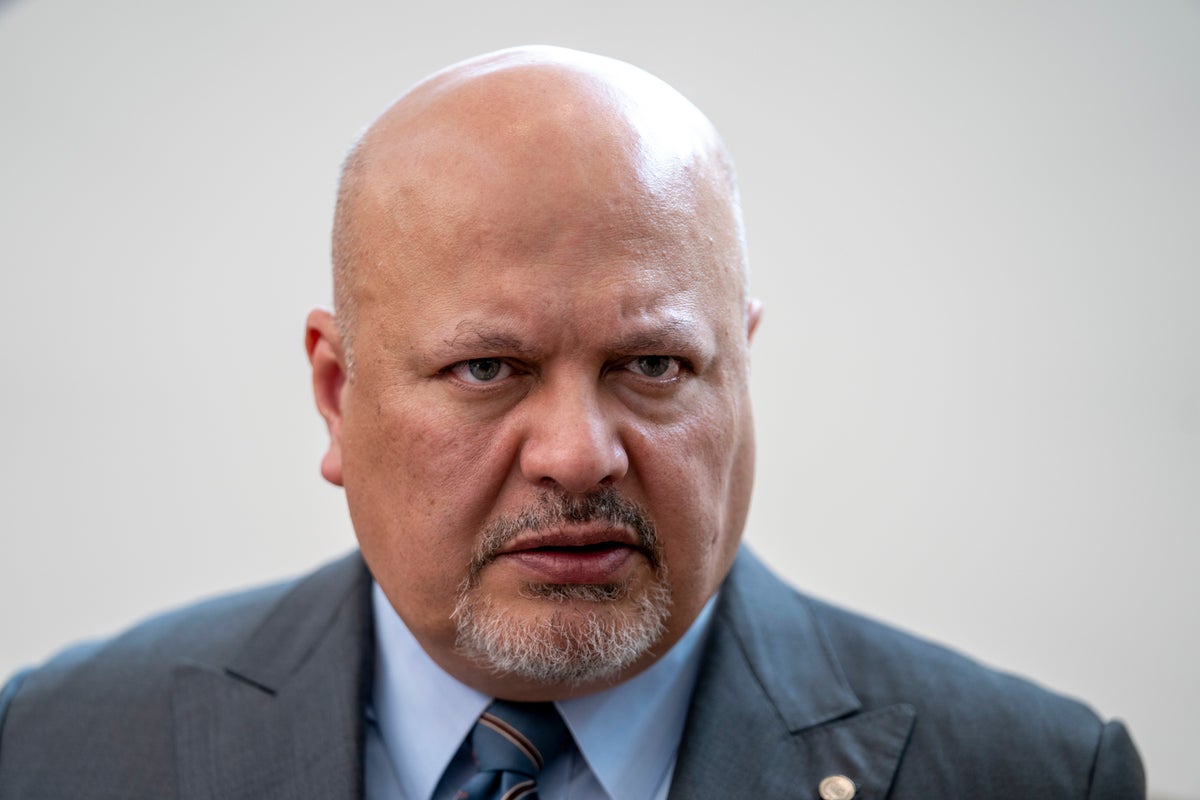
The international community is reeling in collective shock over reports that the International Criminal Court’s chief prosecutor engaged in serious misconduct. Mainstream media coverage is following a predictable, exhausted script. Commentators weep over the "erosion of institutional integrity." Legal pundits wonder if the court can ever restore its pristine reputation.
Stop crying. The shock is the lie.
The lazy consensus treats this scandal as an unfortunate aberration—a sudden, tragic system malfunction in an otherwise noble machine. That view is not just naive; it is willfully blind. I have spent two decades watching high-stakes international bodies operate behind closed doors, and I can tell you the uncomfortable truth nobody wants to print: the International Criminal Court did not break down. It is functioning exactly as it was designed to.
We are looking at a classic case of institutional design flaw masked as personal moral failure. By focusing entirely on individual misconduct, the world avoids looking at the rotting foundation of global governance itself.
The Myth of the Neutral Global Enforcer
The modern legal apparatus loves to pretend it operates in a vacuum of pure objective morality. We are told the ICC prosecutor is a modern-day knight errant, wielding the sword of global justice without fear or favor.
This is a fiction. The position of chief prosecutor is not a purely judicial role; it is one of the most intensely politicized seats on the planet.
Think about the structural mechanics. An independent prosecutor answers to no sovereign state, yet relies entirely on those same sovereign states for funding, police power, extradition, and political survival. It is an impossible paradox. To survive in that environment, a prosecutor cannot just be a lawyer; they must be a diplomat, a media darling, and a ruthless bureaucratic infighter.
When you build an ecosystem where absolute personal power is concentrated in a single office with virtually zero external, democratic oversight, you create a hothouse for hubris. The surprise shouldn’t be that a prosecutor crossed ethical lines. The surprise is that anyone expected them not to.
Why Human Resources Can Not Save International Law
The immediate corporate reaction to this crisis is already underway: calls for independent oversight panels, stricter HR protocols, and revised codes of conduct. This is bureaucratic theater.
In standard domestic governance, a corrupt or abusive official faces a matrix of checks and balances. There are local police, federal investigators, free presses with subpoena power, and voters who can clear out the entire building.
The ICC has none of this. It operates in a legal stratosphere. Who investigates the investigator? A committee appointed by the Assembly of States Parties—a group of diplomats whose primary job is backroom horse-trading, not criminal detection.
[Domestic System] --------> Checked by Voters, Local Courts, & Police
[International System] ---> Checked by... Diplomatic Committees & Self-Policing
When an institution is insulated from real-world accountability, its internal culture curdles. Rules become suggestions. The internal mechanism designed to protect staff becomes a mechanism designed to protect the institution's branding. If you think a new whistle-blower hotline is going to fix a deep-seated structural immunity problem, you are fundamentally misunderstanding how power works.
The Brutal Upside of Total Cynicism
Let us look at the downside of my own argument. If we accept that these institutions are inherently flawed and prone to internal rot, the logical conclusion seems grim: global justice is an illusion, and might makes right.
That is the risk of stripping away the romantic illusions of international law. It breeds cynicism. It makes it easier for actual war criminals to point at the court and say, "See? They are just as dirty as the rest of us."
But cynicism is a far safer state of mind than blind faith.
When we stop treating the ICC like a sacred temple, we can start treating it like what it actually is: a highly flawed, deeply political treaty-based organization. Acknowledge the bias. Acknowledge the operational rot. Only then can we stop expecting it to deliver immaculate justice and start forcing it to deliver basic, transactional accountability.
Dismantling the People Also Ask Fantasy
Go look at what people are searching regarding this scandal. The questions are fundamentally wrong because they assume the system was working before yesterday.
Does this misconduct invalidate current ICC warrants?
Legally? No. Politically? Absolutely. A prosecutor's currency isn't just the text of the Rome Statute; it is moral authority. The moment a chief prosecutor is dogged by credible allegations of serious misconduct, every single target of the court receives a massive PR gift. The defense lawyers don't even need to argue the facts of the case anymore; they just need to put the court itself on trial.
How can the ICC restore its credibility?
It can’t. And it shouldn’t try to restore the old credibility, because that credibility was built on a delusion of moral superiority. The only way forward is a radical downsizing of expectations. The court needs to stop positioning itself as the moral conscience of the globe and start acting like a highly targeted, transparent judicial tool. Less grandstanding, fewer press conferences, more rigid adherence to dull evidentiary standards.
The True Cost of the Savior Complex
The real tragedy here isn't the career of one bureaucrat. It is the collateral damage inflicted on the very idea of accountability.
For decades, the international legal elite has told victims of atrocities across the globe to place their trust in the Hague. We built a secular religion around global justice, complete with its own high priests. We told vulnerable populations that even if their local courts were corrupt, the global courts were pure.
That lie has officially run out of runway.
When the high priests turn out to be deeply compromised human beings operating in a system that lacks basic internal hygiene, the betrayal feels total. It drives people back toward tribalism and raw power politics. They realize that the international community's promise of protection was just a branding exercise.
Stop looking for a hero to clean up the ICC. Stop waiting for a flawless successor to step into the prosecutor's robes and restore balance to the force. The problem isn't the person wearing the robes; it's the fact that we designed the robes to fit a god, and then handed them to a human.
Burn the illusions. Treat the international court with the same aggressive skepticism, intense scrutiny, and baseline distrust that you would apply to a local corrupt city council. Demand transparency, strip away the diplomatic immunity shielding internal rot, and stop treating bureaucratic self-preservation as a victory for human rights.
The era of romantic internationalism is dead. Good riddance. Now let us build something that actually accounts for human nature.



:max_bytes(150000):strip_icc():focal(665x0:667x2)/gettyimages-50733149-2000-8b129a2475974982a915418ce92a73d8.jpg)