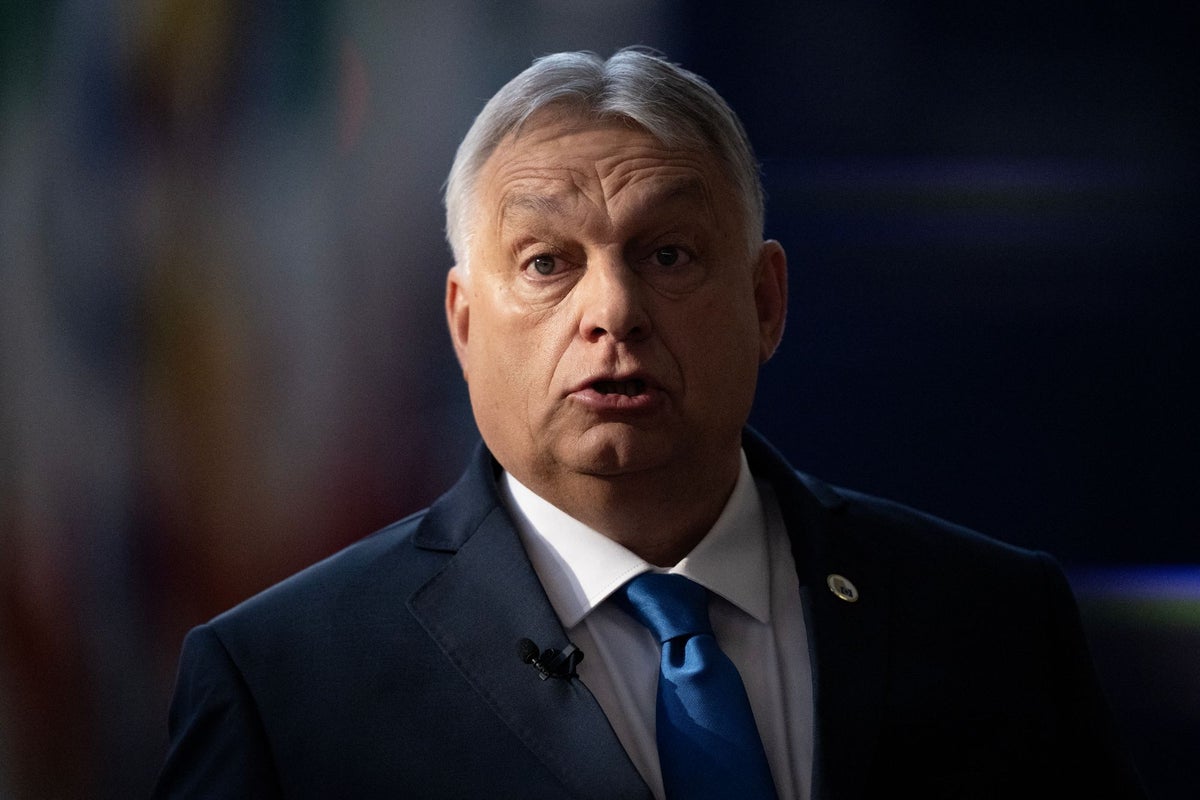
If you want to understand how a nation’s wealth vanishes into thin air, look at Budapest right now. For 16 years, Viktor Orbán treated Hungary like a private fiefdom, channeling state resources and European Union subsidies to a tiny, ultra-loyal group of friends, family, and oligarchs. Now, the bill has come due.
The country’s newly minted anti-corruption leadership is chasing a staggering €3.5 billion that basically evaporated through a system of rigged public tenders and drastically inflated contracts. It is not just about bad bookkeeping. It is a systematic, multi-year wealth transfer that has left the European taxpayer funding the lavish lifestyles of Orbán’s inner circle.
The political seismic shift in Hungary changed everything. With Péter Magyar taking the prime minister's seat after defeating Orbán, the protective wall around the old regime is crumbling. The hunt for the missing billions is no longer a theoretical debate in Brussels. It is an active criminal chase.
The Three Companies and the €3.5 Billion Price Tag
How do you make €3.5 billion disappear without a trace? You don't. You leave a massive paper trail of overpriced contracts, and that is exactly what the Hungarian Integrity Authority just exposed.
Ferenc Pál Bíró, the head of this autonomous anti-graft watchdog, revealed that a mere three companies managed to capture the vast majority of Hungary’s state contracts for goods and services over the last four years of Orbán’s rule. The government poured roughly €10 billion into this corporate trio. The catch? The prices charged under these contracts were completely unmoored from reality.
The Integrity Authority’s investigation shows that public procurement tenders were heavily manipulated. Basic goods and services were billed at several times the market rate. Bíró dropped the hammer with a definitive estimate: the overpricing alone—the pure, unadulterated corruption premium—amounts to €3.5 billion.
The scheme worked because it was simple. A state agency needs a routine service. Instead of a fair competitive bidding process, the tender is tailored so only one of the favored firms can win. The company charges triple the actual cost, the government pays it with EU-backed funds, and the excess cash is funneled away. It was a well-oiled machine that turned public infrastructure into private wealth.
From Budapest to Russia Where the Money Hid
The real tragedy for Hungary is that most of this cash is already gone. According to investigative tracking, the oligarchs close to Orbán realized the political tide was turning long before the election. They started moving massive sums of money out of the jurisdiction to protect their fortunes from the incoming administration.
It gets darker. Reports have surfaced indicating that Hungarian government planes were used to smuggle cash and valuables directly out of the country, with Russia serving as a primary destination. When you're dealing with billions in stolen public funds, Western banks with strict anti-money laundering protocols become a liability. Moving assets to less transparent jurisdictions was a survival strategy for a political class that knew its time was up.
Now, Prime Minister Péter Magyar is under intense pressure to deliver on his core campaign promise: eradicating Orbán-style corruption and repatriating the stolen money. His government is moving fast because they have to. Brussels frozen €16.4 billion in recovery and cohesion funds during the Orbán era due to deep rule-of-law violations. While Magyar recently secured a deal to unlock those funds by proving Hungary is serious about reform, keeping that money flowing depends entirely on putting the old guard behind bars.
Smashing the Oligarch Foundation System
To understand how deep this rot goes, you have to look at how Orbán structured the state before he left. His government didn't just give out bad contracts; they legally transferred state assets into private hands through public interest asset management foundations, known locally as KEKVAs.
Universities, cultural institutions, and prime real estate were shifted into these foundations, which were controlled by boards packed with Orbán loyalists. It was a brilliant, sinister way to maintain power and control over public money even if they lost an election.
Magyar’s administration just introduced a massive anti-graft legislative package to smash this shadow state. The new bill does a few things immediately:
- It forces a total overhaul of university governance, returning them to a direct public framework.
- It renationalizes the state assets previously hidden inside the KEKVA foundations.
- It introduces brutal transparency requirements for the ownership structures of private equity funds, where much of the €3.5 billion is suspected to be hiding.
The legislation also expands the legal powers of Bíró’s Integrity Authority. Under the previous regime, Bíró faced politically motivated attacks and literal bribery attempts just for trying to do his job. The new laws give his team the teeth to suspend corrupt procurement processes in real-time and use the courts to force criminal investigations, bypassing compromised prosecutors who used to protect the regime.
Tracing the €160 Billion Legacy
The €3.5 billion from the last four years is just the tip of the iceberg. The Integrity Authority is looking backward at the entire 16-year Orbán era, tracking a mind-boggling €160 billion in total public spending. To do this, they aren't just relying on standard audits. They built an artificial intelligence and machine-learning system to monitor Hungary’s historic and current economic transactions in real-time.
When Orbán took power in 2010, corruption was estimated to impact roughly 2% to 3% of government spending. By 2025, that number skyrocketed to between 15% and 20%. As the old government saw the door closing on their era, they went into overdrive, pushing through every last euro they could before the collapse.
Predictably, the remnants of the old regime are fighting back. Former Orbán officials are publicly calling these investigations a partisan "witch-hunt." But the data doesn't care about political spin. When a company charges three times the market value for a highway or a IT contract, it's not politics. It's theft.
What Happens Next
The immediate next step for Hungary is turning these investigative findings into actual indictments. Magyar has already committed to taking Hungary into the European Public Prosecutor’s Office (EPPO), a move Orbán aggressively blocked for years. This will allow international prosecutors to cooperate directly with Budapest to track the assets that fled to foreign bank accounts.
For everyday citizens and businesses, the government's anti-graft bill also introduces immediate personal stakes. Falsifying annual financial statements is now a distinct criminal offense punishable by up to two years in prison. The law broadens the scope of who must submit asset declarations to include not just top politicians, but their immediate relatives, shutting down the common tactic of hiding wealth in a spouse's or cousin's name.
The era of easy corruption in Budapest is officially over, but recovering the €3.5 billion will be a grueling, years-long legal street fight. The oligarchs won't give up the money willingly, and the international networks they used to hide it are complex. But for the first time in nearly two decades, the Hungarian state is actually trying to get its money back.
If you want to dive deeper into how this political shift occurred and what the initial fallout looked like right after the election, check out this detailed breakdown of the Hungarian political transition. This video explains the exact deal Prime Minister Péter Magyar struck with Brussels to begin unlocking the frozen billions, providing critical context on why these anti-corruption investigations are moving at such a frantic pace right now.


